THE ADVENTURE COLLECTIVE® · Independent discovery and booking for outdoor travel

Learn to sail a traditional dhow in Pongwe Bay on a private half-day lesson with a local captain. Calm waters, reef-edge swimming and practical sail-handling make this a hands-on introduction to Zanzibar’s seafaring craft.
Learn to sail a traditional dhow in Pongwe Bay on a private half-day lesson with a local captain. Calm waters, reef-edge swimming and practical sail-handling make this a hands-on introduction to Zanzibar’s seafaring craft.
A lacquered wooden dhow slips from the coral-fringed shallows of Pongwe Bay, the Indian Ocean breeze filling its lateen sail and pushing the craft along glassy green water. On a half-day lesson a local captain gestures at ropes and demonstrates how hull shape and sail make long coastal crossings possible, turning instruction into a living link to centuries of coastal trade.
Verified experiences and guided adventures in the surrounding area.
Operated by Pongwe Tour & Safari · Pongwe, Zanzibar
A lacquered wooden dhow slips from the coral-fringed shallows of Pongwe Bay, the Indian Ocean breeze filling its lateen sail and pushing the craft along glassy green water. On a half-day lesson a local captain gestures at ropes and demonstrates how hull shape and sail make long coastal crossings possible, turning instruction into a living link to centuries of coastal trade.
Pongwe sits on Zanzibar’s eastern reef line where shallow lagoons and scattered coral bommies sit atop ancient carbonate platforms. The island’s Swahili culture grew from maritime exchange with Arabia and India; dhow design reflects that history—practical, adaptable, and tuned to the monsoon rhythms.
Expect about three hours afloat on a private dhow with hands-on coaching: reefing and trimming the lateen sail, steering with the long tiller, and learning to read wind and swell. The crew often weaves short shore stops for a reef-edge swim or to sample grilled seafood from a beach stall, adding cultural texture to the skill work.
Practical guidance: wear non-marking, quick-dry footwear and liberal sun protection—sea and sand magnify exposure. Bring a small dry bag, keep modest cash for beach vendors, and consider seasickness medication if you’re sensitive; mornings are usually the calmest for beginners, afternoons bring steadier breeze for practice. The outing is accessible for most fitness levels and offers a clear window into Zanzibar’s maritime heritage.
easy.
3 hours.
Minimal fitness required—able to step aboard a low-sided boat and move on an unsteady deck.
No—this half-day is designed for beginners with hands-on instruction from an experienced local captain.
Yes, children are typically welcome but must be supervised; life jackets are provided—confirm age or group rules with the operator at booking.
Many operators offer hotel pickup from nearby accommodations—check your booking confirmation and provide a pickup point if requested.
The operator may cancel for safety in poor weather; the standard policy allows a full refund if you cancel at least 24 hours before departure, and the tour cancels if conditions are unsafe.
Dhows have plied the Swahili coast for centuries, carrying goods and stories between East Africa, Arabia and India; their design evolved to fit local winds and cargo needs.
Coral reefs here are sensitive—avoid touching coral, use reef-safe sunscreen, and respect local fishing areas to reduce impact.
Pongwe Tour & Safari operates guided outdoor trips and adventures with an emphasis on safety, stewardship, and memorable experiences.
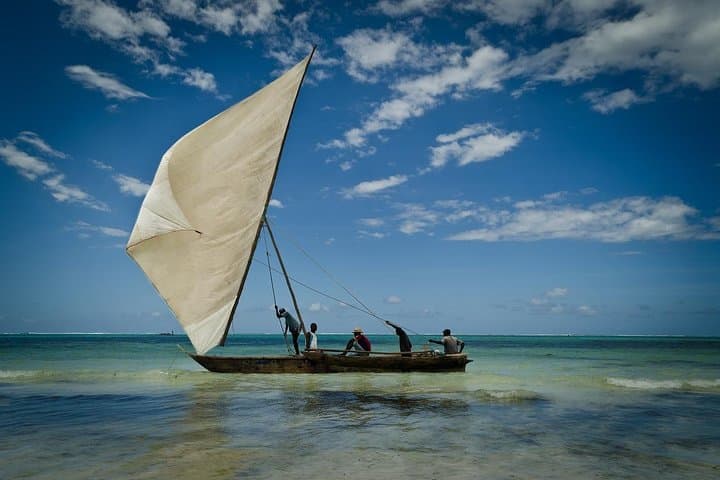
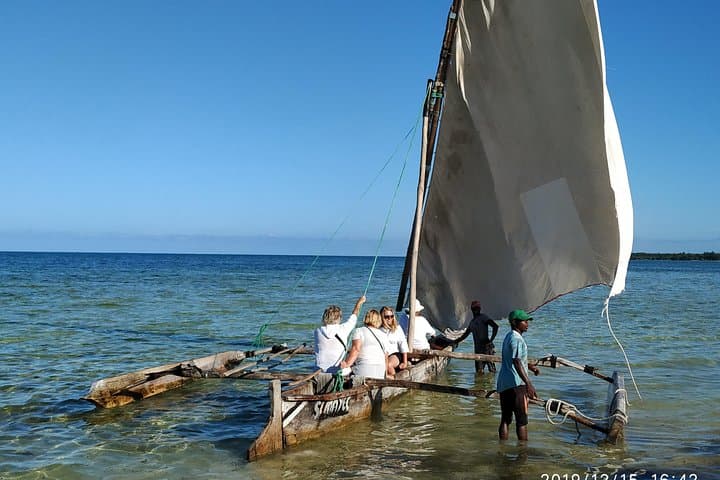
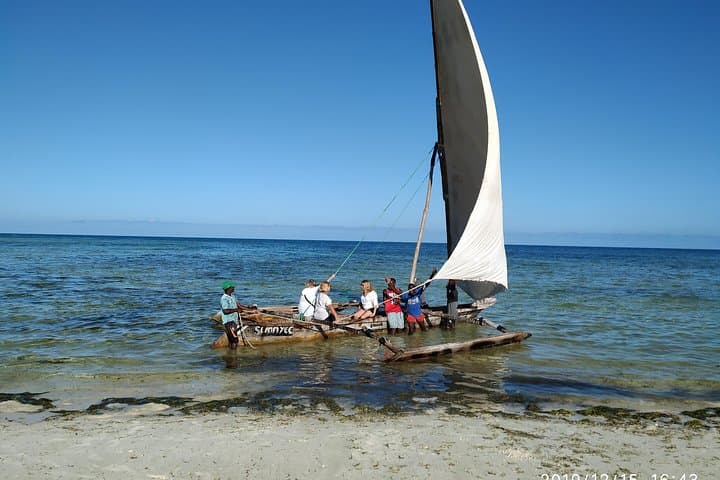
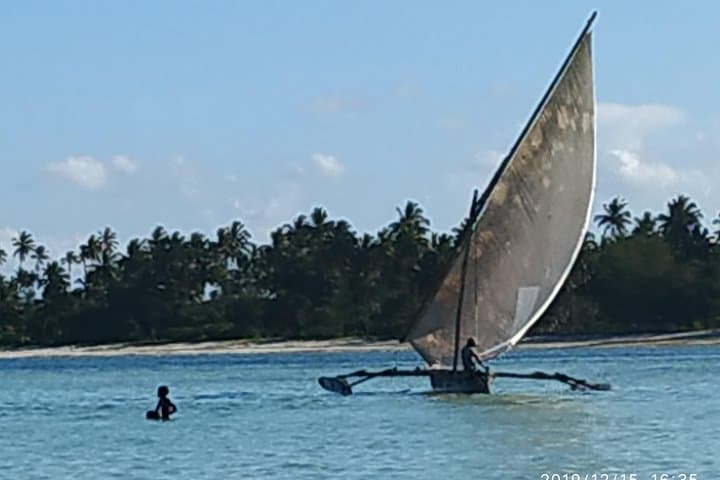
A lacquered wooden dhow slips from the coral-fringed shallows of Pongwe Bay, the Indian Ocean breeze filling its lateen sail and pushing the craft along glassy green water. On a half-day lesson a local captain gestures at ropes and demonstrates how hull shape and sail make long coastal crossings possible, turning instruction into a living link to centuries of coastal trade.
A lacquered wooden dhow slips from the coral-fringed shallows of Pongwe Bay, the Indian Ocean breeze filling its lateen sail and pushing the craft along glassy green water. On a half-day lesson a local captain gestures at ropes and demonstrates how hull shape and sail make long coastal crossings possible, turning instruction into a living link to centuries of coastal trade.
Pongwe sits on Zanzibar’s eastern reef line where shallow lagoons and scattered coral bommies sit atop ancient carbonate platforms. The island’s Swahili culture grew from maritime exchange with Arabia and India; dhow design reflects that history—practical, adaptable, and tuned to the monsoon rhythms.
Expect about three hours afloat on a private dhow with hands-on coaching: reefing and trimming the lateen sail, steering with the long tiller, and learning to read wind and swell. The crew often weaves short shore stops for a reef-edge swim or to sample grilled seafood from a beach stall, adding cultural texture to the skill work.
Practical guidance: wear non-marking, quick-dry footwear and liberal sun protection—sea and sand magnify exposure. Bring a small dry bag, keep modest cash for beach vendors, and consider seasickness medication if you’re sensitive; mornings are usually the calmest for beginners, afternoons bring steadier breeze for practice. The outing is accessible for most fitness levels and offers a clear window into Zanzibar’s maritime heritage.