THE ADVENTURE COLLECTIVE® · Independent discovery and booking for outdoor travel

Spend a day between two ruined Roman towns and the rim of Italy’s most infamous volcano. This private tour from Sorrento pairs close-up archaeology with a short ascent to Vesuvius for panoramic views of the Bay of Naples.
Spend a day between two ruined Roman towns and the rim of Italy’s most infamous volcano. This private tour from Sorrento pairs close-up archaeology with a short ascent to Vesuvius for panoramic views of the Bay of Naples.
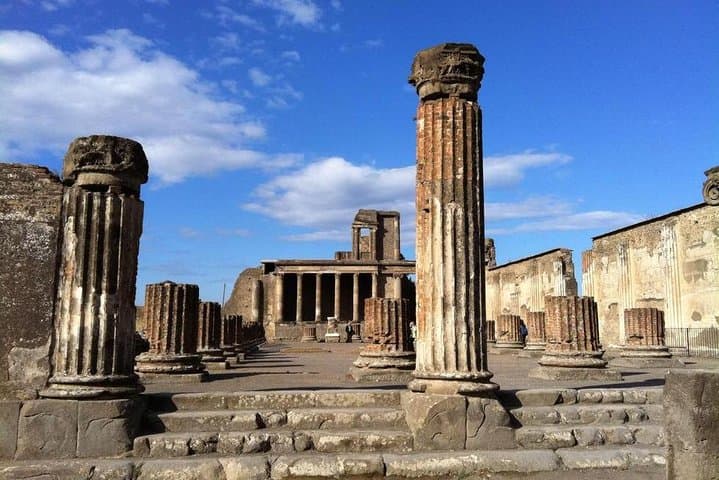
You step out of the minivan into heat-hardened streets where dust still settles into the grooves of ancient cart tracks. The air tastes faintly of salt from the Bay of Naples; above, Vesuvius broods, its rim framing the sea like a watchful eye.
Verified experiences and guided adventures in the surrounding area.
Operated by Italydriver · Pompeii, Campania
You step out of the minivan into heat-hardened streets where dust still settles into the grooves of ancient cart tracks. The air tastes faintly of salt from the Bay of Naples; above, Vesuvius broods, its rim framing the sea like a watchful eye.
Walk through Pompeii’s ash-choked alleys and the plaster casts that hold frozen gestures of everyday life—bakers’ shops, frescoed villas, and a forum where commerce once pulsed. Herculaneum offers a different intimacy: the mud and pyroclastic flows preserved wooden roofs and household items with startling clarity. Geologically, Vesuvius is a stratovolcano whose explosive event in 79 A.D. reshaped coastlines and lives; its summit sits near 1,000 meters and offers sweeping views of Naples and Capri.
Local culture still orbits these sites—Neapolitan cuisine, salt-cured fish, and small-town wineries where volcanic soils flavor the grapes. Guides often point out Roman engineering details and the social rhythms visible in household layouts.
Practical guidance: plan for a long, active day—expect cobbled, uneven terrain at both ruins and a rocky trail near the Vesuvius crater. Entrance fees and lunch are usually not included on private tours; bring euros for sites and a simple lunch recommendation from your driver can save time. Wear good walking shoes, carry 1–2 liters of water, and start early to beat midday heat and coach traffic. If you’re prone to vertigo, note that the crater rim has exposed sections; a steady pace and basic fitness make this full day accessible and richly rewarding.
moderate.
7–8 hours.
Moderate fitness: able to walk 3–6 miles on uneven terrain and handle short steep sections to the volcano rim.
Typically not included on this private tour—bring cash or card to purchase tickets on arrival or request ticket handling when booking.
Expect several hours of walking over uneven surfaces across both archaeological sites and a short hike to the Vesuvius crater area; plan for 3–6 miles total.
The ruins are generally accessible for most ages, but the crater trail has loose rock and some steep pitches—assess mobility and balance before attempting the summit approach.
Yes—an English-speaking guide can usually be requested in advance; confirm availability and any additional fees when you reserve the tour.
Pompeii and Herculaneum were buried by Vesuvius’s 79 A.D. eruption; the rapid burial preserved buildings and artifacts that reveal Roman domestic and public life in rare detail.
Site managers balance visitor access with preservation—stick to marked paths, avoid touching frescoes and support local conservation by following guide instructions and not removing artifacts.
Italydriver operates guided outdoor trips and adventures with an emphasis on safety, stewardship, and memorable experiences.

You step out of the minivan into heat-hardened streets where dust still settles into the grooves of ancient cart tracks. The air tastes faintly of salt from the Bay of Naples; above, Vesuvius broods, its rim framing the sea like a watchful eye.
You step out of the minivan into heat-hardened streets where dust still settles into the grooves of ancient cart tracks. The air tastes faintly of salt from the Bay of Naples; above, Vesuvius broods, its rim framing the sea like a watchful eye.
Walk through Pompeii’s ash-choked alleys and the plaster casts that hold frozen gestures of everyday life—bakers’ shops, frescoed villas, and a forum where commerce once pulsed. Herculaneum offers a different intimacy: the mud and pyroclastic flows preserved wooden roofs and household items with startling clarity. Geologically, Vesuvius is a stratovolcano whose explosive event in 79 A.D. reshaped coastlines and lives; its summit sits near 1,000 meters and offers sweeping views of Naples and Capri.
Local culture still orbits these sites—Neapolitan cuisine, salt-cured fish, and small-town wineries where volcanic soils flavor the grapes. Guides often point out Roman engineering details and the social rhythms visible in household layouts.
Practical guidance: plan for a long, active day—expect cobbled, uneven terrain at both ruins and a rocky trail near the Vesuvius crater. Entrance fees and lunch are usually not included on private tours; bring euros for sites and a simple lunch recommendation from your driver can save time. Wear good walking shoes, carry 1–2 liters of water, and start early to beat midday heat and coach traffic. If you’re prone to vertigo, note that the crater rim has exposed sections; a steady pace and basic fitness make this full day accessible and richly rewarding.