THE ADVENTURE COLLECTIVE® · Independent discovery and booking for outdoor travel

Combine archaeology, a short summit hike and volcanic wines on a private day trip from Naples. Visit Pompeii’s ruins, climb toward Vesuvius’s crater rim, and sample Lacryma Christi at a family-run winery.
Combine archaeology, a short summit hike and volcanic wines on a private day trip from Naples. Visit Pompeii’s ruins, climb toward Vesuvius’s crater rim, and sample Lacryma Christi at a family-run winery.
A narrow coastal road peels away from Naples and the city’s harbor glints behind you as the driver threads through lemon groves toward a volcano that still breathes heat into the air.
Verified experiences and guided adventures in the surrounding area.
Operated by taxiGo DMC · Naples, Campania
A narrow coastal road peels away from Naples and the city’s harbor glints behind you as the driver threads through lemon groves toward a volcano that still breathes heat into the air.
By midday you stand on Roman paving stones in Pompeii: shops frozen mid-trade, frescoed walls that still hold color, and plaster casts that give voice to lives interrupted by Vesuvius’s 79 AD eruption. The archaeological park reads like a street-level history lesson—straight roads, baths, and villas that reveal daily Roman routine.
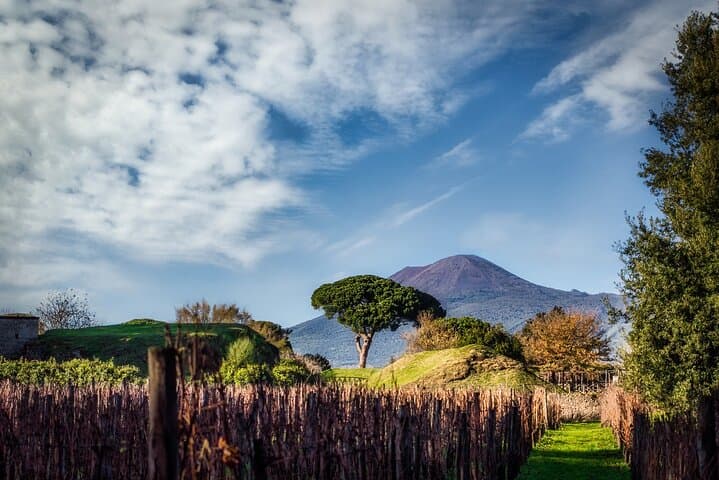
Upward from the ruins, Vesuvius is a living geological page—layers of ash, hardened lava, and terraces where vines cling to volcanic pumice. The Russo family winery uses those mineral-rich soils to grow local varietals like Lacryma Christi; a tasting here links terroir directly to the mountain’s long-ago fury.
Expect a mix of flat walking in Pompeii, a roughly 30–45 minute uphill stroll to Vesuvius’s crater rim, and a relaxed, seated tasting with regional specialties at the cantina. The route moves from archaeology to geology to agrarian culture in one continuous sweep.
Practical takeaways: book morning departures to avoid heat and crowds, bring sturdy shoes for loose volcanic gravel, and carry at least 1–1.5 liters of water. Confirm if entrance fees are included and request hotel pickup in Naples. The day is structured for comfort—private transport and a guide—but it rewards curiosity: history underfoot, volcanic geology overhead, and a glass that tastes of the slopes below.
moderate.
6–7 hours.
Suitable for travelers who can walk 2–4 miles over mixed terrain and handle a short uphill climb; basic mobility required.
Not always—confirm at booking. The itinerary indicates admissions may not be included, so be prepared to pay entry on site if needed.
Yes; private pick up and drop off at your Naples hotel or specified address is included in the tour amenities.
The walk to the crater rim is a moderately steep 30–45 minute hike on compacted volcanic trail—comfortable for most people with basic fitness.
Family-owned wineries welcome all ages for the scenery and food; tastings are for adults, but non-alcoholic options and snacks are typically available.
Mount Vesuvius’s 79 AD eruption buried Pompeii and Herculaneum, preserving urban Roman life; Campania viticulture dates to ancient times with varietals adapted to volcanic soils.
The archaeological park and national park manage foot traffic to protect fragile ruins and volcanic ecosystems; visitors should remain on marked paths and support local, family-run wineries practicing sustainable cultivation.
taxiGo DMC operates guided outdoor trips and adventures with an emphasis on safety, stewardship, and memorable experiences.



A narrow coastal road peels away from Naples and the city’s harbor glints behind you as the driver threads through lemon groves toward a volcano that still breathes heat into the air.
A narrow coastal road peels away from Naples and the city’s harbor glints behind you as the driver threads through lemon groves toward a volcano that still breathes heat into the air.
By midday you stand on Roman paving stones in Pompeii: shops frozen mid-trade, frescoed walls that still hold color, and plaster casts that give voice to lives interrupted by Vesuvius’s 79 AD eruption. The archaeological park reads like a street-level history lesson—straight roads, baths, and villas that reveal daily Roman routine.
Upward from the ruins, Vesuvius is a living geological page—layers of ash, hardened lava, and terraces where vines cling to volcanic pumice. The Russo family winery uses those mineral-rich soils to grow local varietals like Lacryma Christi; a tasting here links terroir directly to the mountain’s long-ago fury.
Expect a mix of flat walking in Pompeii, a roughly 30–45 minute uphill stroll to Vesuvius’s crater rim, and a relaxed, seated tasting with regional specialties at the cantina. The route moves from archaeology to geology to agrarian culture in one continuous sweep.
Practical takeaways: book morning departures to avoid heat and crowds, bring sturdy shoes for loose volcanic gravel, and carry at least 1–1.5 liters of water. Confirm if entrance fees are included and request hotel pickup in Naples. The day is structured for comfort—private transport and a guide—but it rewards curiosity: history underfoot, volcanic geology overhead, and a glass that tastes of the slopes below.