THE ADVENTURE COLLECTIVE® · Independent discovery and booking for outdoor travel

Skip the queue and explore Pompeii at your own pace with a downloadable audio guide that points out frescoes, graffiti and architectural details. Ideal for visitors who want focused insight into daily Roman life and Vesuvius’ geological legacy.
Skip the queue and explore Pompeii at your own pace with a downloadable audio guide that points out frescoes, graffiti and architectural details. Ideal for visitors who want focused insight into daily Roman life and Vesuvius’ geological legacy.
You step through the Porta Marina and the stones answer with the hollow echo of a city paused. Heat from the sun and the lingering smell of dust set the stage; massive basalt pavements, worn wheel ruts and the shadow of long-gone roofs orient your rhythm as the audio guide unfolds stories behind each threshold.
Verified experiences and guided adventures in the surrounding area.
Operated by Italy Wonders SRLS · Pompeii, Campania
You step through the Porta Marina and the stones answer with the hollow echo of a city paused. Heat from the sun and the lingering smell of dust set the stage; massive basalt pavements, worn wheel ruts and the shadow of long-gone roofs orient your rhythm as the audio guide unfolds stories behind each threshold.
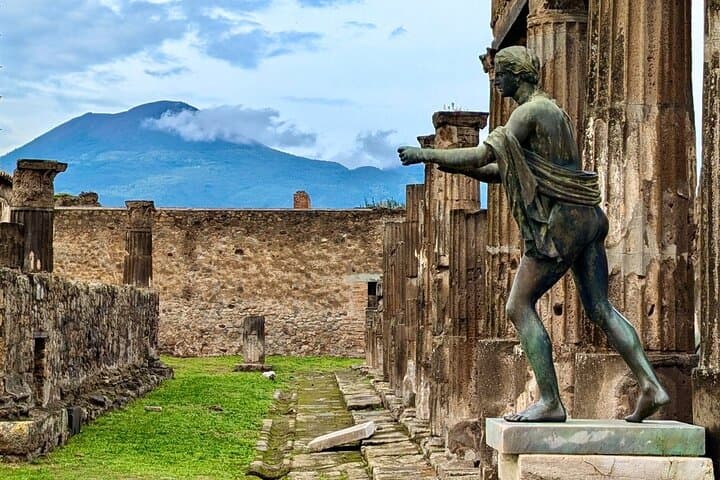
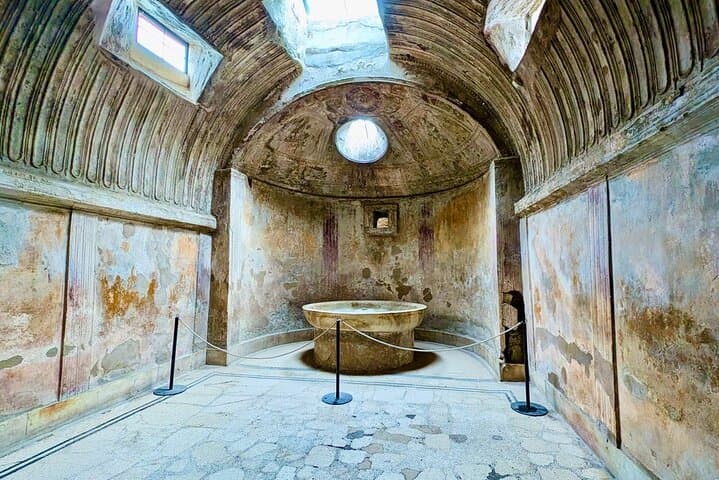
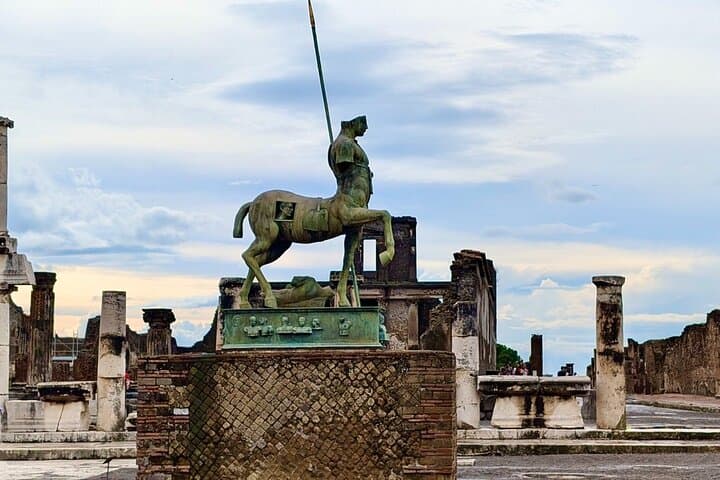
Pompeii's streets are a geological and historical cross-section: ash and pumice from Vesuvius’ AD 79 eruption preserved wood, plaster and frescoes beneath a dense layer of volcanic material. Roman civic life plays out through the Forum’s columns, the Basilica where law was argued, and houses whose frescoes and graffiti reveal politics, religion and everyday commerce. Nearby villas — the Villa of the Mysteries, Villa Regina — and the Antiquarium at Boscoreale add context to what excavation has revealed about elite tastes and domestic routines.
The skip-the-line ticket frees you from queues; the downloadable audio guide points out details you’d otherwise miss, like election slogans scrawled on walls or the precise joinery of a fast-food thermopolium. Practical notes: download audio on Wi‑Fi, carry ID (tickets are nominative), and expect several miles of uneven walking across exposed stone. Peak sun and reflected heat make morning or late-afternoon visits more comfortable; winter brings softer light and fewer crowds. Respect ropes and fragile surfaces — many frescoes are exposed and require careful stewardship.
This is a self-paced day of archaeology and weathered urban fabric: move deliberately, listen closely, and let the voices of the past map a city’s sudden silence.
easy.
3–6 hours.
Light walking fitness; you should be able to walk several miles on uneven stone and stand for periods of time.
No—mobile or paper tickets are accepted, but ensure the ticket name matches your photo ID at entrance.
Yes—the audio guide must be downloaded beforehand over Wi‑Fi and will run offline during your visit.
Many main routes are wheelchair accessible, but some areas have uneven surfaces; check specific accessibility notes and contact the operator for details.
A focused visit can be 3–4 hours; to see major houses and nearby museums plan 5–6 hours or a full day.
Pompeii was buried by Mount Vesuvius in AD 79; the eruption’s tephra sealed buildings and daily objects, preserving an unparalleled snapshot of Roman life.
The site balances public access with preservation—stay on marked paths, avoid touching frescoes, and follow signage to limit wear on fragile surfaces.
Italy Wonders SRLS operates guided outdoor trips and adventures with an emphasis on safety, stewardship, and memorable experiences.
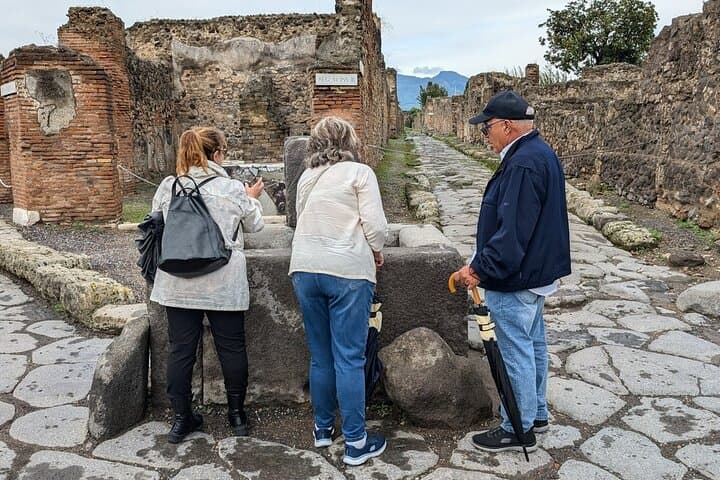
You step through the Porta Marina and the stones answer with the hollow echo of a city paused. Heat from the sun and the lingering smell of dust set the stage; massive basalt pavements, worn wheel ruts and the shadow of long-gone roofs orient your rhythm as the audio guide unfolds stories behind each threshold.
You step through the Porta Marina and the stones answer with the hollow echo of a city paused. Heat from the sun and the lingering smell of dust set the stage; massive basalt pavements, worn wheel ruts and the shadow of long-gone roofs orient your rhythm as the audio guide unfolds stories behind each threshold.
Pompeii's streets are a geological and historical cross-section: ash and pumice from Vesuvius’ AD 79 eruption preserved wood, plaster and frescoes beneath a dense layer of volcanic material. Roman civic life plays out through the Forum’s columns, the Basilica where law was argued, and houses whose frescoes and graffiti reveal politics, religion and everyday commerce. Nearby villas — the Villa of the Mysteries, Villa Regina — and the Antiquarium at Boscoreale add context to what excavation has revealed about elite tastes and domestic routines.
The skip-the-line ticket frees you from queues; the downloadable audio guide points out details you’d otherwise miss, like election slogans scrawled on walls or the precise joinery of a fast-food thermopolium. Practical notes: download audio on Wi‑Fi, carry ID (tickets are nominative), and expect several miles of uneven walking across exposed stone. Peak sun and reflected heat make morning or late-afternoon visits more comfortable; winter brings softer light and fewer crowds. Respect ropes and fragile surfaces — many frescoes are exposed and require careful stewardship.
This is a self-paced day of archaeology and weathered urban fabric: move deliberately, listen closely, and let the voices of the past map a city’s sudden silence.