THE ADVENTURE COLLECTIVE® · Independent discovery and booking for outdoor travel

Walk Pompeii with an expert guide and bypass the queues to explore the forum, baths, bakery and preserved homes. This 2-hour small-group tour focuses on the western quarter and pairs archaeological insight with practical site tips.
Walk Pompeii with an expert guide and bypass the queues to explore the forum, baths, bakery and preserved homes. This 2-hour small-group tour focuses on the western quarter and pairs archaeological insight with practical site tips.
Stepping through the Porta Marina, the ruined streets of Pompeii open like pages from a long-buried life. Sunlight slants across volcanic stone; plastered façades and fresco fragments keep the cadence of everyday tasks — bakeries, baths, the forum — while Mount Vesuvius watches from the skyline, a geological actor that shaped the site in 79 AD.
Verified experiences and guided adventures in the surrounding area.
Operated by Enjoy Pompeii · Pompeii, Campania
Stepping through the Porta Marina, the ruined streets of Pompeii open like pages from a long-buried life. Sunlight slants across volcanic stone; plastered façades and fresco fragments keep the cadence of everyday tasks — bakeries, baths, the forum — while Mount Vesuvius watches from the skyline, a geological actor that shaped the site in 79 AD.
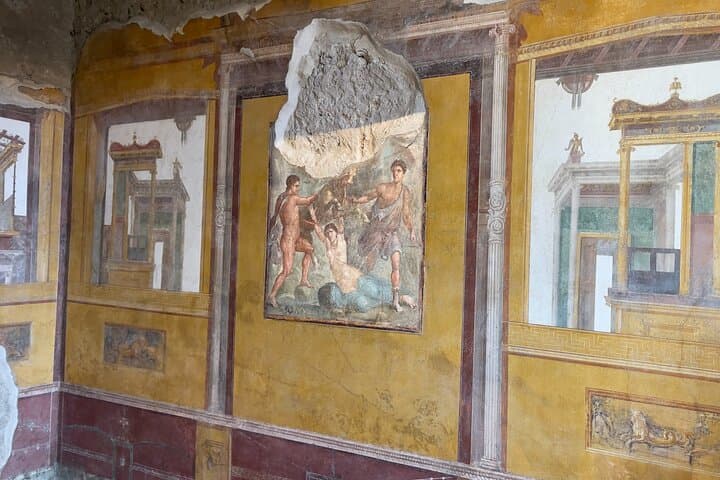
This two-hour guided route focuses on the western quarter: the forum and basilica where civic life was debated, thermal baths that reveal Roman bathing culture, a working bakery, and several homes whose frescoes and floor mosaics explain domestic rituals. Pompeii’s geology is straightforward — compacted ash and pumice preserved organic detail — which makes the site an unparalleled time capsule of Roman urban life and infrastructure.
Culturally, Pompeii sits at the intersection of Roman administration and Campanian commerce; the guide’s role is to translate architectural clues into daily routines and social norms. Practicalities matter: the ground is uneven basalt and packed ash, shade is limited, and large groups can bottleneck narrow streets, so a small-group format improves access and context.
Plan morning or late-afternoon visits to avoid the strongest sun; carry water, wear supportive footwear, and budget time for museum or site maps. Respect ropes and no-touch rules — frescoes and casts are fragile. With an informed guide, the city becomes readable: a blueprint of Roman urban life framed by a mountain that continues to shape the region’s landscape and risks.
easy.
2–2.5 hours.
Suitable for most fitness levels; expect continuous walking on uneven surfaces with minimal elevation change.
Yes — the booking includes a skip-the-line entrance allowing the group to enter without waiting in the main ticket queue.
The site has uneven surfaces and some distance between points; it’s labeled suitable for most fitness levels but not ideal for visitors with significant mobility limitations.
Availability depends on the specific departure; check the booking page for language options and confirm when you reserve.
The tour includes an expert guide and skip-the-line entry; it does not typically include museum admission outside the archaeological park or transport to the site.
Pompeii was rapidly buried by the 79 AD eruption of Vesuvius; ash preserved buildings and organic details that offer direct evidence of Roman urban life.
Heavy visitation accelerates wear on pavements and frescoes; follow ropes, avoid touching surfaces, and use marked paths to support ongoing preservation efforts.
Enjoy Pompeii operates guided outdoor trips and adventures with an emphasis on safety, stewardship, and memorable experiences.
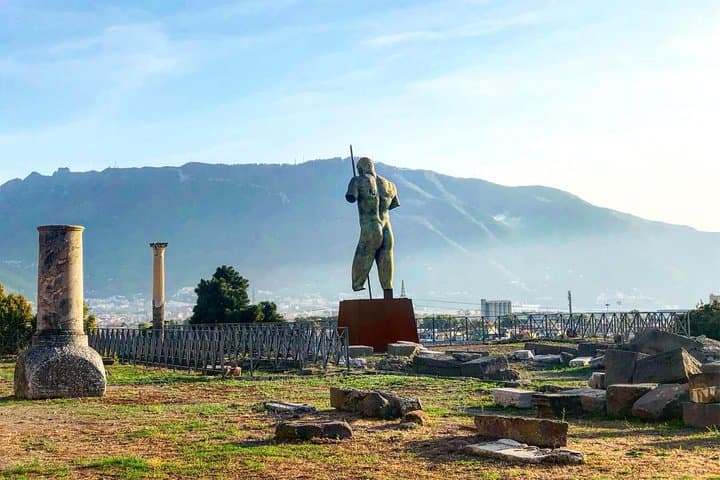
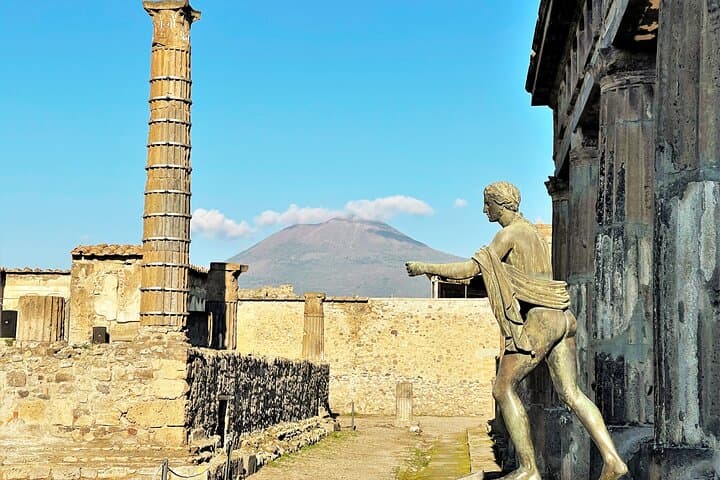
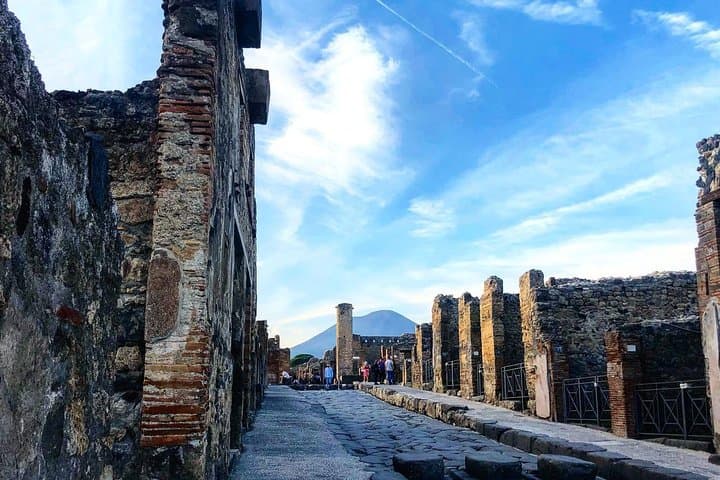
Stepping through the Porta Marina, the ruined streets of Pompeii open like pages from a long-buried life. Sunlight slants across volcanic stone; plastered façades and fresco fragments keep the cadence of everyday tasks — bakeries, baths, the forum — while Mount Vesuvius watches from the skyline, a geological actor that shaped the site in 79 AD.
Stepping through the Porta Marina, the ruined streets of Pompeii open like pages from a long-buried life. Sunlight slants across volcanic stone; plastered façades and fresco fragments keep the cadence of everyday tasks — bakeries, baths, the forum — while Mount Vesuvius watches from the skyline, a geological actor that shaped the site in 79 AD.
This two-hour guided route focuses on the western quarter: the forum and basilica where civic life was debated, thermal baths that reveal Roman bathing culture, a working bakery, and several homes whose frescoes and floor mosaics explain domestic rituals. Pompeii’s geology is straightforward — compacted ash and pumice preserved organic detail — which makes the site an unparalleled time capsule of Roman urban life and infrastructure.
Culturally, Pompeii sits at the intersection of Roman administration and Campanian commerce; the guide’s role is to translate architectural clues into daily routines and social norms. Practicalities matter: the ground is uneven basalt and packed ash, shade is limited, and large groups can bottleneck narrow streets, so a small-group format improves access and context.
Plan morning or late-afternoon visits to avoid the strongest sun; carry water, wear supportive footwear, and budget time for museum or site maps. Respect ropes and no-touch rules — frescoes and casts are fragile. With an informed guide, the city becomes readable: a blueprint of Roman urban life framed by a mountain that continues to shape the region’s landscape and risks.