THE ADVENTURE COLLECTIVE® · Independent discovery and booking for outdoor travel

Combine a brisk hike to Vesuvius’s rim with an on-foot exploration of Pompeii’s streets on this small-group tour from Naples. Expect loose volcanic gravel, panoramic bay views, and a poignant walk through Roman ruins.
Combine a brisk hike to Vesuvius’s rim with an on-foot exploration of Pompeii’s streets on this small-group tour from Naples. Expect loose volcanic gravel, panoramic bay views, and a poignant walk through Roman ruins.
You step off the minibus into a wind that carries salt from the Bay of Naples and the dry, mineral scent of volcanic gravel. The road climbs, the city falls away, and Vesuvius looms—an ancient engine of change that still shapes the coastline. The final approach is a zigzag on loose scoria; the trail tests balance and rewards with a rim that frames the crater like an amphitheater and spills views of Capri, Ischia, and the Sorrentine Peninsula.
Verified experiences and guided adventures in the surrounding area.
Operated by Mondo Guide Srl · Pompeii, Campania
You step off the minibus into a wind that carries salt from the Bay of Naples and the dry, mineral scent of volcanic gravel. The road climbs, the city falls away, and Vesuvius looms—an ancient engine of change that still shapes the coastline. The final approach is a zigzag on loose scoria; the trail tests balance and rewards with a rim that frames the crater like an amphitheater and spills views of Capri, Ischia, and the Sorrentine Peninsula.
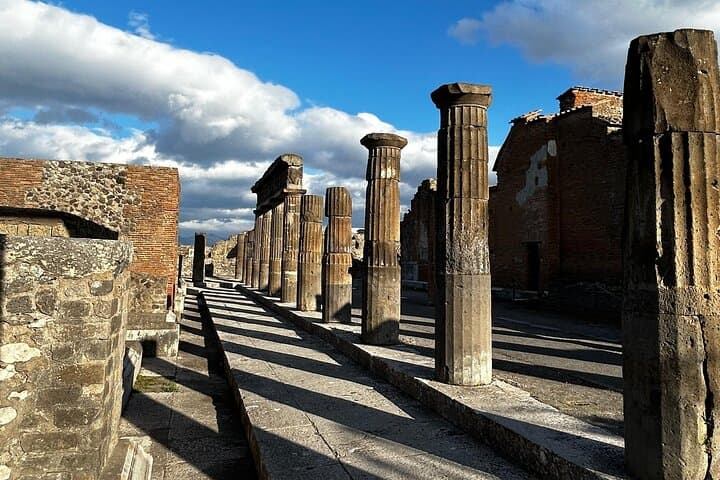
Below, Pompeii waits in open air, streets frozen under ash. Walking its cardo and decumanus, you pass houses with fresco fragments, placid baths, and cast forms that make the eruption’s human scale unmistakable. Geology and history overlap here: Vesuvius is a stratovolcano built from episodic eruptions; the 79 CE blast preserved Roman urban life in a sudden, intimate archive.
Culturally, the area blends Neapolitan vigor and archaeological stewardship—local guides point out artisan shops and cafes that nod to centuries of trade and cuisine. Practicalities matter: the volcano climb involves roughly 25 minutes on loose volcanic gravel and an elevation gain of a few hundred meters; Pompeii covers several kilometers of uneven cobbles.
Plan for sun and wind, wear sturdy shoes, and carry water; shade is scarce on Vesuvius and walking distances in Pompeii add up fast. Timing matters—mornings are cooler and light is better for photography; skip-the-line entry saves hours during high season. With a local guide and an air-conditioned transfer, this combined day gives you both a physical summit and a deep, walkable lesson in history.
moderate.
6–8 hours.
Suitable for people who can walk 3–5 miles on uneven ground and manage short uphill sections; basic stamina required for the volcano ascent.
The final walk from the parking area to the summit takes about 20–30 minutes on a zigzag path of volcanic gravel; altitude gain is moderate but footing can be loose.
The tour advertises skip-the-line entry; confirm that Vesuvius tickets have been pre-purchased as some operators require non-refundable reservations for the volcano park.
Pompeii has uneven cobbles and Vesuvius has loose gravel and steps—children and those with mobility limits can participate but should expect challenges; check with the operator about accessibility options.
Pack a lightweight windproof layer and a packable rain shell—weather can change quickly on the volcano and evenings near the bay can be cool.
Mount Vesuvius erupts periodically; the 79 CE eruption buried Pompeii and Herculaneum under ash, preserving buildings and everyday objects in remarkable detail.
Visitor pressure is managed through timed entries and conservation programs; stay on marked paths to protect fragile ruins and local flora.
Mondo Guide Srl operates guided outdoor trips and adventures with an emphasis on safety, stewardship, and memorable experiences.


You step off the minibus into a wind that carries salt from the Bay of Naples and the dry, mineral scent of volcanic gravel. The road climbs, the city falls away, and Vesuvius looms—an ancient engine of change that still shapes the coastline. The final approach is a zigzag on loose scoria; the trail tests balance and rewards with a rim that frames the crater like an amphitheater and spills views of Capri, Ischia, and the Sorrentine Peninsula.
You step off the minibus into a wind that carries salt from the Bay of Naples and the dry, mineral scent of volcanic gravel. The road climbs, the city falls away, and Vesuvius looms—an ancient engine of change that still shapes the coastline. The final approach is a zigzag on loose scoria; the trail tests balance and rewards with a rim that frames the crater like an amphitheater and spills views of Capri, Ischia, and the Sorrentine Peninsula.
Below, Pompeii waits in open air, streets frozen under ash. Walking its cardo and decumanus, you pass houses with fresco fragments, placid baths, and cast forms that make the eruption’s human scale unmistakable. Geology and history overlap here: Vesuvius is a stratovolcano built from episodic eruptions; the 79 CE blast preserved Roman urban life in a sudden, intimate archive.
Culturally, the area blends Neapolitan vigor and archaeological stewardship—local guides point out artisan shops and cafes that nod to centuries of trade and cuisine. Practicalities matter: the volcano climb involves roughly 25 minutes on loose volcanic gravel and an elevation gain of a few hundred meters; Pompeii covers several kilometers of uneven cobbles.
Plan for sun and wind, wear sturdy shoes, and carry water; shade is scarce on Vesuvius and walking distances in Pompeii add up fast. Timing matters—mornings are cooler and light is better for photography; skip-the-line entry saves hours during high season. With a local guide and an air-conditioned transfer, this combined day gives you both a physical summit and a deep, walkable lesson in history.