THE ADVENTURE COLLECTIVE® · Independent discovery and booking for outdoor travel

Walk through a city frozen by Vesuvius and hear the story of Roman daily life on a 2.5-hour guided, skip-the-line tour. Licensed guides illuminate frescoes, baths and the Forum while practical tips help you navigate heat, uneven stone and crowds.
Walk through a city frozen by Vesuvius and hear the story of Roman daily life on a 2.5-hour guided, skip-the-line tour. Licensed guides illuminate frescoes, baths and the Forum while practical tips help you navigate heat, uneven stone and crowds.
The morning light hits the Forum’s worn steps and Mount Vesuvius looms like a silent narrator as visitors move beneath porticoes and past plaster casts of the city’s last moments. The guided, priority-entry walk through Pompeii compresses centuries into footsteps: a basilica that held civic business, narrow shopfronts once lined with amphorae and mosaic counters, and frescoed homes that still gaze across paved streets.
Verified experiences and guided adventures in the surrounding area.
Operated by IAMME IA! - Gray Line Amalfi Coast · Pompeii, Campania
The morning light hits the Forum’s worn steps and Mount Vesuvius looms like a silent narrator as visitors move beneath porticoes and past plaster casts of the city’s last moments. The guided, priority-entry walk through Pompeii compresses centuries into footsteps: a basilica that held civic business, narrow shopfronts once lined with amphorae and mosaic counters, and frescoed homes that still gaze across paved streets.
Pompeii’s story is geological as much as historical. In AD 79 Vesuvius erupted, burying the Roman town under pumice and ash; that violent burial arrested daily life and preserved building plans, mosaics and organic traces in a way few sites can. The cultural layers—temples, baths, brothels, and workshops—reveal a commercial Mediterranean hub where trade, religion and entertainment converged.
Locally, guides draw attention to details missed at a glance: graffiti in alleyways, the engineering of drainage along decumani, and how later excavations reshaped the modern town’s understanding of Roman urban planning. Practicalities shape the visit: the route covers uneven volcanic stone and exposed sun, lasts about 2.5 hours, and moves at a steady, interpretive pace with licensed guides bringing context to each stop.
Plan mornings or late afternoons to avoid peak heat, bring water and sturdy shoes, and expect some standing and short walks between highlights like the Lupanar, the House of the Menander and the Forum Baths. The skip-the-line entry saves time, but responsible travel—sticking to paths and leaving artifacts untouched—keeps Pompeii readable for future visitors.
moderate.
2–3 hours.
Light-to-moderate mobility required: participants should be comfortable standing and walking 2–3 miles on uneven ground.
Yes—priority entrance is included to reduce time waiting at the main ticket lines, though security checks may still apply.
The tour is family-friendly but involves walking on uneven stone; strollers are not practical and those with mobility issues should contact the operator in advance.
For groups larger than 10, headphones are provided so everyone can hear the guide; otherwise the guide will use a voice or megaphone as needed.
Pompeii is served by regional trains and buses from Naples and Sorrento; the main entrance (Porta Marina) is accessible via local transit—check the operator’s meeting instructions for precise directions.
Pompeii was buried in ash during the AD 79 eruption of Vesuvius; the rapid burial preserved urban layout, frescoes and everyday objects that reveal Roman civic and domestic life.
Ongoing conservation balances visitor access with fragile remains—stay on marked paths, avoid touching frescoes and follow guide instructions to reduce erosion and damage.
IAMME IA! - Gray Line Amalfi Coast operates guided outdoor trips and adventures with an emphasis on safety, stewardship, and memorable experiences.


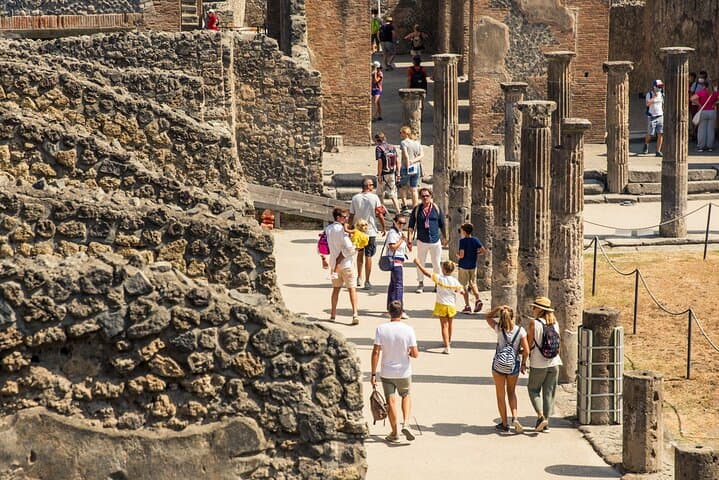

The morning light hits the Forum’s worn steps and Mount Vesuvius looms like a silent narrator as visitors move beneath porticoes and past plaster casts of the city’s last moments. The guided, priority-entry walk through Pompeii compresses centuries into footsteps: a basilica that held civic business, narrow shopfronts once lined with amphorae and mosaic counters, and frescoed homes that still gaze across paved streets.
The morning light hits the Forum’s worn steps and Mount Vesuvius looms like a silent narrator as visitors move beneath porticoes and past plaster casts of the city’s last moments. The guided, priority-entry walk through Pompeii compresses centuries into footsteps: a basilica that held civic business, narrow shopfronts once lined with amphorae and mosaic counters, and frescoed homes that still gaze across paved streets.
Pompeii’s story is geological as much as historical. In AD 79 Vesuvius erupted, burying the Roman town under pumice and ash; that violent burial arrested daily life and preserved building plans, mosaics and organic traces in a way few sites can. The cultural layers—temples, baths, brothels, and workshops—reveal a commercial Mediterranean hub where trade, religion and entertainment converged.
Locally, guides draw attention to details missed at a glance: graffiti in alleyways, the engineering of drainage along decumani, and how later excavations reshaped the modern town’s understanding of Roman urban planning. Practicalities shape the visit: the route covers uneven volcanic stone and exposed sun, lasts about 2.5 hours, and moves at a steady, interpretive pace with licensed guides bringing context to each stop.
Plan mornings or late afternoons to avoid peak heat, bring water and sturdy shoes, and expect some standing and short walks between highlights like the Lupanar, the House of the Menander and the Forum Baths. The skip-the-line entry saves time, but responsible travel—sticking to paths and leaving artifacts untouched—keeps Pompeii readable for future visitors.