THE ADVENTURE COLLECTIVE® · Independent discovery and booking for outdoor travel

Explore Pompeii efficiently with a local, authorized guide and skip-the-line admission. This two-hour, small-group tour focuses on the city’s highlights, geology and daily Roman life.
Explore Pompeii efficiently with a local, authorized guide and skip-the-line admission. This two-hour, small-group tour focuses on the city’s highlights, geology and daily Roman life.
You step through the modern stone entrance and the air changes — dust and heat press lightly against the ruins while Vesuvius watches from the horizon, indifferent and present. The guide leads a small group down a street lined with cobbled ruts, pausing at a painted doorway where a fresco still hints at a life interrupted.
Verified experiences and guided adventures in the surrounding area.
Operated by Gennaro Balzano · Pompeii, Campania
You step through the modern stone entrance and the air changes — dust and heat press lightly against the ruins while Vesuvius watches from the horizon, indifferent and present. The guide leads a small group down a street lined with cobbled ruts, pausing at a painted doorway where a fresco still hints at a life interrupted.
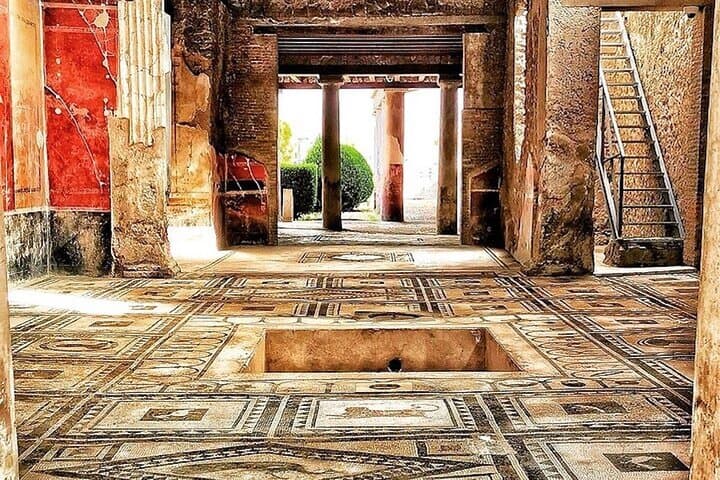
Pompeii’s story is geological and human: Mt. Vesuvius erupted in AD 79, burying a bustling Roman town under ash that preserved buildings, shops, and everyday objects. Walks here combine architecture, urban planning and volcanic geology — you’ll see plaster casts of victims, layered pumice and the outlines of homes that reveal domestic routines, trade life, and Roman engineering.
Culturally the site sits between Naples and the Bay of Naples, shaped by classical Italian life and centuries of excavation that began in the 18th century. Local guides tie geology to daily habit — why doors face certain streets, how bath complexes were heated, and how wine and garum were traded.
Practically: expect uneven flagstones, open sun, and crowds thinning if you choose early hours. The two-hour guided format covers highlights — Forum, bakeries, the Villa of the Mysteries — with skip-the-line access and a paced 12-person group size that keeps the experience readable and informative.
Bring water, sensible footwear, and a sun layer; plan for summer heat or sudden coastal winds. Photography is allowed but don’t touch frescoes. This tour is best for travelers who want an efficient, contextual visit that combines history, geology and clear on-site interpretation without museum pacing.
easy.
2 hours.
Suitable for most fitness levels; requires standing and walking on uneven surfaces for up to two hours.
Yes — the route is family-friendly and paced for general audiences, though children should be supervised around drop-offs and fragile areas.
Yes, the experience includes a guaranteed admission ticket designed to reduce wait times at the park entrance.
Pompeii is a 30–40 minute train ride from Naples (Circumvesuviana) or a 30–45 minute drive; public transport stops are conveniently close to the site.
Parts of Pompeii feature uneven terrain and limited accessibility; some main thoroughfares are navigable but full access to all ruins may be restricted.
Pompeii was buried by Vesuvius in AD 79; the ash preserved buildings and daily objects, creating an unusually detailed archaeological snapshot of Roman urban life.
Ongoing conservation balances visitor access with preservation — stay on marked paths, avoid touching surfaces, and follow guide instructions to minimize impact.
Gennaro Balzano operates guided outdoor trips and adventures with an emphasis on safety, stewardship, and memorable experiences.
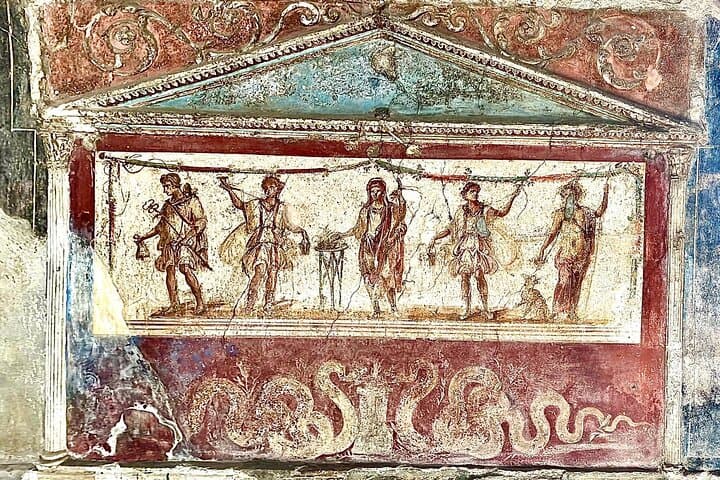
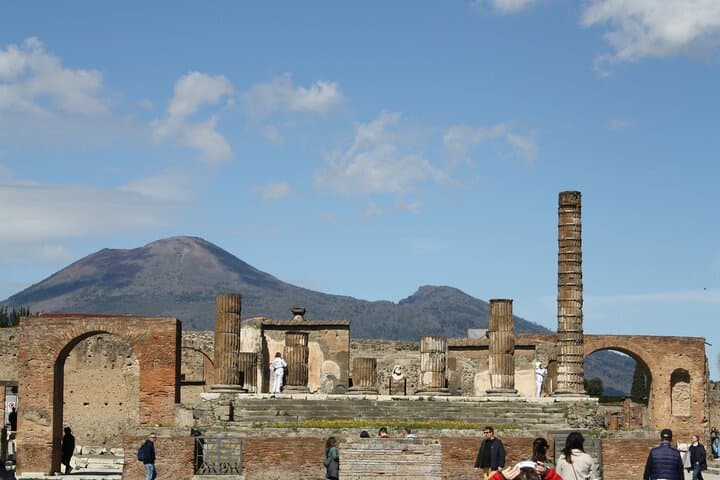
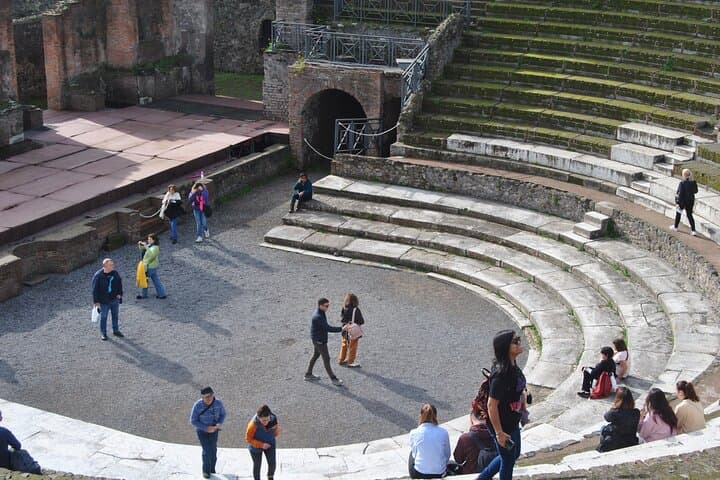
You step through the modern stone entrance and the air changes — dust and heat press lightly against the ruins while Vesuvius watches from the horizon, indifferent and present. The guide leads a small group down a street lined with cobbled ruts, pausing at a painted doorway where a fresco still hints at a life interrupted.
You step through the modern stone entrance and the air changes — dust and heat press lightly against the ruins while Vesuvius watches from the horizon, indifferent and present. The guide leads a small group down a street lined with cobbled ruts, pausing at a painted doorway where a fresco still hints at a life interrupted.
Pompeii’s story is geological and human: Mt. Vesuvius erupted in AD 79, burying a bustling Roman town under ash that preserved buildings, shops, and everyday objects. Walks here combine architecture, urban planning and volcanic geology — you’ll see plaster casts of victims, layered pumice and the outlines of homes that reveal domestic routines, trade life, and Roman engineering.
Culturally the site sits between Naples and the Bay of Naples, shaped by classical Italian life and centuries of excavation that began in the 18th century. Local guides tie geology to daily habit — why doors face certain streets, how bath complexes were heated, and how wine and garum were traded.
Practically: expect uneven flagstones, open sun, and crowds thinning if you choose early hours. The two-hour guided format covers highlights — Forum, bakeries, the Villa of the Mysteries — with skip-the-line access and a paced 12-person group size that keeps the experience readable and informative.
Bring water, sensible footwear, and a sun layer; plan for summer heat or sudden coastal winds. Photography is allowed but don’t touch frescoes. This tour is best for travelers who want an efficient, contextual visit that combines history, geology and clear on-site interpretation without museum pacing.