THE ADVENTURE COLLECTIVE® · Independent discovery and booking for outdoor travel

Skip the queues and explore Pompeii at your own pace with a phone audio guide and shuttle access to suburban villas. This fast-track ticket focuses your time on the city's best-preserved houses, the forum, and frescoed villas — practical advice included.
Skip the queues and explore Pompeii at your own pace with a phone audio guide and shuttle access to suburban villas. This fast-track ticket focuses your time on the city's best-preserved houses, the forum, and frescoed villas — practical advice included.
You arrive through a tall gate into a city frozen the moment Mount Vesuvius erupted in AD 79 — sun-warmed cobbles underfoot, the forum’s stones radiating heat, and the volcano itself watching the ruins from a short distance away.
Verified experiences and guided adventures in the surrounding area.
Operated by Wanderung · Pompeii, Campania
You arrive through a tall gate into a city frozen the moment Mount Vesuvius erupted in AD 79 — sun-warmed cobbles underfoot, the forum’s stones radiating heat, and the volcano itself watching the ruins from a short distance away.
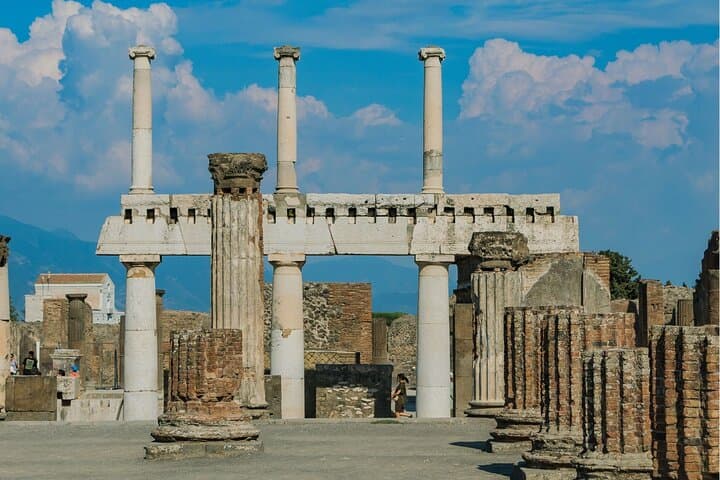
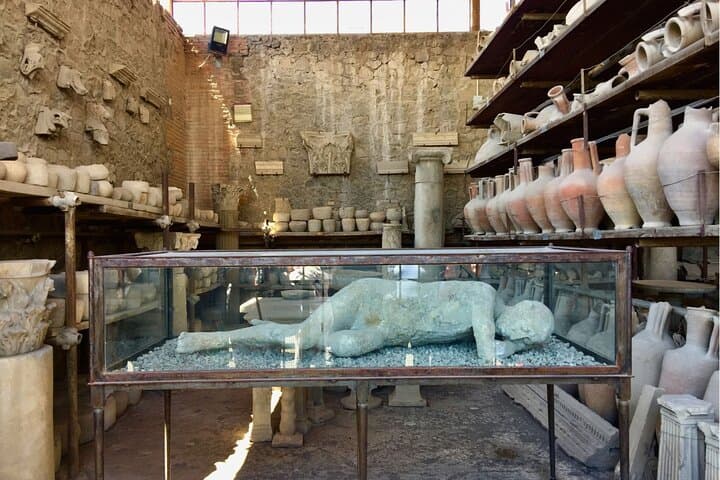
Pompeii preserves Roman urban life with unusual clarity: bakeries with ovens still visible, the mosaic-strewn House of the Faun, the theatrical stages, and plaster casts that mark where residents once stood. Geologically, the ash and pumice that buried the town sealed frescoes and woodwork, creating a time capsule for archaeologists; culturally, the city reveals everyday commerce, religion and domestic life in vivid detail.
This fast-track ticket lets you bypass main lines and move at your own pace with a phone audio guide that points out key sites and context. The experience typically covers the core archaeological park and nearby suburban villas — Villa of the Mysteries, Villa of Diomedes, and Villa Regina — with a shuttle linking sites so you don’t double back.
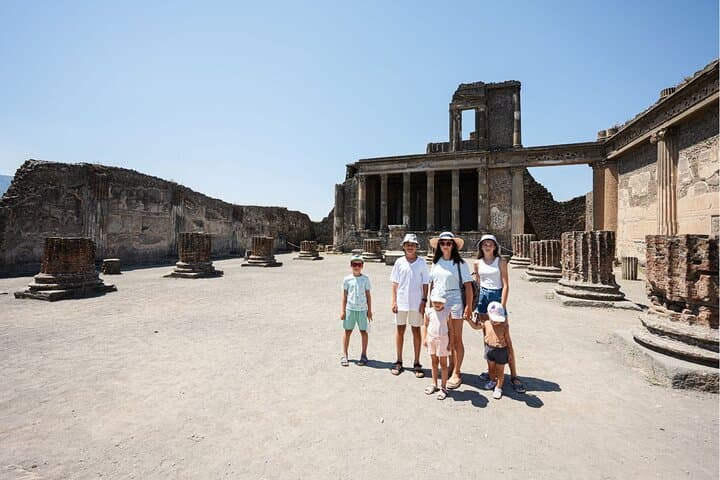
Plan practically: the site stretches for a few kilometers over mostly flat but uneven volcanic stone; expect 2.5–3.5 hours of walking. Bring sun protection and plenty of water in summer, a light jacket in spring and fall, and sturdy shoes year-round. Charge your phone for the audio guide and download any maps you need; while many pathways are accessible, older streets are narrow and bumpy. Respect ropes and closed areas to protect fragile mosaics and frescoes. With a sensible pace and basic gear, Pompeii becomes not just a list of ruins but a narrated walk through Roman life and the geology that preserved it.
easy.
2.5–3.5 hours.
Moderate mobility and the ability to walk several kilometers on uneven surfaces; suitable for most fitness levels.
Yes — this booking provides flexible entrance tickets and a phone audio guide; follow instructions in your confirmation to access the audio content.
Plan roughly 2.5–3.5 hours for the main park and an additional hour if you visit suburban villas; shuttle service links sites to save time.
Parts of Pompeii are wheelchair accessible and ramps exist in some areas, but many streets are narrow and uneven; check specific routes in advance and plan assistance if needed.
This is a self-guided product using an audio guide; live guided tours may be available separately and are often offered at the entrance or by third-party operators.
Pompeii was buried by Vesuvius’s eruption in AD 79; the rapid ashfall preserved buildings, art and everyday objects, creating an unparalleled archaeological record.
High visitor numbers impact fragile surfaces; follow marked paths, avoid touching frescoes, and support local conservation efforts by respecting site rules.
Wanderung operates guided outdoor trips and adventures with an emphasis on safety, stewardship, and memorable experiences.
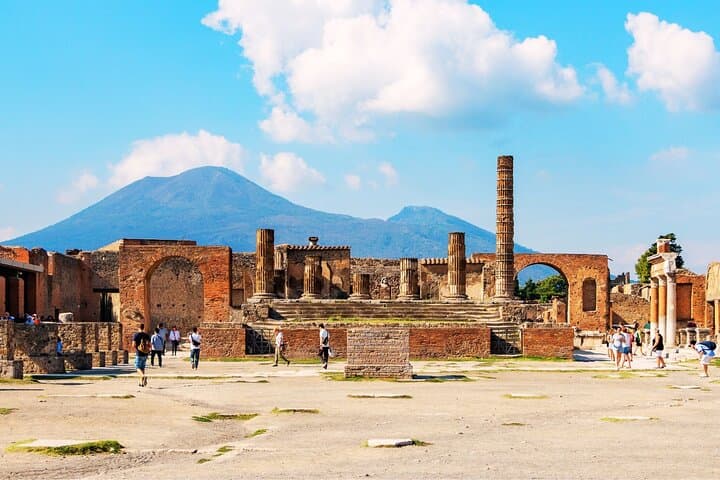
You arrive through a tall gate into a city frozen the moment Mount Vesuvius erupted in AD 79 — sun-warmed cobbles underfoot, the forum’s stones radiating heat, and the volcano itself watching the ruins from a short distance away.
You arrive through a tall gate into a city frozen the moment Mount Vesuvius erupted in AD 79 — sun-warmed cobbles underfoot, the forum’s stones radiating heat, and the volcano itself watching the ruins from a short distance away.
Pompeii preserves Roman urban life with unusual clarity: bakeries with ovens still visible, the mosaic-strewn House of the Faun, the theatrical stages, and plaster casts that mark where residents once stood. Geologically, the ash and pumice that buried the town sealed frescoes and woodwork, creating a time capsule for archaeologists; culturally, the city reveals everyday commerce, religion and domestic life in vivid detail.
This fast-track ticket lets you bypass main lines and move at your own pace with a phone audio guide that points out key sites and context. The experience typically covers the core archaeological park and nearby suburban villas — Villa of the Mysteries, Villa of Diomedes, and Villa Regina — with a shuttle linking sites so you don’t double back.
Plan practically: the site stretches for a few kilometers over mostly flat but uneven volcanic stone; expect 2.5–3.5 hours of walking. Bring sun protection and plenty of water in summer, a light jacket in spring and fall, and sturdy shoes year-round. Charge your phone for the audio guide and download any maps you need; while many pathways are accessible, older streets are narrow and bumpy. Respect ropes and closed areas to protect fragile mosaics and frescoes. With a sensible pace and basic gear, Pompeii becomes not just a list of ruins but a narrated walk through Roman life and the geology that preserved it.