THE ADVENTURE COLLECTIVE® · Independent discovery and booking for outdoor travel

Walk the streets frozen in 79 AD on a guided Pompeii excursion from Naples. This two-hour trip pairs convenient transport with a focused tour of temples, homes and casts that make Roman life tangible.
Walk the streets frozen in 79 AD on a guided Pompeii excursion from Naples. This two-hour trip pairs convenient transport with a focused tour of temples, homes and casts that make Roman life tangible.
You step out of the air-conditioned minivan and the smell of sun-baked stone replaces the sea air—dry, warm, and oddly intimate. The marble-cut streets of Pompeii spread ahead, a city paused under ash where doorways, shops and frescoed villas open like pages from a book. Your guide leads the way, voice low against the hum of distant Vesuvius, drawing lines between inscriptions, mosaics and the hollow casts of those who once walked here.
Verified experiences and guided adventures in the surrounding area.
Operated by Aiana Travel · Pompeii, Campania
You step out of the air-conditioned minivan and the smell of sun-baked stone replaces the sea air—dry, warm, and oddly intimate. The marble-cut streets of Pompeii spread ahead, a city paused under ash where doorways, shops and frescoed villas open like pages from a book. Your guide leads the way, voice low against the hum of distant Vesuvius, drawing lines between inscriptions, mosaics and the hollow casts of those who once walked here.
Pompeii’s story is geological and human: Vesuvius’ eruption in 79 AD buried the town under meters of pumice and ash, preserving everyday Roman life across roughly 66 hectares. The excavation history—first systematic work in the 18th century—revealed homes, baths, bakeries and graffiti that sketch an intimate urban portrait. Culturally, Pompeii reflects Roman domestic life, commerce and religion; frescoes and shops show tastes and trades that survived millennia.
Expect mostly flat walking across paved Roman streets, intermittent gravel and uneven thresholds; total walking within the main route is roughly 2–4 km with negligible elevation gain. Sun exposure is constant on open piazzas; shade appears only inside porticoes and atria. Photography is encouraged but fragile surfaces remain protected.
Practical guide: wear sturdy shoes with good soles, bring 1–2 liters of water in summer and sun protection year-round. The tour includes round-trip transport from Naples and entrance tickets; plan for about two hours on site. Arrive early to avoid heat and crowds, follow the guide’s route to see key highlights efficiently, and respect ropes and conservation signage to help preserve this ancient place.
moderate.
2 hours.
Moderate—comfortable walking for 2 hours on uneven terrain; minimal elevation gain.
Yes—the tour includes air-conditioned transport from designated pickup points in Naples or the port as specified at booking.
Entrance to the Pompeii excavations and a licensed local guide are included in the excursion price; skip-the-line access is not guaranteed.
Some parts of the site and the provided transportation are wheelchair accessible, but many streets and interiors have uneven surfaces that limit full access—check specific accessibility needs with the operator in advance.
This excursion is a guided activity with a set duration; independent exploration outside the scheduled tour depends on return transport times and the operator’s policy—ask at booking if you’d like extra time.
Pompeii was rapidly buried by Vesuvius in 79 AD; layered ash preserved buildings, objects and organic details that reveal Roman urban life.
The site is fragile—visitors should stick to marked paths and avoid touching frescoes; supporting guided tours helps fund preservation and local heritage work.
Aiana Travel operates guided outdoor trips and adventures with an emphasis on safety, stewardship, and memorable experiences.
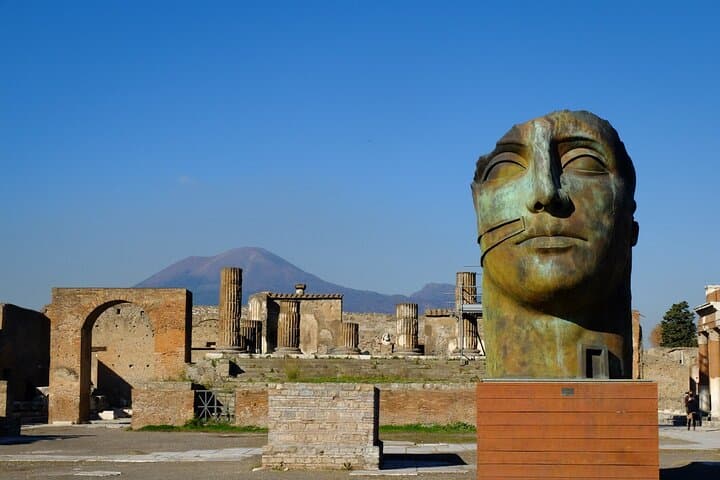

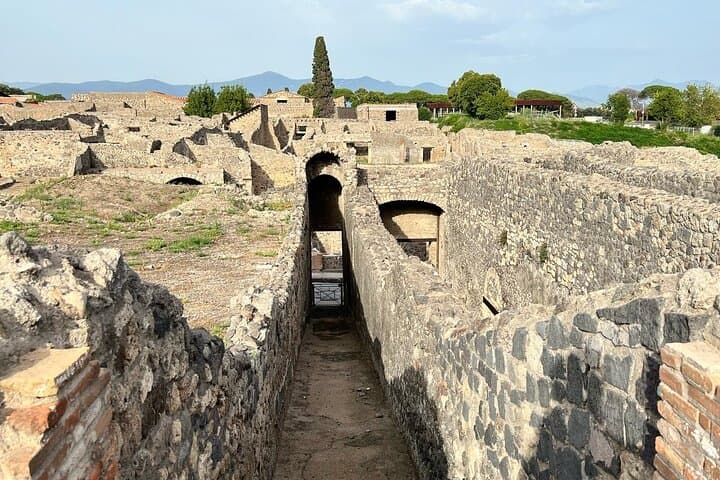

You step out of the air-conditioned minivan and the smell of sun-baked stone replaces the sea air—dry, warm, and oddly intimate. The marble-cut streets of Pompeii spread ahead, a city paused under ash where doorways, shops and frescoed villas open like pages from a book. Your guide leads the way, voice low against the hum of distant Vesuvius, drawing lines between inscriptions, mosaics and the hollow casts of those who once walked here.
You step out of the air-conditioned minivan and the smell of sun-baked stone replaces the sea air—dry, warm, and oddly intimate. The marble-cut streets of Pompeii spread ahead, a city paused under ash where doorways, shops and frescoed villas open like pages from a book. Your guide leads the way, voice low against the hum of distant Vesuvius, drawing lines between inscriptions, mosaics and the hollow casts of those who once walked here.
Pompeii’s story is geological and human: Vesuvius’ eruption in 79 AD buried the town under meters of pumice and ash, preserving everyday Roman life across roughly 66 hectares. The excavation history—first systematic work in the 18th century—revealed homes, baths, bakeries and graffiti that sketch an intimate urban portrait. Culturally, Pompeii reflects Roman domestic life, commerce and religion; frescoes and shops show tastes and trades that survived millennia.
Expect mostly flat walking across paved Roman streets, intermittent gravel and uneven thresholds; total walking within the main route is roughly 2–4 km with negligible elevation gain. Sun exposure is constant on open piazzas; shade appears only inside porticoes and atria. Photography is encouraged but fragile surfaces remain protected.
Practical guide: wear sturdy shoes with good soles, bring 1–2 liters of water in summer and sun protection year-round. The tour includes round-trip transport from Naples and entrance tickets; plan for about two hours on site. Arrive early to avoid heat and crowds, follow the guide’s route to see key highlights efficiently, and respect ropes and conservation signage to help preserve this ancient place.