THE ADVENTURE COLLECTIVE® · Independent discovery and booking for outdoor travel

Take a short train from Naples to explore Pompeii with a professional guide or an audio guide. This 3–4 hour outing combines a 40-minute rail ride with a two-hour guided walk through one of antiquity's most vivid archaeological sites.
Take a short train from Naples to explore Pompeii with a professional guide or an audio guide. This 3–4 hour outing combines a 40-minute rail ride with a two-hour guided walk through one of antiquity's most vivid archaeological sites.
You step off a short regional train as the hulking form of Vesuvius keeps a distant, watchful silence. The platform in Pompeii smells faintly of warm stone and espresso; beyond it, a grid of ancient streets cuts through sunwarmed rubble and shadowed porticoes. The guide falls into step beside you, and suddenly the toppled columns and painted walls read like pages from a Roman daybook.
Verified experiences and guided adventures in the surrounding area.
Operated by InStazione · Pompeii, Campania
You step off a short regional train as the hulking form of Vesuvius keeps a distant, watchful silence. The platform in Pompeii smells faintly of warm stone and espresso; beyond it, a grid of ancient streets cuts through sunwarmed rubble and shadowed porticoes. The guide falls into step beside you, and suddenly the toppled columns and painted walls read like pages from a Roman daybook.
Pompeii was entombed by the 79 AD eruption of Vesuvius, a geological event that buried homes, shops and bodies in ash and pumice. The volcanic material preserved frescoes, mosaics and urban layouts, giving modern visitors an unusually detailed window into Roman daily life. Archaeologists over two centuries have excavated temples, baths and the forum — the public heart of the city — while conservation teams battle erosion and visitor impact.
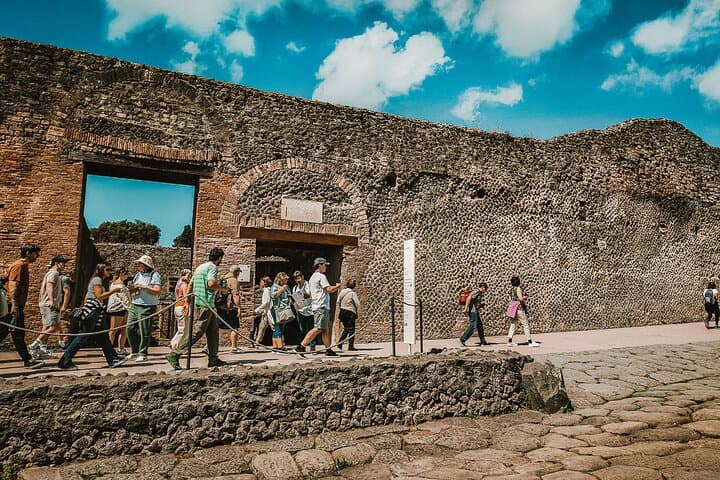
Culturally, Pompeii sits at the crossroads of modern Campania: local sellers, narrow streets and Neapolitan rhythms frame an ancient plan. Expect uneven volcanic stone underfoot and low thresholds into houses; the terrain is mostly level with little elevation gain, but distances through the main excavations cover roughly 2–3 km.
Practical guidance: the package includes a 40-minute return train from Naples and 120 minutes on site, so plan for about 3–4 hours total. Wear sturdy walking shoes, bring a refillable water bottle and sun protection, and download or charge audio guides if you prefer a self-directed pace. Arrive early to avoid midday crowds and allow time to reboard the train—the station is small and schedules are frequent but fixed.
easy.
3–4 hours.
Light fitness required — able to walk 2–3 km on uneven stone for up to two hours at a time.
Yes — the itinerary includes a 40-minute return train from Naples to Pompeii; check departure times on booking confirmation.
Admission to Pompeii is included, but this specific product does not guarantee a skip-the-line fast track; timing can reduce waits but entry is subject to park procedures.
Large parts of the archaeological park have uneven stone streets and thresholds; some areas are partially accessible but full wheelchair access is limited—contact the operator for specific accommodations.
Yes — the tour offers the option of a professional guide or smart audio guides so you can explore independently at your own pace.
Pompeii was catastrophically buried by Mount Vesuvius in 79 AD; the layer of ash created an anaerobic environment that preserved structures, artifacts and organic forms in remarkable detail.
Ongoing conservation addresses erosion, salt crystallization and visitor wear; stick to marked routes, avoid touching frescoes and support local preservation efforts by following park rules.
InStazione operates guided outdoor trips and adventures with an emphasis on safety, stewardship, and memorable experiences.
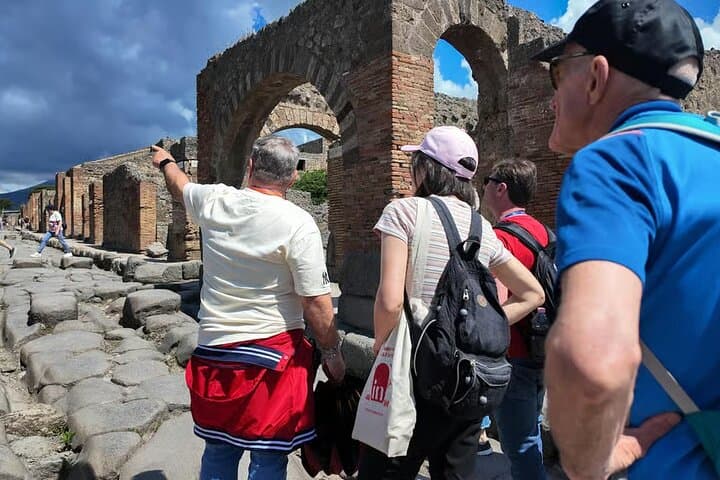
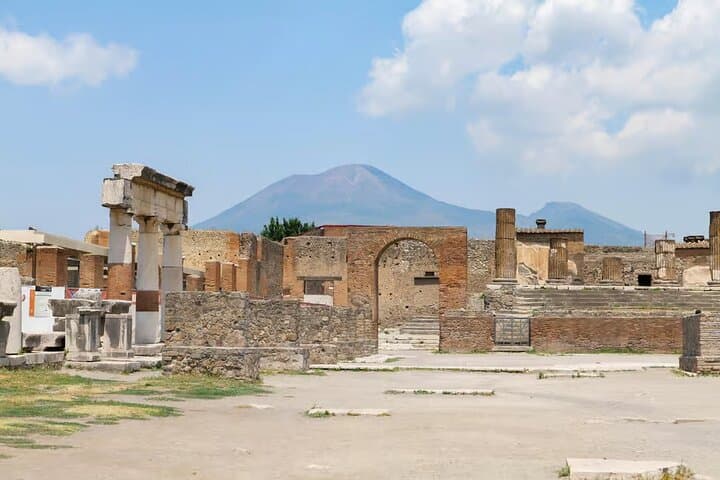
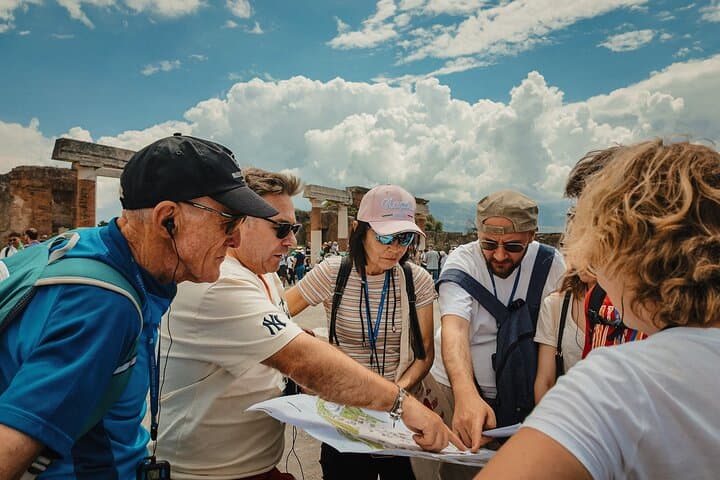
You step off a short regional train as the hulking form of Vesuvius keeps a distant, watchful silence. The platform in Pompeii smells faintly of warm stone and espresso; beyond it, a grid of ancient streets cuts through sunwarmed rubble and shadowed porticoes. The guide falls into step beside you, and suddenly the toppled columns and painted walls read like pages from a Roman daybook.
You step off a short regional train as the hulking form of Vesuvius keeps a distant, watchful silence. The platform in Pompeii smells faintly of warm stone and espresso; beyond it, a grid of ancient streets cuts through sunwarmed rubble and shadowed porticoes. The guide falls into step beside you, and suddenly the toppled columns and painted walls read like pages from a Roman daybook.
Pompeii was entombed by the 79 AD eruption of Vesuvius, a geological event that buried homes, shops and bodies in ash and pumice. The volcanic material preserved frescoes, mosaics and urban layouts, giving modern visitors an unusually detailed window into Roman daily life. Archaeologists over two centuries have excavated temples, baths and the forum — the public heart of the city — while conservation teams battle erosion and visitor impact.
Culturally, Pompeii sits at the crossroads of modern Campania: local sellers, narrow streets and Neapolitan rhythms frame an ancient plan. Expect uneven volcanic stone underfoot and low thresholds into houses; the terrain is mostly level with little elevation gain, but distances through the main excavations cover roughly 2–3 km.
Practical guidance: the package includes a 40-minute return train from Naples and 120 minutes on site, so plan for about 3–4 hours total. Wear sturdy walking shoes, bring a refillable water bottle and sun protection, and download or charge audio guides if you prefer a self-directed pace. Arrive early to avoid midday crowds and allow time to reboard the train—the station is small and schedules are frequent but fixed.