THE ADVENTURE COLLECTIVE® · Independent discovery and booking for outdoor travel

Walk the streets frozen by Vesuvius in 79 AD with a local guide who highlights baths, frescoes and daily Roman life. Practical tips cover timing, tickets and what to bring for a comfortable, educational half-day at the ruins.
Walk the streets frozen by Vesuvius in 79 AD with a local guide who highlights baths, frescoes and daily Roman life. Practical tips cover timing, tickets and what to bring for a comfortable, educational half-day at the ruins.
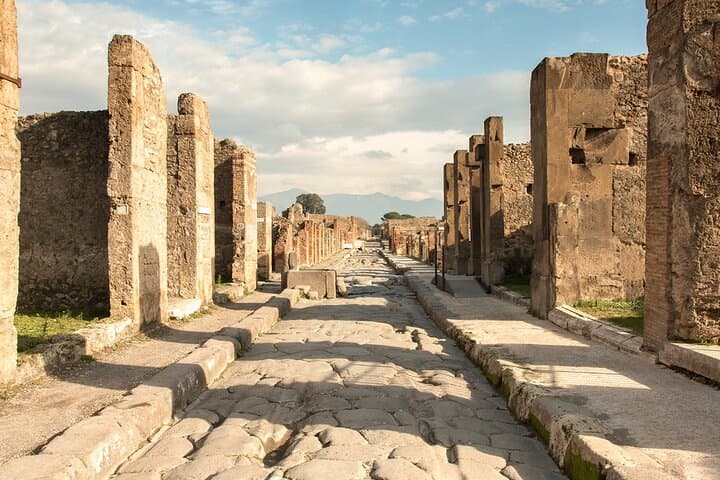
You step through a wide stone gate and the city exhales: sun-bleached streets, the faint bruise of volcanic soil on low walls, and arcades that still hold the rhythm of ancient footfall. The guide points to a mosaic, then to a plaster cast—faces frozen not in myth but in the suddenness of 79 AD—and the scale of what was lost and later found becomes immediate.
Verified experiences and guided adventures in the surrounding area.
Operated by Campania Overland · Pompeii, Campania
You step through a wide stone gate and the city exhales: sun-bleached streets, the faint bruise of volcanic soil on low walls, and arcades that still hold the rhythm of ancient footfall. The guide points to a mosaic, then to a plaster cast—faces frozen not in myth but in the suddenness of 79 AD—and the scale of what was lost and later found becomes immediate.
Pompeii sits on the southern slope of Vesuvius, its ash and pumice preserving domestic life, shops and frescoed rooms beneath layers of pyroclastic flow. Excavations from the 18th century onward revealed urban grids, baths, and brothels that map social routines of the Roman Empire; the town’s rediscovery reshaped modern archaeology and museum practice.
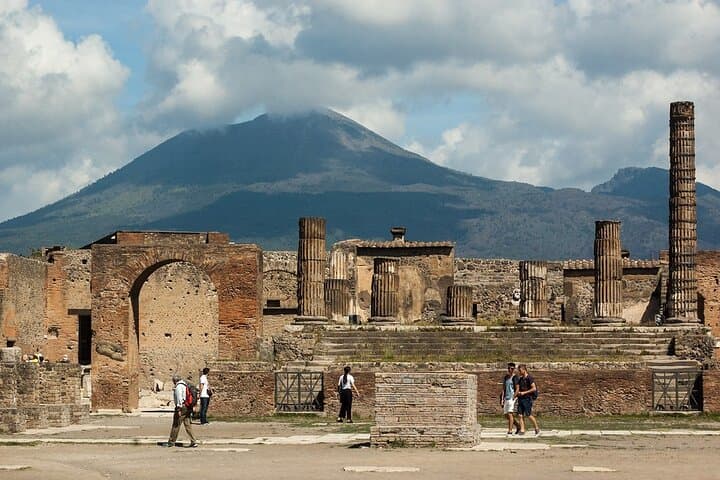
Culture here is tactile: graffiti scratched into walls, bakeries’ ovens, and forum stones that once tracked commerce. Geology is never far—Vesuvius looms, its presence still shaping soil, views and cautions for visitors.
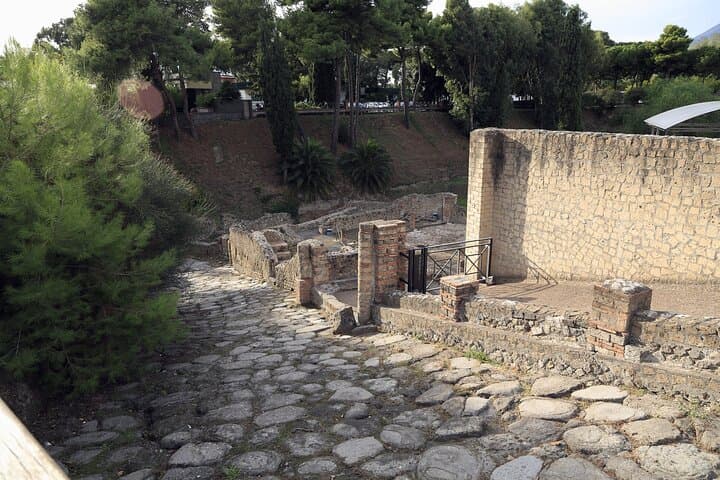
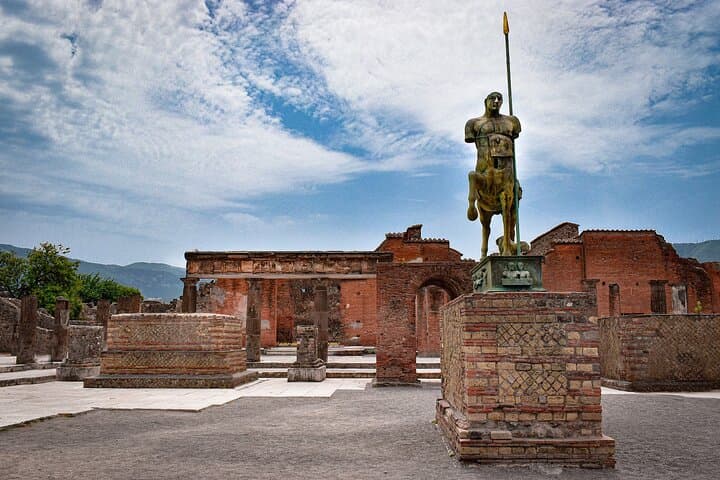
Practically, expect 1.5–2 hours of walking within the ruins on uneven, sometimes cobbled surfaces, with sections exposed to sun. Guides will adjust routes for crowds and restoration work; nominative tickets and ID are required at entry. Wear sturdy shoes, carry water and sun protection, and allow 3–4 hours for round-trip logistics if you join a shuttle from Naples or Salerno. Small-group tours may use audio guides when numbers are low; larger groups move at the pace of the site and the seasons. For a focused visit, prioritize the forum, baths and a preserved house to see frescoes and mosaics up close—then look back toward Vesuvius and imagine the city’s final afternoon.
moderate.
3–4 hours.
Moderate level of fitness—able to stand and walk for 1.5–2 hours on uneven terrain.
The guided visit typically lasts 1.5–2 hours, with the full tour (including transport and transfer) 3–4 hours.
Skip-the-line entrance tickets are included; tickets are nominative so everyone must present a valid ID at the site entrance.
Pompeii has uneven surfaces and limited accessibility in some sectors; people with walking difficulties should check in advance—certain routes may be unsuitable.
Yes, shuttle pick-ups are offered from scheduled meeting points in Naples and Salerno—verify pickup locations and times when booking.
Pompeii was buried in ash after Vesuvius erupted in 79 AD; large-scale excavations began in the 18th century and continue to reshape understanding of Roman urban life.
Visitor numbers and exposure stress fragile frescoes and mosaics—stay on marked paths, avoid touching surfaces, and follow guide instructions to help preserve the site.
Campania Overland operates guided outdoor trips and adventures with an emphasis on safety, stewardship, and memorable experiences.
You step through a wide stone gate and the city exhales: sun-bleached streets, the faint bruise of volcanic soil on low walls, and arcades that still hold the rhythm of ancient footfall. The guide points to a mosaic, then to a plaster cast—faces frozen not in myth but in the suddenness of 79 AD—and the scale of what was lost and later found becomes immediate.
You step through a wide stone gate and the city exhales: sun-bleached streets, the faint bruise of volcanic soil on low walls, and arcades that still hold the rhythm of ancient footfall. The guide points to a mosaic, then to a plaster cast—faces frozen not in myth but in the suddenness of 79 AD—and the scale of what was lost and later found becomes immediate.
Pompeii sits on the southern slope of Vesuvius, its ash and pumice preserving domestic life, shops and frescoed rooms beneath layers of pyroclastic flow. Excavations from the 18th century onward revealed urban grids, baths, and brothels that map social routines of the Roman Empire; the town’s rediscovery reshaped modern archaeology and museum practice.
Culture here is tactile: graffiti scratched into walls, bakeries’ ovens, and forum stones that once tracked commerce. Geology is never far—Vesuvius looms, its presence still shaping soil, views and cautions for visitors.
Practically, expect 1.5–2 hours of walking within the ruins on uneven, sometimes cobbled surfaces, with sections exposed to sun. Guides will adjust routes for crowds and restoration work; nominative tickets and ID are required at entry. Wear sturdy shoes, carry water and sun protection, and allow 3–4 hours for round-trip logistics if you join a shuttle from Naples or Salerno. Small-group tours may use audio guides when numbers are low; larger groups move at the pace of the site and the seasons. For a focused visit, prioritize the forum, baths and a preserved house to see frescoes and mosaics up close—then look back toward Vesuvius and imagine the city’s final afternoon.