THE ADVENTURE COLLECTIVE® · Independent discovery and booking for outdoor travel

Walk Pompeii at your own pace with an audio guide and direct transfer from Naples. Learn the city’s final day, see thermal baths and frescoed domus, and plan for uneven streets and strong sun.
Walk Pompeii at your own pace with an audio guide and direct transfer from Naples. Learn the city’s final day, see thermal baths and frescoed domus, and plan for uneven streets and strong sun.
You step off the air-conditioned transfer and through a gate that opens onto a city frozen in ash and light. Cobbled streets run between stone houses; frescoed walls still hold color beneath a thin crust of centuries. The audio guide slips into your ear and a voice begins to place each courtyard, bath, and forum into human scale.
Verified experiences and guided adventures in the surrounding area.
Operated by Fancy Tour · Pompeii, Campania
You step off the air-conditioned transfer and through a gate that opens onto a city frozen in ash and light. Cobbled streets run between stone houses; frescoed walls still hold color beneath a thin crust of centuries. The audio guide slips into your ear and a voice begins to place each courtyard, bath, and forum into human scale.
Pompeii’s streets record one day in Roman life—79 AD became the moment that preserved ovens, mosaics, theaters and the plaster casts of people caught by Vesuvius’s surge. Geologically, the eruption sealed organic material under pumice and ash, creating the unique archaeological window you’ll walk through. Culturally, Pompeii was a thriving port-town connected to Naples by trade, politics and shared cuisine; the ruins reveal commerce, entertainment and domestic routine with surprising intimacy.
On this transfer-and-audio format you control the pace: linger at the Forum’s public buildings, study the acoustic design of the theatres, or read the graffiti that humanizes the city. Expect uneven stone underfoot, open sun on warm days and limited shade in high season.
Practical guidance: arrive with a charged phone for the audio device, wear sturdy footwear, bring water and sun protection, and allow four to five hours for a thorough visit. Respect cordoned areas and don’t touch frescoes or mosaics—conservation depends on visitor care. A midweek morning start reduces crowds and makes the walk more reflective than hurried.
moderate.
4–5 hours.
Light to moderate fitness for several hours of walking on uneven terrain and occasional stairs.
Yes, audio guides for Pompeii are typically offered in major languages—confirm language options when booking or at pickup.
Allocate at least four hours for the archaeological park to visit main sites at an unhurried pace; five hours allows deeper exploration.
Basic restrooms and small kiosks or vending are available, but options are limited—bring snacks and use facilities before entering busy sections.
Much of the site has uneven terrain and steps; accessibility is limited—contact the park for current wheelchair-accessible routes and assistance.
Pompeii was buried by Vesuvius in 79 AD; the rapid burial under pumice and ash preserved buildings and organic remains, offering a snapshot of Roman urban life.
The park balances tourism with preservation—stay on marked paths, avoid touching frescoes, and minimize single-use plastics to reduce wear and waste.
Fancy Tour operates guided outdoor trips and adventures with an emphasis on safety, stewardship, and memorable experiences.

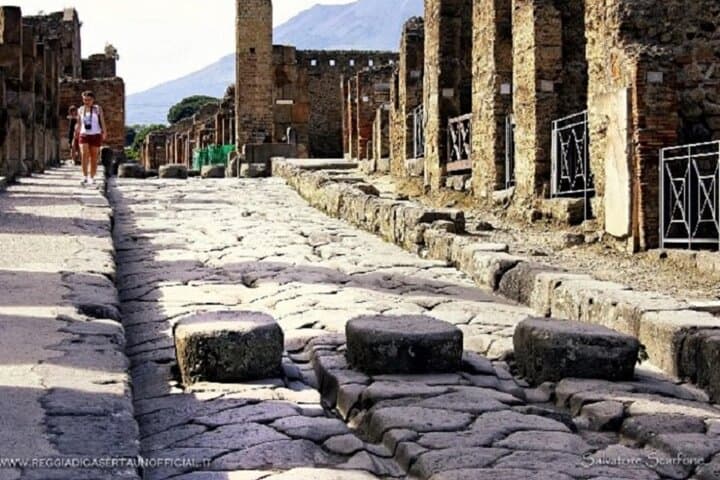
You step off the air-conditioned transfer and through a gate that opens onto a city frozen in ash and light. Cobbled streets run between stone houses; frescoed walls still hold color beneath a thin crust of centuries. The audio guide slips into your ear and a voice begins to place each courtyard, bath, and forum into human scale.
You step off the air-conditioned transfer and through a gate that opens onto a city frozen in ash and light. Cobbled streets run between stone houses; frescoed walls still hold color beneath a thin crust of centuries. The audio guide slips into your ear and a voice begins to place each courtyard, bath, and forum into human scale.
Pompeii’s streets record one day in Roman life—79 AD became the moment that preserved ovens, mosaics, theaters and the plaster casts of people caught by Vesuvius’s surge. Geologically, the eruption sealed organic material under pumice and ash, creating the unique archaeological window you’ll walk through. Culturally, Pompeii was a thriving port-town connected to Naples by trade, politics and shared cuisine; the ruins reveal commerce, entertainment and domestic routine with surprising intimacy.
On this transfer-and-audio format you control the pace: linger at the Forum’s public buildings, study the acoustic design of the theatres, or read the graffiti that humanizes the city. Expect uneven stone underfoot, open sun on warm days and limited shade in high season.
Practical guidance: arrive with a charged phone for the audio device, wear sturdy footwear, bring water and sun protection, and allow four to five hours for a thorough visit. Respect cordoned areas and don’t touch frescoes or mosaics—conservation depends on visitor care. A midweek morning start reduces crowds and makes the walk more reflective than hurried.