THE ADVENTURE COLLECTIVE® · Independent discovery and booking for outdoor travel

Spend a full day exploring Pompeii’s preserved streets with an expert guide, then climb by minibus toward Mount Vesuvius for panoramic crater views. Fast-track admission and hotel pickup streamline what would otherwise be a long logistical day.
Spend a full day exploring Pompeii’s preserved streets with an expert guide, then climb by minibus toward Mount Vesuvius for panoramic crater views. Fast-track admission and hotel pickup streamline what would otherwise be a long logistical day.
The morning air tastes of sea and stone as you arrive at Pompeii: sun catching plastered façades, alleys that still hold the echoes of ancient traffic, and the dark flank of Vesuvius rising like a weathered ruler over the plain. A licensed guide leads a two-hour, close-up walk through the city’s main arteries — the Forum, the House of Menander, the Macellum — pointing out plaster casts where life stopped suddenly and mosaics that survived millennia.
Verified experiences and guided adventures in the surrounding area.
Operated by Mr. Costanzo · Pompeii, Campania
The morning air tastes of sea and stone as you arrive at Pompeii: sun catching plastered façades, alleys that still hold the echoes of ancient traffic, and the dark flank of Vesuvius rising like a weathered ruler over the plain. A licensed guide leads a two-hour, close-up walk through the city’s main arteries — the Forum, the House of Menander, the Macellum — pointing out plaster casts where life stopped suddenly and mosaics that survived millennia.
Pompeii’s streets reveal Roman daily life: markets, baths, temples. Geologically, the day moves eastward from ash-choked archaeology to living volcano; Vesuvius is a stratovolcano whose 79 CE eruption reshaped the Bay of Naples and preserved the city beneath meters of pumice. Local culture remains intensely proud of both sites—eat local pizza and limoncello in nearby towns for context.
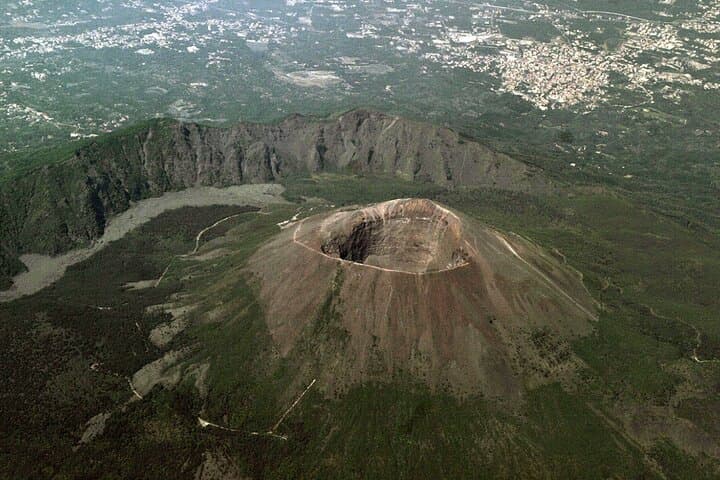
The afternoon drive climbs toward the crater rim at roughly 1,000 meters elevation. Trails near the summit are volcanic scree and packed soil; wind can be sharp and views open onto Capri and the Gulf. The crater itself is a raw, breathing landscape: fumaroles whisper, rock colors change with light.
Practical note: this is an eight-hour experience with hotel pickup, fast-track admissions, and a 2-hour guided Pompeii visit plus time to ascend to Vesuvius crater edge. Wear sturdy walking shoes, bring 1–2 liters of water, sunscreen, and a light wind layer. Expect uneven ground and periods of standing. The operator advises against this for people with serious cardiovascular conditions and offers free cancellation up to 24 hours prior for weather or low bookings.
moderate.
8 hours.
Moderately fit — able to walk 2–4 miles on uneven surfaces and manage short elevation gain on volcanic trails.
Yes — fast-track admission for the Pompeii archaeological park is included as part of the tour.
Yes — the itinerary includes hotel pickup and return within the service area; confirm your pickup point when booking.
Yes — transport takes you up to around 1,000 meters and there is time to walk to the crater edge on a marked trail, but paths are uneven and can be steep in sections.
Children can join, but the operator advises caution; the experience involves walking on uneven ground and is not recommended for those with serious cardiovascular or severe mobility limitations.
Pompeii was buried in the 79 CE eruption of Vesuvius, preserving a snapshot of Roman urban life; Vesuvius remains one of Europe’s most studied active volcanoes.
Visitor management is critical—follow designated paths and avoid touching frescoes or ruins; local programs focus on limiting wear and funding conservation through managed access.
Mr. Costanzo operates guided outdoor trips and adventures with an emphasis on safety, stewardship, and memorable experiences.
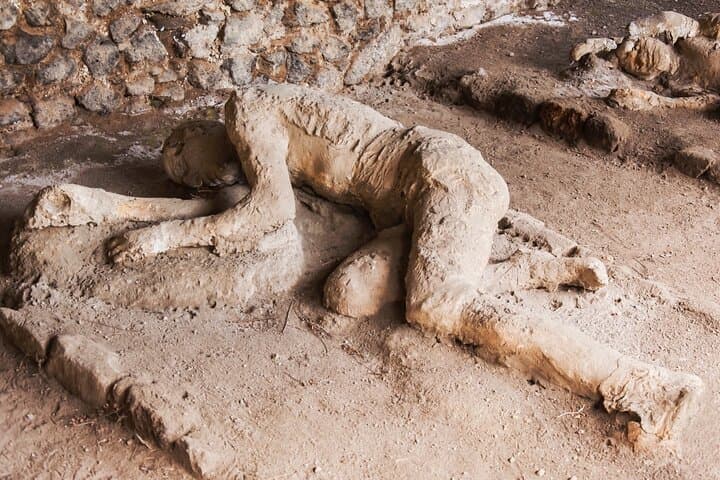
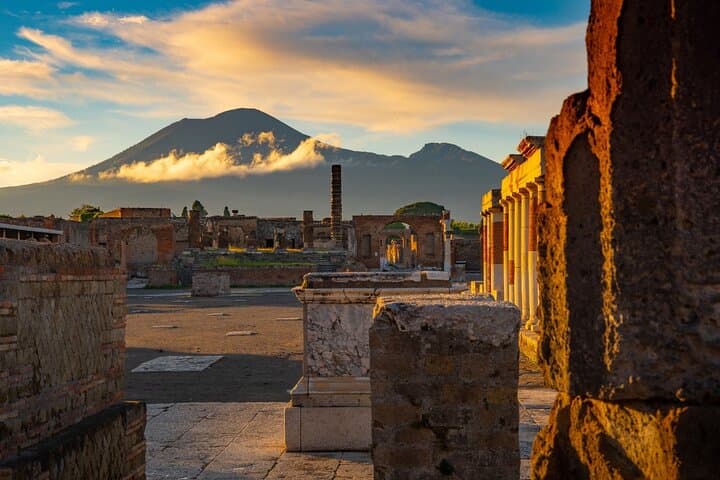
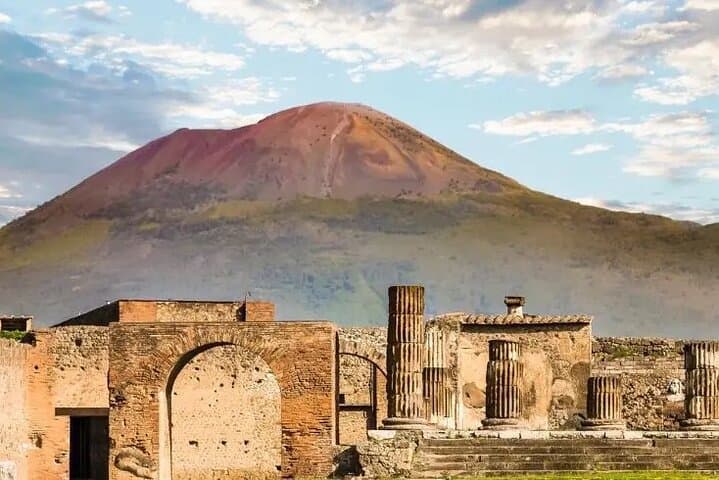
The morning air tastes of sea and stone as you arrive at Pompeii: sun catching plastered façades, alleys that still hold the echoes of ancient traffic, and the dark flank of Vesuvius rising like a weathered ruler over the plain. A licensed guide leads a two-hour, close-up walk through the city’s main arteries — the Forum, the House of Menander, the Macellum — pointing out plaster casts where life stopped suddenly and mosaics that survived millennia.
The morning air tastes of sea and stone as you arrive at Pompeii: sun catching plastered façades, alleys that still hold the echoes of ancient traffic, and the dark flank of Vesuvius rising like a weathered ruler over the plain. A licensed guide leads a two-hour, close-up walk through the city’s main arteries — the Forum, the House of Menander, the Macellum — pointing out plaster casts where life stopped suddenly and mosaics that survived millennia.
Pompeii’s streets reveal Roman daily life: markets, baths, temples. Geologically, the day moves eastward from ash-choked archaeology to living volcano; Vesuvius is a stratovolcano whose 79 CE eruption reshaped the Bay of Naples and preserved the city beneath meters of pumice. Local culture remains intensely proud of both sites—eat local pizza and limoncello in nearby towns for context.
The afternoon drive climbs toward the crater rim at roughly 1,000 meters elevation. Trails near the summit are volcanic scree and packed soil; wind can be sharp and views open onto Capri and the Gulf. The crater itself is a raw, breathing landscape: fumaroles whisper, rock colors change with light.
Practical note: this is an eight-hour experience with hotel pickup, fast-track admissions, and a 2-hour guided Pompeii visit plus time to ascend to Vesuvius crater edge. Wear sturdy walking shoes, bring 1–2 liters of water, sunscreen, and a light wind layer. Expect uneven ground and periods of standing. The operator advises against this for people with serious cardiovascular conditions and offers free cancellation up to 24 hours prior for weather or low bookings.