THE ADVENTURE COLLECTIVE® · Independent discovery and booking for outdoor travel

Walk ancient streets frozen by Vesuvius’s eruption, then climb a short volcanic trail to peer into the crater itself. This full-day guided tour from Naples combines archaeology, geology, and practical local guidance for a compact, unforgettable outing.
Walk ancient streets frozen by Vesuvius’s eruption, then climb a short volcanic trail to peer into the crater itself. This full-day guided tour from Naples combines archaeology, geology, and practical local guidance for a compact, unforgettable outing.
You step from the minivan into a hot, open square where Roman stones still remember footsteps. Sun hits cracked frescoes behind a low wall, and the volcanic cone of Vesuvius sits across the Bay of Naples — a dark shape that seems to watch the city it once buried.
Verified experiences and guided adventures in the surrounding area.
Operated by Sesto Continente Tours · Pompeii, Campania
You step from the minivan into a hot, open square where Roman stones still remember footsteps. Sun hits cracked frescoes behind a low wall, and the volcanic cone of Vesuvius sits across the Bay of Naples — a dark shape that seems to watch the city it once buried.
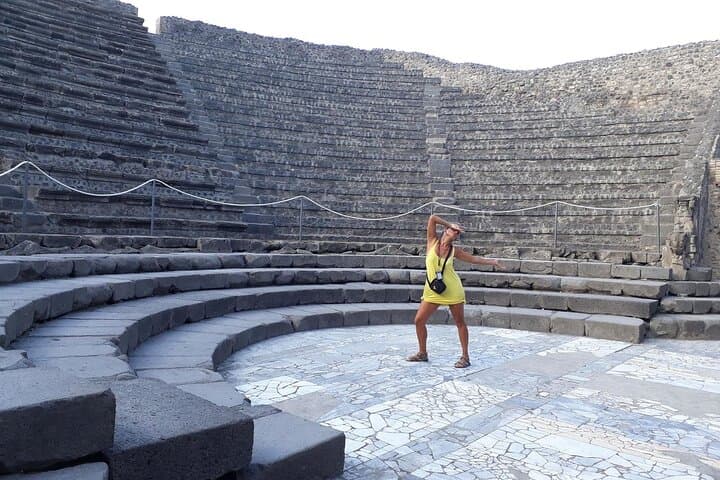
This day trip pairs two complementary stories: Pompeii, the Roman city preserved under ash after the eruption of AD 79, and Vesuvius, the volcano whose geology shaped the coastline. Archaeological lanes such as Via dell’Abbondanza, the Forum and the House of the Faun showcase urban life: markets, baths, and theaters frozen mid-routine by tephra and pumice. Vesuvius, composed of layers of lava, ash and pyroclastic deposits, offers a short but sharp ascent to the crater rim where fumaroles whisper the mountain’s continuing activity.
Local culture blends Neapolitan warmth with serious volcanic science — guides are often multilingual and, on Vesuvius, volcanological mountain guides explain fumaroles and the park’s monitoring efforts. Expect uneven Roman pavements, dust, and exposed stonework in Pompeii; on Vesuvius, a roughly 1 km trail with loose volcanic scree and about 150–200 m of elevation gain from the parking/checkpoint area.
Practical guidance: wear sturdy shoes with good traction, bring 1–2 liters of water, sun protection and windproof layers — conditions at the crater can shift fast. The full loop is an 8‑hour day with guided time in Pompeii and up to two hours at Vesuvius; operators usually include pickup and private transport. Note health restrictions: the crater ascent is not recommended for people with serious heart, spinal, or pregnancy concerns. Plan for crowds in high season and leave space in your schedule for slow walking through historic streets.
moderate.
8 hours.
Moderate fitness: able to walk several kilometers on uneven ground and climb a short steep path with loose rock.
Yes — the tour description lists private transportation and pickup; confirm your pickup point when booking.
From the minivan drop-off it’s typically around 1 km one way with roughly 150–200 m of elevation gain and loose volcanic rock underfoot.
The itinerary notes that the Vesuvius entrance ticket is included; confirm Pompeii access arrangements with the operator at booking.
Pompeii and the Vesuvius trail have uneven surfaces and steps; these sites are not well-suited to strollers or standard wheelchairs and may restrict access.
Pompeii was rapidly buried by the explosive eruption of Vesuvius in AD 79, preserving buildings and everyday objects under ash and pumice for centuries.
Both the archaeological park and Vesuvius National Park manage visitor impacts—stay on marked paths, avoid touching frescoes, and carry out all waste to protect fragile sites.
Sesto Continente Tours operates guided outdoor trips and adventures with an emphasis on safety, stewardship, and memorable experiences.
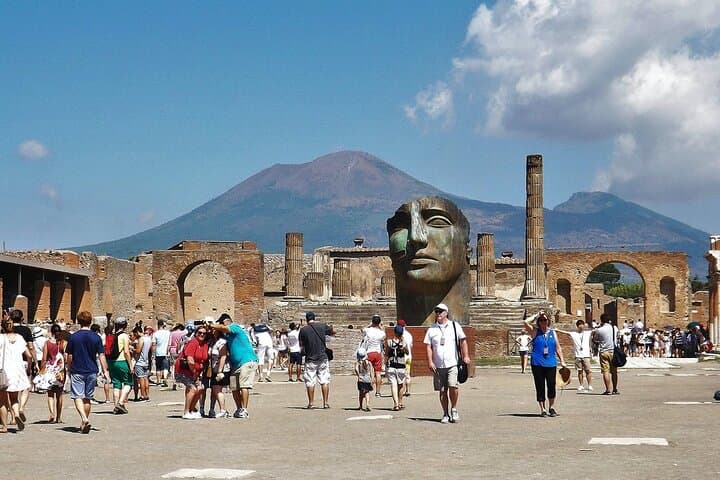
You step from the minivan into a hot, open square where Roman stones still remember footsteps. Sun hits cracked frescoes behind a low wall, and the volcanic cone of Vesuvius sits across the Bay of Naples — a dark shape that seems to watch the city it once buried.
You step from the minivan into a hot, open square where Roman stones still remember footsteps. Sun hits cracked frescoes behind a low wall, and the volcanic cone of Vesuvius sits across the Bay of Naples — a dark shape that seems to watch the city it once buried.
This day trip pairs two complementary stories: Pompeii, the Roman city preserved under ash after the eruption of AD 79, and Vesuvius, the volcano whose geology shaped the coastline. Archaeological lanes such as Via dell’Abbondanza, the Forum and the House of the Faun showcase urban life: markets, baths, and theaters frozen mid-routine by tephra and pumice. Vesuvius, composed of layers of lava, ash and pyroclastic deposits, offers a short but sharp ascent to the crater rim where fumaroles whisper the mountain’s continuing activity.
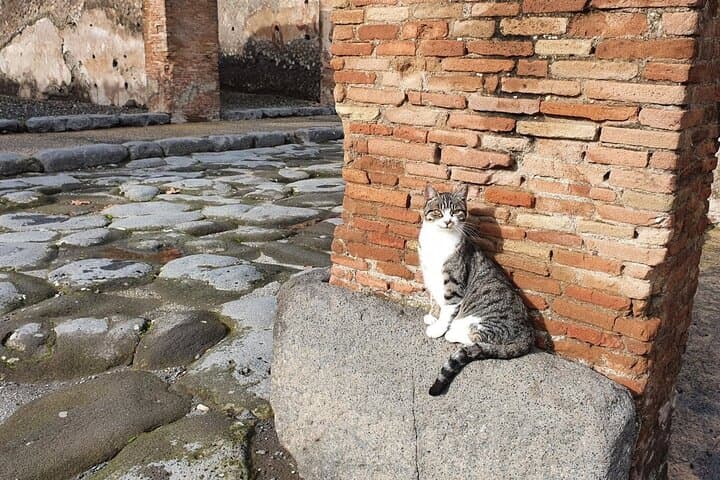
Local culture blends Neapolitan warmth with serious volcanic science — guides are often multilingual and, on Vesuvius, volcanological mountain guides explain fumaroles and the park’s monitoring efforts. Expect uneven Roman pavements, dust, and exposed stonework in Pompeii; on Vesuvius, a roughly 1 km trail with loose volcanic scree and about 150–200 m of elevation gain from the parking/checkpoint area.
Practical guidance: wear sturdy shoes with good traction, bring 1–2 liters of water, sun protection and windproof layers — conditions at the crater can shift fast. The full loop is an 8‑hour day with guided time in Pompeii and up to two hours at Vesuvius; operators usually include pickup and private transport. Note health restrictions: the crater ascent is not recommended for people with serious heart, spinal, or pregnancy concerns. Plan for crowds in high season and leave space in your schedule for slow walking through historic streets.