THE ADVENTURE COLLECTIVE® · Independent discovery and booking for outdoor travel

Follow a shaded riverbed and a steep initial descent through Polyrinia and Sirikari Gorge on this 5 km private day hike from Kissamos. Expect shady rest stops, a Venetian bridge, and local olive-wood crafts along the route.
Follow a shaded riverbed and a steep initial descent through Polyrinia and Sirikari Gorge on this 5 km private day hike from Kissamos. Expect shady rest stops, a Venetian bridge, and local olive-wood crafts along the route.
A dry stone road opens beneath the minibus, and the mountains of western Crete lean over the valley like careful elders. You step out at 500 m elevation and the trail immediately drops—steep for a few hundred metres—into a shaded gorge where plane trees and chestnuts throw cool, dappled light across the path. A small river threads the bottom, daring you to slow and listen.
Verified experiences and guided adventures in the surrounding area.
Operated by MOYSIDIS TRAVEL · Polyrinnia, Crete
A dry stone road opens beneath the minibus, and the mountains of western Crete lean over the valley like careful elders. You step out at 500 m elevation and the trail immediately drops—steep for a few hundred metres—into a shaded gorge where plane trees and chestnuts throw cool, dappled light across the path. A small river threads the bottom, daring you to slow and listen.
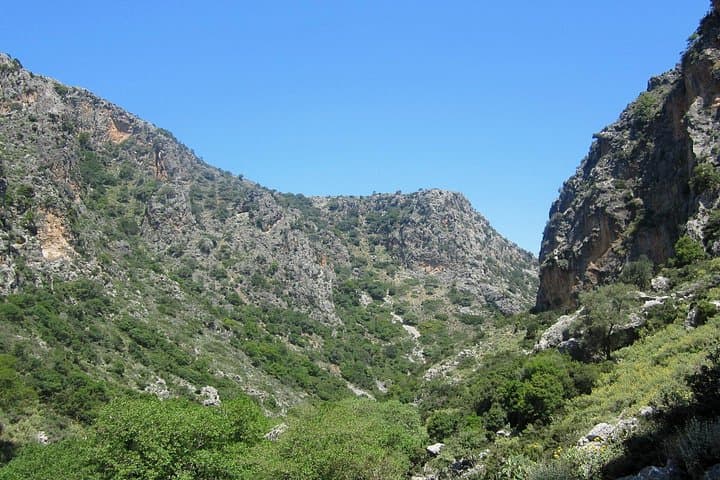
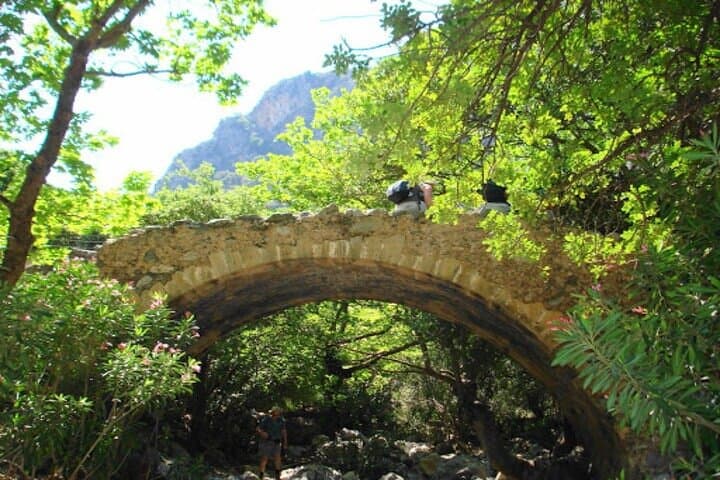
This route follows landscapes shaped by limestone and the White Mountains’ runoff; the gorge was carved by seasonal streams that swell in winter and retreat to ribbon-slow flows in summer. Ancient Polyrinia sits nearby — remnants of walls and a Venetian-era bridge mark a layered history of Minoan, Hellenistic and Venetian presence. The village of Polyrinnia repurposed stone from the archaeological site, and local crafts like olive-wood carving reflect a long relationship between people and trees.
Expect roughly 5 km of walking, about 250 m net descent, easy paths once the initial slope eases, and a shady riverside rest halfway. Griffon vultures are commonly seen riding thermals above the cliffs; keep binoculars handy.
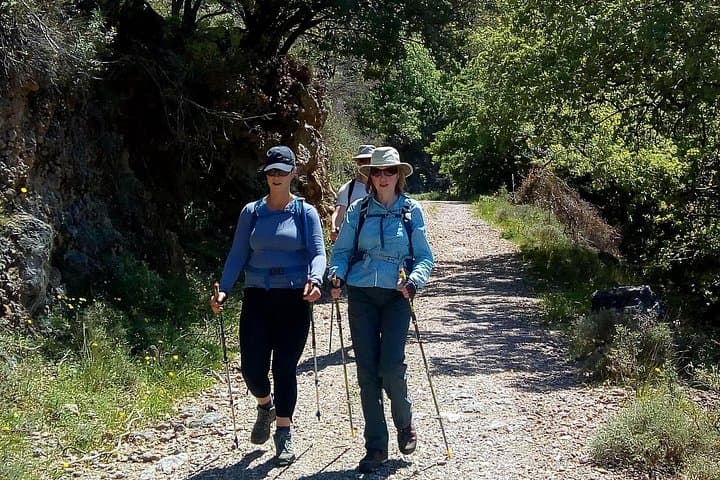
Practical guidance: wear sturdy shoes with grip for the initial steep section, bring at least 1–2 liters of water, and layer for changing shade and sun. The tour provides hiking poles and bottled spring water; plan for a relaxed pace with stops — an olive-wood workshop and a village visit complete the day.
moderate.
5–6 hours.
Suitable for people who can walk 5 km with some elevation change; basic stamina and balance recommended.
The walking portion is about 5 km with an initial steep descent of roughly 250 m; overall it’s moderate and suitable for most people in reasonable health.
Yes — griffon vultures frequently ride the thermals above the gorge and you may spot smaller birds and reptiles along the riverbed.
Yes — the tour includes hotel pick-up/drop-off by minibus and a short transfer between the trail end and Polyrinnia village.
Yes, the tour supplies hiking sticks, although some participants prefer to bring their own for comfort.
The route skirts the area of ancient Polyrinia, a fortified city later reused by villagers; visible masonry and an aqueduct trace occupation from antiquity through Venetian times.
Trails are fragile; stick to packed paths, carry out waste, and avoid disturbing nesting vultures — water is scarce so conserve and refill where available.
MOYSIDIS TRAVEL operates guided outdoor trips and adventures with an emphasis on safety, stewardship, and memorable experiences.
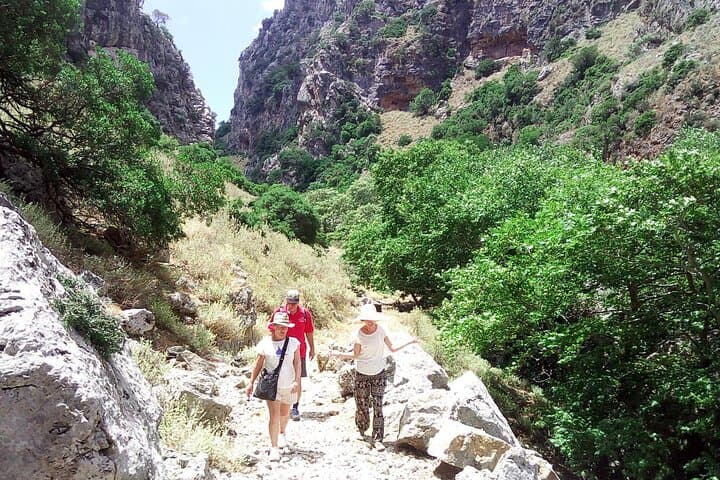
A dry stone road opens beneath the minibus, and the mountains of western Crete lean over the valley like careful elders. You step out at 500 m elevation and the trail immediately drops—steep for a few hundred metres—into a shaded gorge where plane trees and chestnuts throw cool, dappled light across the path. A small river threads the bottom, daring you to slow and listen.
A dry stone road opens beneath the minibus, and the mountains of western Crete lean over the valley like careful elders. You step out at 500 m elevation and the trail immediately drops—steep for a few hundred metres—into a shaded gorge where plane trees and chestnuts throw cool, dappled light across the path. A small river threads the bottom, daring you to slow and listen.
This route follows landscapes shaped by limestone and the White Mountains’ runoff; the gorge was carved by seasonal streams that swell in winter and retreat to ribbon-slow flows in summer. Ancient Polyrinia sits nearby — remnants of walls and a Venetian-era bridge mark a layered history of Minoan, Hellenistic and Venetian presence. The village of Polyrinnia repurposed stone from the archaeological site, and local crafts like olive-wood carving reflect a long relationship between people and trees.
Expect roughly 5 km of walking, about 250 m net descent, easy paths once the initial slope eases, and a shady riverside rest halfway. Griffon vultures are commonly seen riding thermals above the cliffs; keep binoculars handy.
Practical guidance: wear sturdy shoes with grip for the initial steep section, bring at least 1–2 liters of water, and layer for changing shade and sun. The tour provides hiking poles and bottled spring water; plan for a relaxed pace with stops — an olive-wood workshop and a village visit complete the day.