THE ADVENTURE COLLECTIVE® · Independent discovery and booking for outdoor travel

Soak in Rotorua’s famed geothermal waters at the Deluxe Lake Spa—five mineral pools ranging 36–41°C, a cold plunge, heated loungers, and a lakeside relaxation lounge. Learn the springs’ history, what to expect, and practical tips for a restorative visit.
Soak in Rotorua’s famed geothermal waters at the Deluxe Lake Spa—five mineral pools ranging 36–41°C, a cold plunge, heated loungers, and a lakeside relaxation lounge. Learn the springs’ history, what to expect, and practical tips for a restorative visit.
You step off the lakefront path and into steam that leans toward you like a warm hand—Lake Rotorua’s surface gleams and the spa’s mineral pools invite a slow, deliberate sink. The Deluxe Lake Spa strings five rock pools along the shoreline: four alkaline Rachel Springs and one acidic Priest Spring, each between 36°C and 41°C, with a cold plunge and geothermally-heated loungers to punctuate the soak.
Verified experiences and guided adventures in the surrounding area.
Operated by Polynesian Spa · Rotorua, Bay of Plenty
You step off the lakefront path and into steam that leans toward you like a warm hand—Lake Rotorua’s surface gleams and the spa’s mineral pools invite a slow, deliberate sink. The Deluxe Lake Spa strings five rock pools along the shoreline: four alkaline Rachel Springs and one acidic Priest Spring, each between 36°C and 41°C, with a cold plunge and geothermally-heated loungers to punctuate the soak.
The site sits on Rotorua’s historic bathing grounds, where 19th-century visitors flocked to thermal waters believed to ease arthritis and skin complaints. The Rachel and Priest springs carry different mineral signatures—sodium silicate-rich alkaline water for skin nourishment, acidic Priest water linked in local stories to Father Mahoney’s recovery in 1878—both blended into a modern therapeutic program while retaining original bathhouse elements.
Geology here is immediate: shallow geothermal upwellings feed the pools, and the lake’s rim still sighs with fumaroles. Māori villages and colonial-era bathhouses shaped the cultural setting; Ohinemutu’s carving and lakeside history are a short walk away.
Practically, this is a low-effort wellness stop that rewards timing and manners: book a flexible-day admission, bring or rent swimwear, and alternate hot and cold cycles for effective hydrotherapy. Expect towels and lockers, an indoor relaxation lounge, and a healthy café on site. The spa is wheelchair-accessible and cashless; consult a doctor if pregnant or managing heart conditions. Plan 1–3 hours for a measured visit—enough to let the heat do its work and to leave the water carrying a quiet, restored stride.
easy.
1–4 hours.
Suitable for most fitness levels; minimal exertion required beyond walking short distances and entering pools.
Admission is valid for the day of booking and not locked to a specific time, but booking ensures entry during busy periods.
Children are welcome but under-8s must be actively supervised in the water by a caregiver over 16; keep noise low to preserve the atmosphere.
Yes—policies and surfaces are wheelchair-accessible, with accessible changing facilities and pool access considerations discussed on arrival.
Pregnant visitors should consult their medical practitioner before bathing; high temperatures and rapid temperature changes can pose risks.
The spa occupies the site of 19th-century bathhouses; Priest and Rachel springs were famous for therapeutic claims and are linked to early European and Māori bathing traditions.
Respect marked paths and thermal features—geothermal areas are fragile; the facility operates cashless and promotes responsible water use and visitor behavior to protect springs.
Polynesian Spa operates guided outdoor trips and adventures with an emphasis on safety, stewardship, and memorable experiences.
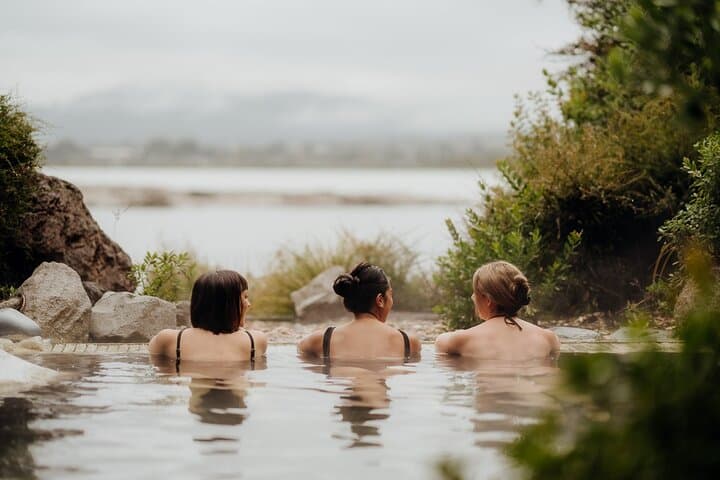
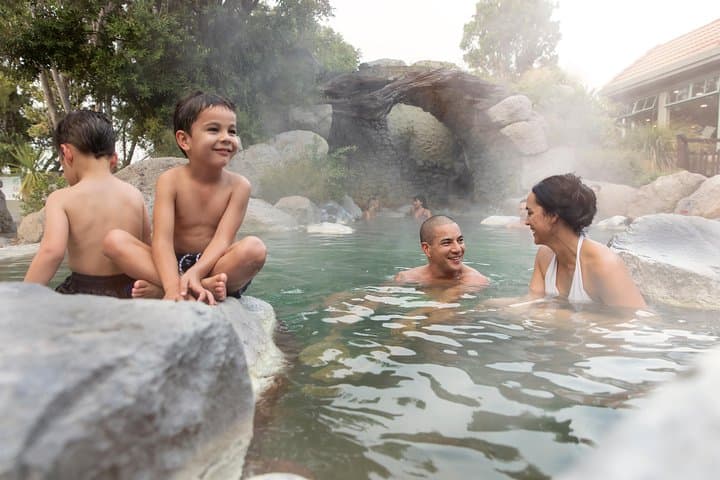
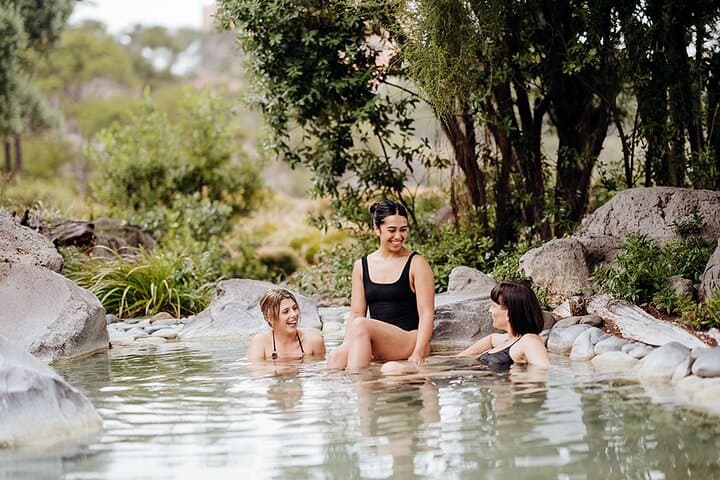
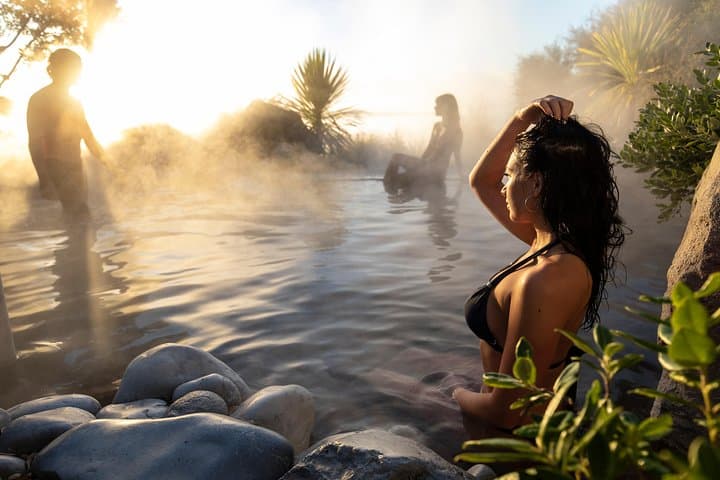
You step off the lakefront path and into steam that leans toward you like a warm hand—Lake Rotorua’s surface gleams and the spa’s mineral pools invite a slow, deliberate sink. The Deluxe Lake Spa strings five rock pools along the shoreline: four alkaline Rachel Springs and one acidic Priest Spring, each between 36°C and 41°C, with a cold plunge and geothermally-heated loungers to punctuate the soak.
You step off the lakefront path and into steam that leans toward you like a warm hand—Lake Rotorua’s surface gleams and the spa’s mineral pools invite a slow, deliberate sink. The Deluxe Lake Spa strings five rock pools along the shoreline: four alkaline Rachel Springs and one acidic Priest Spring, each between 36°C and 41°C, with a cold plunge and geothermally-heated loungers to punctuate the soak.
The site sits on Rotorua’s historic bathing grounds, where 19th-century visitors flocked to thermal waters believed to ease arthritis and skin complaints. The Rachel and Priest springs carry different mineral signatures—sodium silicate-rich alkaline water for skin nourishment, acidic Priest water linked in local stories to Father Mahoney’s recovery in 1878—both blended into a modern therapeutic program while retaining original bathhouse elements.
Geology here is immediate: shallow geothermal upwellings feed the pools, and the lake’s rim still sighs with fumaroles. Māori villages and colonial-era bathhouses shaped the cultural setting; Ohinemutu’s carving and lakeside history are a short walk away.
Practically, this is a low-effort wellness stop that rewards timing and manners: book a flexible-day admission, bring or rent swimwear, and alternate hot and cold cycles for effective hydrotherapy. Expect towels and lockers, an indoor relaxation lounge, and a healthy café on site. The spa is wheelchair-accessible and cashless; consult a doctor if pregnant or managing heart conditions. Plan 1–3 hours for a measured visit—enough to let the heat do its work and to leave the water carrying a quiet, restored stride.