THE ADVENTURE COLLECTIVE® · Independent discovery and booking for outdoor travel

Spend a full day on Oahu’s North Shore at the Polynesian Cultural Center: hands-on village experiences, a generous island buffet, and the evening HĀ: Breath of Life performance. This guide covers what to expect and how to plan your visit.
Spend a full day on Oahu’s North Shore at the Polynesian Cultural Center: hands-on village experiences, a generous island buffet, and the evening HĀ: Breath of Life performance. This guide covers what to expect and how to plan your visit.
You arrive on the North Shore with trade winds skimming the palms and the Pacific flashing beyond highway guardrails. The Polynesian Cultural Center opens like a village spread across a coastal plain—thatched houses, the smell of coconut and roasted taro, and the low drumbeat that follows visitors from one island village to the next.
Verified experiences and guided adventures in the surrounding area.
You arrive on the North Shore with trade winds skimming the palms and the Pacific flashing beyond highway guardrails. The Polynesian Cultural Center opens like a village spread across a coastal plain—thatched houses, the smell of coconut and roasted taro, and the low drumbeat that follows visitors from one island village to the next.
Since 1963 the center has staged living exhibitions of Polynesian life drawn from Hawaii, Samoa, Tonga, Fiji, Tahiti and more. The site sits on the coral-reef plain of Laie, where volcanic islands have weathered into fertile terraces and shorelines that shaped navigation and cultivars for centuries. Student-cast cultural interpreters combine craft demonstrations, canoe displays, and oral histories with performances that highlight regional differences in dance, tattooing, carving and song.
Practical planning keeps the day flowing: the Gateway Buffet provides a central meal — island-inspired hot dishes, salad bar, and desserts — so groups can refuel before afternoon activities. Expect 5–9 hours on site, moderate walking on packed paths and grass, and several theatrical shows culminating in HĀ: Breath of Life, an open-air production with fire and drumming that can run after sunset.
Bring sun protection and a light rain layer; the North Shore’s weather shifts quickly. Arrive early to tour each village at a relaxed pace, book seats for HĀ in advance, and leave time to visit the small on-site museum and the temple grounds nearby. The PCC is as much a cultural classroom as a spectacle — prepare to listen, ask questions, and let the islands’ voices lead the day.
easy.
5–9 hours.
Light walking ability is sufficient; visitors should be comfortable standing for presentations and navigating short stretches of uneven ground.
Plan on a full-day visit: the experience typically ranges from about 5 to 9 hours depending on arrival time and whether you stay for the evening HĀ show.
Yes—HĀ is staged in an open-air amphitheater with family-friendly content, dynamic music, and fire-based segments; note that seats may be exposed to wind and occasional spray.
The buffet usually includes salad bar items and several island-inspired vegetarian options; bring specific allergy questions to front-of-house staff on arrival for current accommodations.
Yes—village walk-throughs and scheduled demonstrations are open to visitors; hands-on activities may have limited capacity or extra fees.
The Polynesian Cultural Center was founded in 1963 as an educational nonprofit to preserve Pacific island traditions and to employ local students from Brigham Young University–Hawaii.
The center promotes cultural sustainability and supports student education; visitors are asked to respect artifacts, avoid single-use plastics where possible, and stay on designated paths to protect lawn and shoreline habitats.
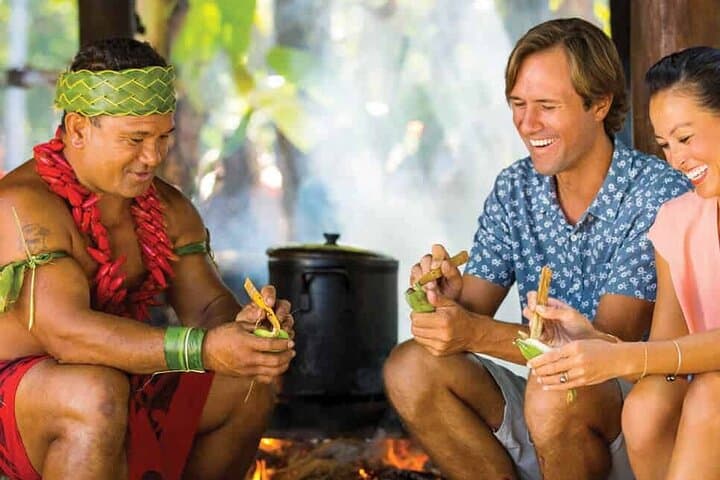
You arrive on the North Shore with trade winds skimming the palms and the Pacific flashing beyond highway guardrails. The Polynesian Cultural Center opens like a village spread across a coastal plain—thatched houses, the smell of coconut and roasted taro, and the low drumbeat that follows visitors from one island village to the next.
You arrive on the North Shore with trade winds skimming the palms and the Pacific flashing beyond highway guardrails. The Polynesian Cultural Center opens like a village spread across a coastal plain—thatched houses, the smell of coconut and roasted taro, and the low drumbeat that follows visitors from one island village to the next.
Since 1963 the center has staged living exhibitions of Polynesian life drawn from Hawaii, Samoa, Tonga, Fiji, Tahiti and more. The site sits on the coral-reef plain of Laie, where volcanic islands have weathered into fertile terraces and shorelines that shaped navigation and cultivars for centuries. Student-cast cultural interpreters combine craft demonstrations, canoe displays, and oral histories with performances that highlight regional differences in dance, tattooing, carving and song.
Practical planning keeps the day flowing: the Gateway Buffet provides a central meal — island-inspired hot dishes, salad bar, and desserts — so groups can refuel before afternoon activities. Expect 5–9 hours on site, moderate walking on packed paths and grass, and several theatrical shows culminating in HĀ: Breath of Life, an open-air production with fire and drumming that can run after sunset.
Bring sun protection and a light rain layer; the North Shore’s weather shifts quickly. Arrive early to tour each village at a relaxed pace, book seats for HĀ in advance, and leave time to visit the small on-site museum and the temple grounds nearby. The PCC is as much a cultural classroom as a spectacle — prepare to listen, ask questions, and let the islands’ voices lead the day.