
Polonnaruwa Day Tour from Kandy — Ancient City, Hatadage & Parakrama Samudra
Spend a day tracing Sri Lanka’s medieval capital on a private tour from Kandy. See the royal palace precinct, Hatadage shrine and Parakrama Samudra with practical tips for timing, transport and what to bring.
An Adventure In Kandy.
Spend a day tracing Sri Lanka’s medieval capital on a private tour from Kandy. See the royal palace precinct, Hatadage shrine and Parakrama Samudra with practical tips for timing, transport and what to bring.
Read the full experience
You arrive before the heat of the day, the car sliding off Kandy’s hills onto long, flat plains where paddy fields stretch toward Polonnaruwa. The road opens and the ruined city appears low and broad—stone dagabas, Buddha images sun-bleached, and the wide mirror of Parakrama Samudra daring you to pause.
You arrive before the heat of the day, the car sliding off Kandy’s hills onto long, flat plains where paddy fields stretch toward Polonnaruwa. The road opens and the ruined city appears low and broad—stone dagabas, Buddha images sun-bleached, and the wide mirror of Parakrama Samudra daring you to pause.
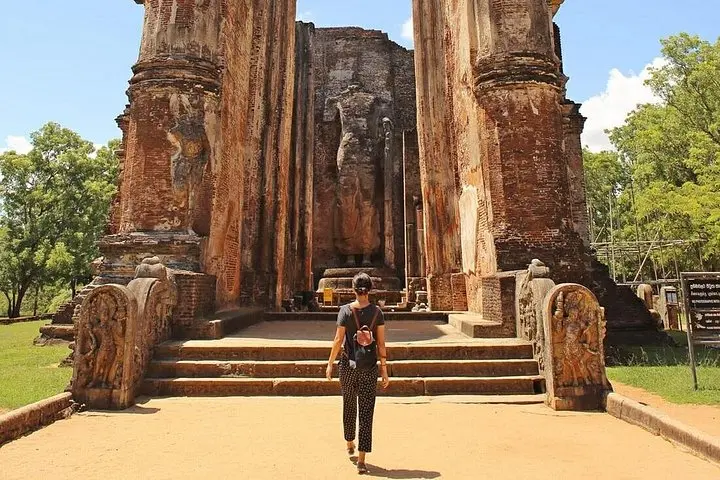
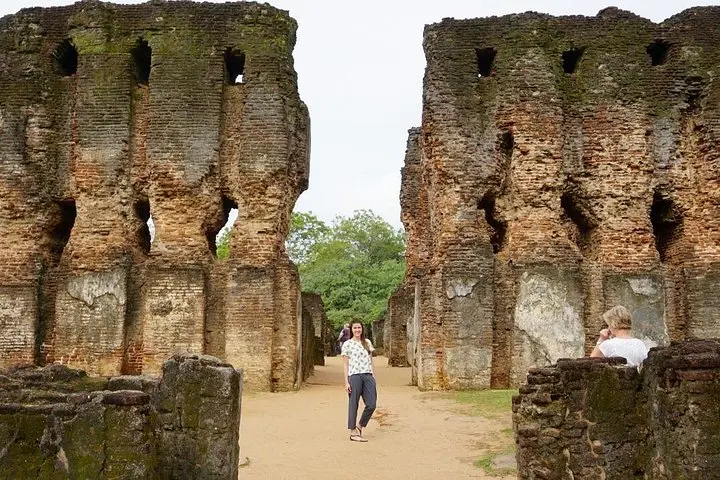
Polonnaruwa was Sri Lanka’s royal seat in the 11th–13th centuries under kings such as Parakramabahu and Nissanka Malla. The stonework shows a shift from timber palaces to durable masonry: statues hewn from granite, brick dagabas, bathing tanks and irrigation features that reflect the region’s ancient hydraulic engineering. Culturally the site remains active—small shrines and a slow rhythm of local worship thread through the archaeological park.
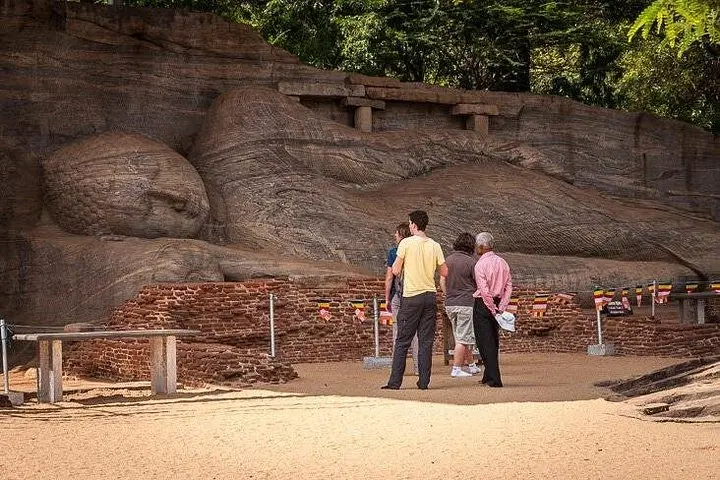
Expect flat terrain and several kilometers of walking between major monuments; most visitors spend roughly 3–4 hours exploring the royal complex and sites like Gal Viharaya and Rankoth Vehera, with a focused hour at the Hatadage shrine. Elevation is low with minimal gain, but surfaces range from packed earth to uneven stone and steps.
Practical guidance: bring sun protection, reliable water, and comfortable shoes; consider renting a bike or hiring a local guide to cover more ground. If you’re coming from Kandy, plan for roughly 3–3.5 hours of driving each way (about 140–160 km) depending on traffic. Entrance fees are paid at the site; check seasonal weather—dry months make access easiest. Respect ropes and signage: many ruins are fragile and still under conservation.
Frequently asked questions
The itinerary indicates entrance fees are not included; plan to pay for site admission at the archaeological park on arrival.
Expect roughly 3–3.5 hours one way by road (about 140–160 km) depending on traffic and stops.
Vehicles and transport options are wheelchair accessible, but many ruins have uneven surfaces and limited wheelchair access within the park—access may be restricted at specific monuments.
Yes—bicycle rentals are commonly available near the park entrance and are a popular way to cover more ground quickly.
About This Experience
MIRISSA CABS SRI LANKA operates guided outdoor trips and adventures with an emphasis on safety, stewardship, and memorable experiences.
Adventure tips
Recommended gear
- Sun hat and sunscreen: Shallow tree cover and reflective stone increase sun exposure through the day.
- Reusable water bottle (1.5L+): Hydration is critical—bottled water may be provided but having your own is practical.
- Sturdy walking shoes: Closed shoes protect against sharp stone and provide better traction on steps.
- Light rain shell: Intermittent tropical showers can appear outside the dry season—pack a compressible rain layer.
Photos of the experience
Related adventures & guides
Read the full experience
You arrive before the heat of the day, the car sliding off Kandy’s hills onto long, flat plains where paddy fields stretch toward Polonnaruwa. The road opens and the ruined city appears low and broad—stone dagabas, Buddha images sun-bleached, and the wide mirror of Parakrama Samudra daring you to pause.
You arrive before the heat of the day, the car sliding off Kandy’s hills onto long, flat plains where paddy fields stretch toward Polonnaruwa. The road opens and the ruined city appears low and broad—stone dagabas, Buddha images sun-bleached, and the wide mirror of Parakrama Samudra daring you to pause.
Polonnaruwa was Sri Lanka’s royal seat in the 11th–13th centuries under kings such as Parakramabahu and Nissanka Malla. The stonework shows a shift from timber palaces to durable masonry: statues hewn from granite, brick dagabas, bathing tanks and irrigation features that reflect the region’s ancient hydraulic engineering. Culturally the site remains active—small shrines and a slow rhythm of local worship thread through the archaeological park.
Expect flat terrain and several kilometers of walking between major monuments; most visitors spend roughly 3–4 hours exploring the royal complex and sites like Gal Viharaya and Rankoth Vehera, with a focused hour at the Hatadage shrine. Elevation is low with minimal gain, but surfaces range from packed earth to uneven stone and steps.
Practical guidance: bring sun protection, reliable water, and comfortable shoes; consider renting a bike or hiring a local guide to cover more ground. If you’re coming from Kandy, plan for roughly 3–3.5 hours of driving each way (about 140–160 km) depending on traffic. Entrance fees are paid at the site; check seasonal weather—dry months make access easiest. Respect ropes and signage: many ruins are fragile and still under conservation.
Make a day of it nearby.
Verified experiences and guided adventures in the surrounding area.