THE ADVENTURE COLLECTIVE® · Independent discovery and booking for outdoor travel

Explore Polonnaruwa’s rock‑hewn Buddhas, lotus pond and royal reservoirs on a full‑day, all‑inclusive tour from Kandy. This guided route mixes high‑status monuments with working craft centers—ideal for history lovers who want context as well as sites.
Explore Polonnaruwa’s rock‑hewn Buddhas, lotus pond and royal reservoirs on a full‑day, all‑inclusive tour from Kandy. This guided route mixes high‑status monuments with working craft centers—ideal for history lovers who want context as well as sites.
You step from an air‑conditioned vehicle into a broad sunlit plain where stone Buddhas recline and a lotus‑shaped pond holds still water like a mirror.
Verified experiences and guided adventures in the surrounding area.
Operated by Classical Lanka Tours · Polonnaruwa, North Central Province
You step from an air‑conditioned vehicle into a broad sunlit plain where stone Buddhas recline and a lotus‑shaped pond holds still water like a mirror.
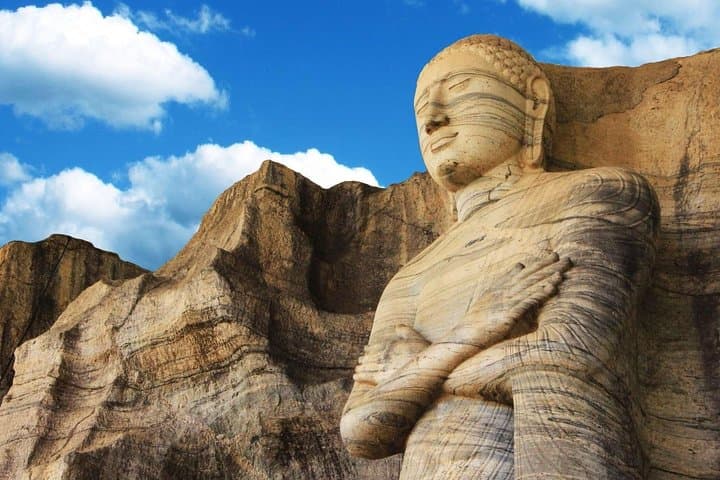
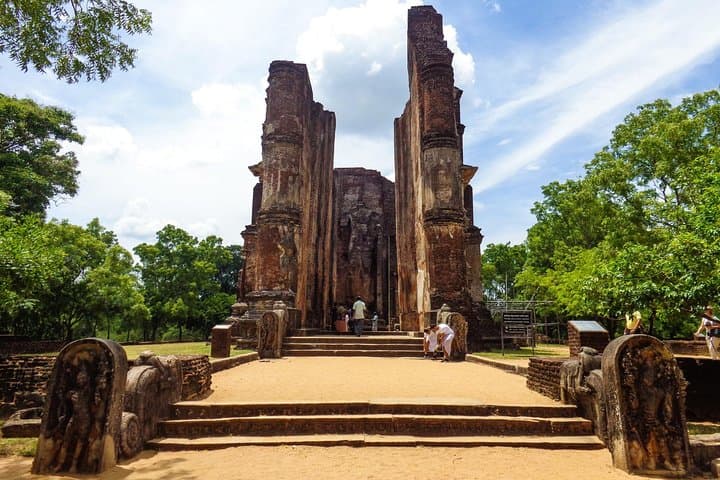
Polonnaruwa rose as Sri Lanka’s second great capital in the 11th–13th centuries under kings such as Parakramabahu I. The site’s granite sculpted figures at Gal Vihara, the multi‑tiered Vatadage, and the vast Parakrama Samudraya reservoir reveal a civilization fluent in hydraulic engineering and stone carving. The compact complex sits on largely flat terrain—ancient causeways, carved stairs and curving pond walls tell a story of practical artistry.
Walk past frescoed image houses, monolithic Buddha images and the Rankoth Vehera stupa and you’ll pass artisans in wood‑carving workshops and gem dealers displaying sapphires—the living crafts that link past to present. Monkeys and peafowl move through the ruins with the same easy authority as the stones.
Practical guidance: expect 3–5 km of walking across packed earth and flagstone with minimal elevation gain; plan on 8–10 hours total for a full day from Kandy including transport. Mornings are cooler and less crowded; midday brings heat and harsh light. Wear comfortable walking shoes with good grip, sun protection and insect repellent. Bring Sri Lankan rupees for modest purchases at craft stops, and observe modest dress when entering image houses. The tour includes admissions and bottled water, but local weather can be hot and humid—hydrate often and set a steady pace to enjoy the art and engineering without rushing.
moderate.
8–10 hours.
Light to moderate fitness; able to walk several kilometers on uneven, flat terrain throughout the day.
Yes — this all‑inclusive tour covers entry to Polonnaruwa monuments and the listed attractions in the itinerary.
The roundtrip including site time makes for an 8–10 hour day; driving each way is roughly 2–3 hours depending on traffic and stops.
Some areas are wheelchair accessible and transport options are listed as accessible, but many ruins have stone steps and uneven ground—access may be limited to certain monuments.
Bottled water is included; meals are not always included so check the booking details or confirm if a lunch stop is provided.
Polonnaruwa flourished under King Parakramabahu I in the 12th century; its stone images and reservoirs reflect centralized royal patronage and advanced irrigation.
Many structures are fragile—stick to marked paths, avoid touching frescoes and support local guides who help protect the site.
Classical Lanka Tours operates guided outdoor trips and adventures with an emphasis on safety, stewardship, and memorable experiences.


You step from an air‑conditioned vehicle into a broad sunlit plain where stone Buddhas recline and a lotus‑shaped pond holds still water like a mirror.
You step from an air‑conditioned vehicle into a broad sunlit plain where stone Buddhas recline and a lotus‑shaped pond holds still water like a mirror.
Polonnaruwa rose as Sri Lanka’s second great capital in the 11th–13th centuries under kings such as Parakramabahu I. The site’s granite sculpted figures at Gal Vihara, the multi‑tiered Vatadage, and the vast Parakrama Samudraya reservoir reveal a civilization fluent in hydraulic engineering and stone carving. The compact complex sits on largely flat terrain—ancient causeways, carved stairs and curving pond walls tell a story of practical artistry.
Walk past frescoed image houses, monolithic Buddha images and the Rankoth Vehera stupa and you’ll pass artisans in wood‑carving workshops and gem dealers displaying sapphires—the living crafts that link past to present. Monkeys and peafowl move through the ruins with the same easy authority as the stones.
Practical guidance: expect 3–5 km of walking across packed earth and flagstone with minimal elevation gain; plan on 8–10 hours total for a full day from Kandy including transport. Mornings are cooler and less crowded; midday brings heat and harsh light. Wear comfortable walking shoes with good grip, sun protection and insect repellent. Bring Sri Lankan rupees for modest purchases at craft stops, and observe modest dress when entering image houses. The tour includes admissions and bottled water, but local weather can be hot and humid—hydrate often and set a steady pace to enjoy the art and engineering without rushing.