THE ADVENTURE COLLECTIVE® · Independent discovery and booking for outdoor travel

A family-friendly guided walk through Polignano a Mare that pairs short, scenic stops—historic arches, a clock tower, a sea-sculpted bridge—with local tips and a beach break at Lama Monachile. Ideal for families wanting cultural context without long museum visits.
A family-friendly guided walk through Polignano a Mare that pairs short, scenic stops—historic arches, a clock tower, a sea-sculpted bridge—with local tips and a beach break at Lama Monachile. Ideal for families wanting cultural context without long museum visits.
The walk opens on the Arco Marchesale, where limestone cliffs drop to the Adriatic and the town's whitewashed facades lean toward the sea.
Verified experiences and guided adventures in the surrounding area.
Operated by Opatrip.com Italy · Polignano a Mare, Puglia
The walk opens on the Arco Marchesale, where limestone cliffs drop to the Adriatic and the town's whitewashed facades lean toward the sea.
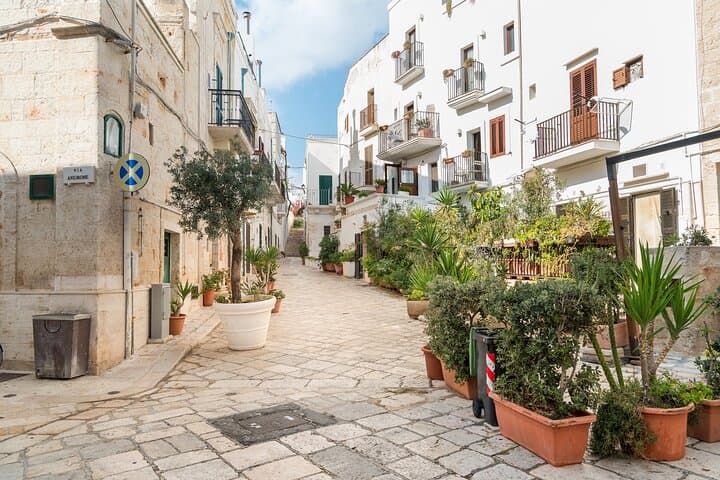
Strolling through narrow alleys, the air carries salt and the faint echo of Domenico Modugno's songs as waves push at the shoreline below. The route moves from the clock tower at Palazzo dell’Orologio to the quiet nave of the Church of Saint Mary of the Assumption, each stop offering a short, family-paced pause rather than a long museum visit.
Polignano a Mare sits on Pliocene and Pleistocene limestone carved by the Adriatic; caves and inlets explain why fishermen and traders settled here centuries ago. The Ponte Borbonico frames a classic coastal vista—scalloped rock, small beaches, and a living fishing quarter that speaks to the town’s maritime past and regional Apulian culture.
The tour blends practical local insights—best gelato spots, where to sit for sunset, and how to navigate cobbled streets—with moments of natural theater: gulls wheeling above the cliffs and the sea daring you to look over the rail. Families will find short walking segments, child-friendly pacing and repeated opportunities to rest and swim at Lama Monachile.
Plan for sun on exposed promenades and uneven paving underfoot. Bring a refillable bottle, sun protection, and closed-toe shoes for curious kids. Aim for morning or late afternoon to avoid the high heat and to see the town shift from market hum to seaside calm—Polignano a Mare is compact, sensory, and best understood at walking pace.
easy.
2 hours.
Suitable for families and visitors of average fitness; mostly short, flat urban walking with some stairs and cobbles.
Yes—it's designed for families with short walking segments, regular stops, and a beach break; however, parents should supervise cliffside viewpoints closely.
There are some stairs and uneven cobbles typical of historic coastal towns, but no sustained steep climbs; strollers may be challenging in spots.
Guides typically speak Italian and often English; confirm at booking if you need another language or private-guide options.
Yes—Lama Monachile is a scheduled stop for relaxation and swimming, weather permitting; bring swimwear and quick-dry towels.
Polignano a Mare developed as a coastal fishing and trading settlement on limestone cliffs with evidence of Greek, Roman and later medieval influence shaping its narrow alleys and harbor.
The old town is sensitive to visitor pressure—stick to marked paths, avoid climbing fragile cliffs and support local shops to keep tourism benefits in the community.
Opatrip.com Italy operates guided outdoor trips and adventures with an emphasis on safety, stewardship, and memorable experiences.

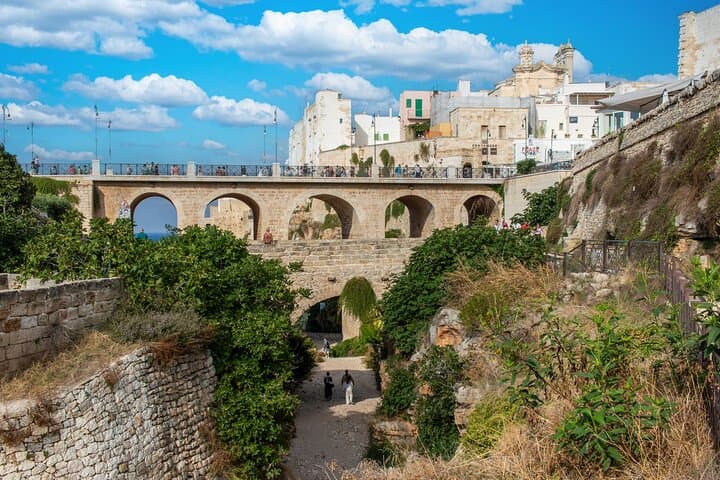

The walk opens on the Arco Marchesale, where limestone cliffs drop to the Adriatic and the town's whitewashed facades lean toward the sea.
The walk opens on the Arco Marchesale, where limestone cliffs drop to the Adriatic and the town's whitewashed facades lean toward the sea.
Strolling through narrow alleys, the air carries salt and the faint echo of Domenico Modugno's songs as waves push at the shoreline below. The route moves from the clock tower at Palazzo dell’Orologio to the quiet nave of the Church of Saint Mary of the Assumption, each stop offering a short, family-paced pause rather than a long museum visit.
Polignano a Mare sits on Pliocene and Pleistocene limestone carved by the Adriatic; caves and inlets explain why fishermen and traders settled here centuries ago. The Ponte Borbonico frames a classic coastal vista—scalloped rock, small beaches, and a living fishing quarter that speaks to the town’s maritime past and regional Apulian culture.
The tour blends practical local insights—best gelato spots, where to sit for sunset, and how to navigate cobbled streets—with moments of natural theater: gulls wheeling above the cliffs and the sea daring you to look over the rail. Families will find short walking segments, child-friendly pacing and repeated opportunities to rest and swim at Lama Monachile.
Plan for sun on exposed promenades and uneven paving underfoot. Bring a refillable bottle, sun protection, and closed-toe shoes for curious kids. Aim for morning or late afternoon to avoid the high heat and to see the town shift from market hum to seaside calm—Polignano a Mare is compact, sensory, and best understood at walking pace.