THE ADVENTURE COLLECTIVE® · Independent discovery and booking for outdoor travel

Walk from Lakeside alongside Fewa Lake and climb through forest to the World Peace Stupa for panoramic Annapurna views. This 3–4 hour day hike blends cultural landmarks, steady uphill trail, and big mountain panoramas.
Walk from Lakeside alongside Fewa Lake and climb through forest to the World Peace Stupa for panoramic Annapurna views. This 3–4 hour day hike blends cultural landmarks, steady uphill trail, and big mountain panoramas.
The trail begins along the placid edge of Fewa Lake, where tuk-tuks and boats recede and the hill takes over. You walk beside the water until the path narrows and the forest leans in—sal trees, occasional rhododendron, and a steady pulse of bird song. The climb is honest but not brutal: compacted dirt, stepped sections and switchbacks that push you up roughly 250–350 meters to the stupa’s rim at about 1,100 m above sea level.
Verified experiences and guided adventures in the surrounding area.
Operated by Couch Adventure Nepal (CAN) · Pokhara, Gandaki Province
The trail begins along the placid edge of Fewa Lake, where tuk-tuks and boats recede and the hill takes over. You walk beside the water until the path narrows and the forest leans in—sal trees, occasional rhododendron, and a steady pulse of bird song. The climb is honest but not brutal: compacted dirt, stepped sections and switchbacks that push you up roughly 250–350 meters to the stupa’s rim at about 1,100 m above sea level.
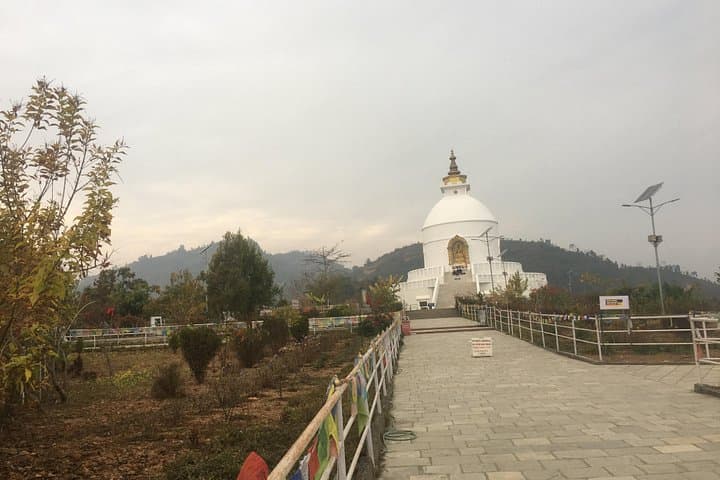
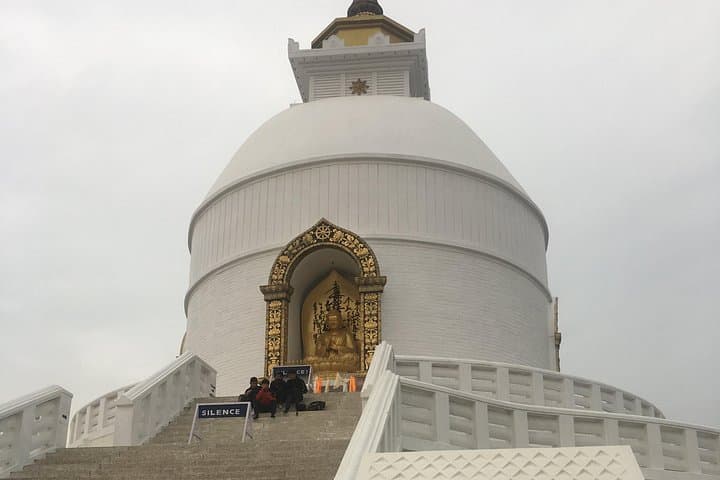
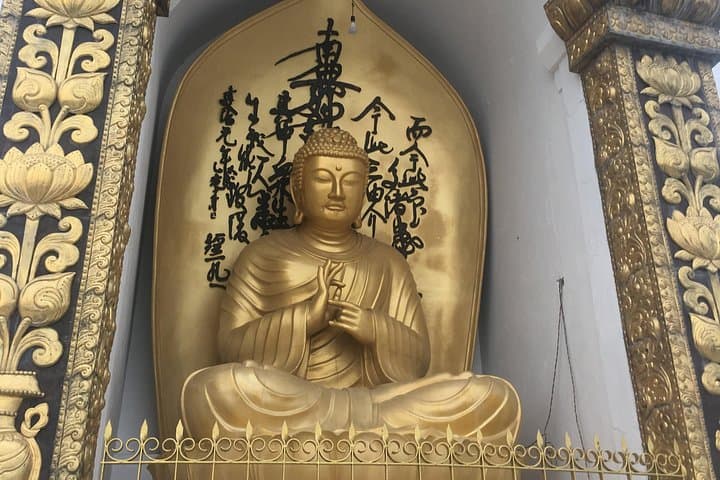
Built by Japanese Buddhist monks in the late 1990s, the World Peace Stupa (Shanti Stupa) sits deliberately above Pokhara as a viewing platform and spiritual landmark. The hill is carved from young sedimentary rocks of the Mahabharat Range; underfoot you’ll find compacted soils and stair-built stone retaining walls. Culture here mixes Nepali daily life with quiet pilgrim rituals — prayer flags flutter and locals may perform brief offerings while porters and vendors mark the route down.
Expect 3–4 hours total including transfers, and roughly 3–5 km walking on trails that can be steep in places. Water is limited once you leave Lakeside; shade is sporadic near the summit. The summit rewards patience: 360-degree views of the Annapurna south faces, the needle of Machapuchare, and Fewa Lake curling below. Photography and short meditative breaks are standard.
Practical tips: start early to avoid midday heat and crowds, wear grippy footwear for stone steps, carry at least 1 liter of water, and respect local customs at the stupa. Guides frequently include pickup and drop-off from Lakeside; if you prefer quiet, time your return to miss tourist groups.
moderate.
3–4 hours.
Moderate fitness required: comfortable walking uphill for 1–2 hours with short breaks
Total outing runs about 3–4 hours including transfers; the trail is moderate with steady uphill sections and some stone steps—suitable for most walkers.
There is no formal entrance fee for the stupa, though small donations are common and parking or boat costs in Lakeside may apply.
A guide is not mandatory but recommended for navigation, local context, and hotel pickup—many operators include an English-speaking guide and private transfer.
At roughly 1,100 m the site is well below high-altitude zones; typical visitors do not experience altitude sickness on this route.
The Pokhara World Peace Stupa was built by Japanese Buddhist practitioners in the late 1990s as a non-denominational monument to peace and as a vantage point over the Annapurna range.
Trails can erode during monsoon; stick to established paths, avoid feeding wildlife, and pack out all trash to limit impact.
Couch Adventure Nepal (CAN) operates guided outdoor trips and adventures with an emphasis on safety, stewardship, and memorable experiences.
The trail begins along the placid edge of Fewa Lake, where tuk-tuks and boats recede and the hill takes over. You walk beside the water until the path narrows and the forest leans in—sal trees, occasional rhododendron, and a steady pulse of bird song. The climb is honest but not brutal: compacted dirt, stepped sections and switchbacks that push you up roughly 250–350 meters to the stupa’s rim at about 1,100 m above sea level.
The trail begins along the placid edge of Fewa Lake, where tuk-tuks and boats recede and the hill takes over. You walk beside the water until the path narrows and the forest leans in—sal trees, occasional rhododendron, and a steady pulse of bird song. The climb is honest but not brutal: compacted dirt, stepped sections and switchbacks that push you up roughly 250–350 meters to the stupa’s rim at about 1,100 m above sea level.
Built by Japanese Buddhist monks in the late 1990s, the World Peace Stupa (Shanti Stupa) sits deliberately above Pokhara as a viewing platform and spiritual landmark. The hill is carved from young sedimentary rocks of the Mahabharat Range; underfoot you’ll find compacted soils and stair-built stone retaining walls. Culture here mixes Nepali daily life with quiet pilgrim rituals — prayer flags flutter and locals may perform brief offerings while porters and vendors mark the route down.
Expect 3–4 hours total including transfers, and roughly 3–5 km walking on trails that can be steep in places. Water is limited once you leave Lakeside; shade is sporadic near the summit. The summit rewards patience: 360-degree views of the Annapurna south faces, the needle of Machapuchare, and Fewa Lake curling below. Photography and short meditative breaks are standard.
Practical tips: start early to avoid midday heat and crowds, wear grippy footwear for stone steps, carry at least 1 liter of water, and respect local customs at the stupa. Guides frequently include pickup and drop-off from Lakeside; if you prefer quiet, time your return to miss tourist groups.