THE ADVENTURE COLLECTIVE® · Independent discovery and booking for outdoor travel

Travel into Upper Mustang and the walled city of Lo Manthang, where Tibetan culture and wind-sculpted badlands meet. This multi-day trek combines high desert scenery, ancient gompas and hands-on cultural encounters—plan for altitude, permits and long rugged days.
Travel into Upper Mustang and the walled city of Lo Manthang, where Tibetan culture and wind-sculpted badlands meet. This multi-day trek combines high desert scenery, ancient gompas and hands-on cultural encounters—plan for altitude, permits and long rugged days.
Wind scours the high valleys of Upper Mustang, carrying a dry, Tibetan-tinged air that sharpens every ridge and cliff.
Verified experiences and guided adventures in the surrounding area.
Operated by Sherpa Expedition & Trekking · Lo Manthang, Mustang District
Wind scours the high valleys of Upper Mustang, carrying a dry, Tibetan-tinged air that sharpens every ridge and cliff.
You arrive from Pokhara or Kathmandu and, within hours, the landscape changes from green river valleys to wind-carved desert and ochre cliffs. Lo Manthang, the walled capital, sits like a compact medieval town — flat-roofed houses, prayer flags snapping, and monasteries where shaved-headed students chant the same texts their ancestors did.
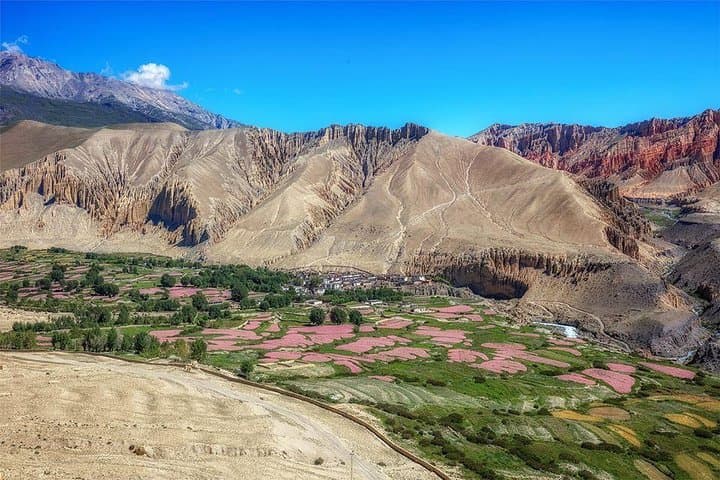
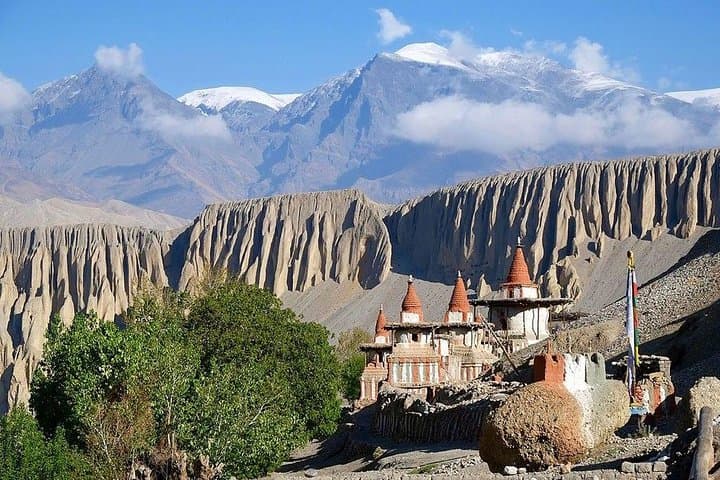
Geologically, Mustang is a rain shadow: soft sedimentary layers exposed by erosion form narrow canyons and mushroomed pinnacles. Culturally, it was once part of the Tibetan kingdom of Guge; many local place names, dialects and gompas reflect that close Himalayan-Tibetan connection. Small salt trade routes and fortified caves still tell the story of a frontier carved between empires.
Expect long, dusty days on rocky trails, regular passes between 3,000–4,000 m, and dry nights that reward a warm sleeping system. Villages offer simple teahouse accommodation and home-cooked dal bhat; permits are required and officials check ACAP/Restricted Area permits en route.
Practical guidance: acclimatize in Pokhara or Jomsom, carry water treatment, and plan for strong sun and cold nights. Footwear with firm soles and ankle support makes the rocky approach to Lo Manthang easier; poles help on steep descents.
This is a trek for travelers ready to trade convenience for cultural depth — the reward is a landscape that still moves at the pace of its own long memory.
challenging.
10–14 days.
Good aerobic fitness and experience with multi-day trekking at altitude; able to walk 6–8 hours on uneven terrain.
Yes—Upper Mustang is a restricted area. Foreign visitors require an ACAP permit, an Upper Mustang special permit, and a TIMS card; these are checked en route.
Spring (April–May) and autumn (September–November) offer the most stable weather, clearer skies and manageable temperatures.
The route reaches elevations around 3,800–4,000 m; proper acclimatization and at least moderate fitness are required to reduce altitude sickness risk.
Teahouse-style lodgings and family-run guesthouses are common in villages; expect simple rooms, shared bathrooms and local meals like dal bhat.
Upper Mustang was part of a Tibetan kingdom and maintained close cultural and trade ties with Tibet; Lo Manthang’s fortified palace reflects centuries of regional autonomy.
The region’s fragile drylands and archaeological sites are vulnerable to foot-traffic and unregulated development; travelers should follow leave-no-trace practices and respect local rules about photography and sacred sites.
Sherpa Expedition & Trekking operates guided outdoor trips and adventures with an emphasis on safety, stewardship, and memorable experiences.
Wind scours the high valleys of Upper Mustang, carrying a dry, Tibetan-tinged air that sharpens every ridge and cliff.
Wind scours the high valleys of Upper Mustang, carrying a dry, Tibetan-tinged air that sharpens every ridge and cliff.
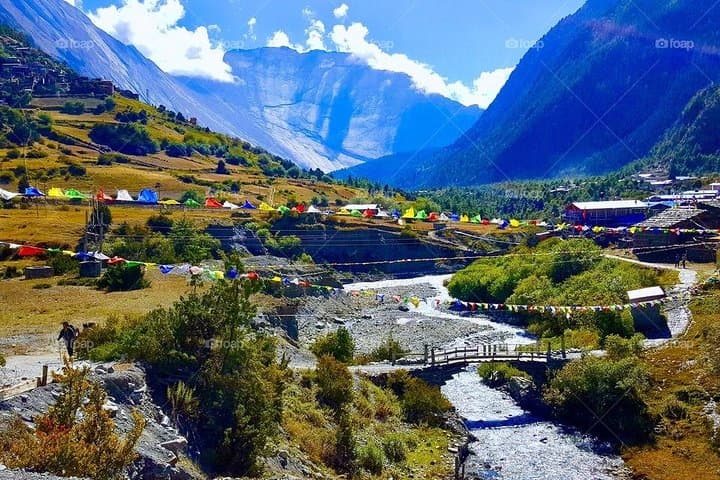
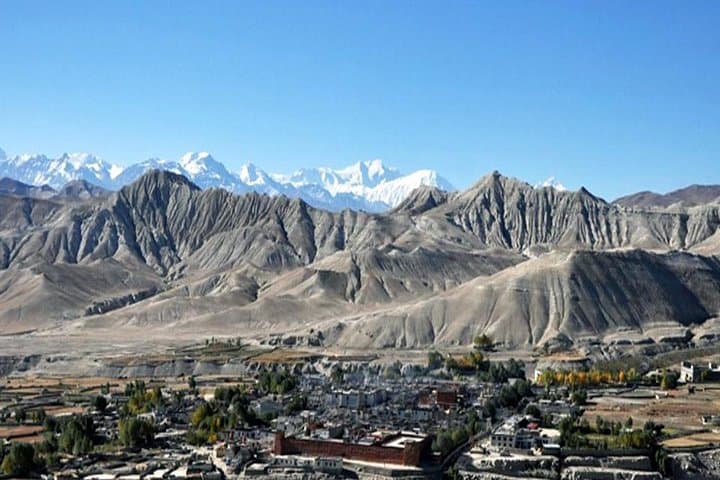
You arrive from Pokhara or Kathmandu and, within hours, the landscape changes from green river valleys to wind-carved desert and ochre cliffs. Lo Manthang, the walled capital, sits like a compact medieval town — flat-roofed houses, prayer flags snapping, and monasteries where shaved-headed students chant the same texts their ancestors did.
Geologically, Mustang is a rain shadow: soft sedimentary layers exposed by erosion form narrow canyons and mushroomed pinnacles. Culturally, it was once part of the Tibetan kingdom of Guge; many local place names, dialects and gompas reflect that close Himalayan-Tibetan connection. Small salt trade routes and fortified caves still tell the story of a frontier carved between empires.
Expect long, dusty days on rocky trails, regular passes between 3,000–4,000 m, and dry nights that reward a warm sleeping system. Villages offer simple teahouse accommodation and home-cooked dal bhat; permits are required and officials check ACAP/Restricted Area permits en route.
Practical guidance: acclimatize in Pokhara or Jomsom, carry water treatment, and plan for strong sun and cold nights. Footwear with firm soles and ankle support makes the rocky approach to Lo Manthang easier; poles help on steep descents.
This is a trek for travelers ready to trade convenience for cultural depth — the reward is a landscape that still moves at the pace of its own long memory.