THE ADVENTURE COLLECTIVE® · Independent discovery and booking for outdoor travel

Soar above Phewa Lake and the Annapurna range on a private 1‑hour ultra‑light flight from Pokhara. Expect intimate mountain views, pilot narration, and quick access from town—best in clear spring and autumn mornings.
Soar above Phewa Lake and the Annapurna range on a private 1‑hour ultra‑light flight from Pokhara. Expect intimate mountain views, pilot narration, and quick access from town—best in clear spring and autumn mornings.
The propeller thins the air as the ultra-light lifts off from a small airstrip near Pokhara, and the valley unfolds beneath like mapped relief—rice terraces, the curving blue of Phewa Lake, and the serrated crown of Machapuchare. From the cockpit you feel close enough to read the shadows on Annapurna’s faces; wind and altitude push gently against the aircraft and against your sense of scale.
Verified experiences and guided adventures in the surrounding area.
Operated by Pokhara Ultralight · Pokhara, Gandaki Province
The propeller thins the air as the ultra-light lifts off from a small airstrip near Pokhara, and the valley unfolds beneath like mapped relief—rice terraces, the curving blue of Phewa Lake, and the serrated crown of Machapuchare. From the cockpit you feel close enough to read the shadows on Annapurna’s faces; wind and altitude push gently against the aircraft and against your sense of scale.
This route follows the western edge of the Pokhara basin toward the Annapurna massif, a range shaped by Himalayan tectonics and glaciation over millions of years. Pilots often point out classic features: the fishtail peak of Machapuchare, the sweeping Annapurna South ridgeline, and the patchwork hill farms that reflect Gandaki Province’s agrarian culture. Pokhara is also the historical gateway to the Annapurna Circuit—traders and trekkers have used these valleys for centuries—so the view is both geological record and living culture.
Practically, expect a compact experience: a 60-minute private flight with pilot narration, light bumps in thermals, and strict weight and health limits (max ~100 kg; not recommended for pregnant or cardiovascular-risk travelers). Best times are clear-morning flights in spring and autumn when visibility is highest; monsoon months bring cloud and reduced views. Bring a windproof layer, flatten camera settings for handheld shots, and arrive early for briefing and transit from central Pokhara. Weather can cancel flights; operators normally refund if conditions make flying unsafe. For anyone who wants the mountains from a human-scale altitude, this flight offers an immediate, panoramic perspective—exhilarating, brief, and grounded in the geography and culture it passes over.
easy.
1 hour.
No special fitness required; passengers should be able to sit upright and follow safety instructions.
The scheduled in‑air time is approximately 60 minutes; allow extra time for briefing, transit, and weight checks.
Yes—maximum passenger weight is approximately 100 kg (220 lb); not recommended for pregnant travelers or those with serious cardiovascular conditions.
Flights are commonly cancelled for low visibility or high winds; operators typically offer a full refund if cancelled at least 24 hours before departure or due to unsafe conditions.
Private ground transportation is often included—confirm pickup point when booking and arrive at the designated meeting location on time.
Pokhara has long been a human crossroads and gateway to the Annapurna region; the valley served local trade routes before becoming a center for mountaineering and trekking since the mid‑20th century.
Operators limit low passes over sensitive habitats and follow local altitude corridors; passengers should minimize noise and avoid dropping waste at airstrips.
Pokhara Ultralight operates guided outdoor trips and adventures with an emphasis on safety, stewardship, and memorable experiences.
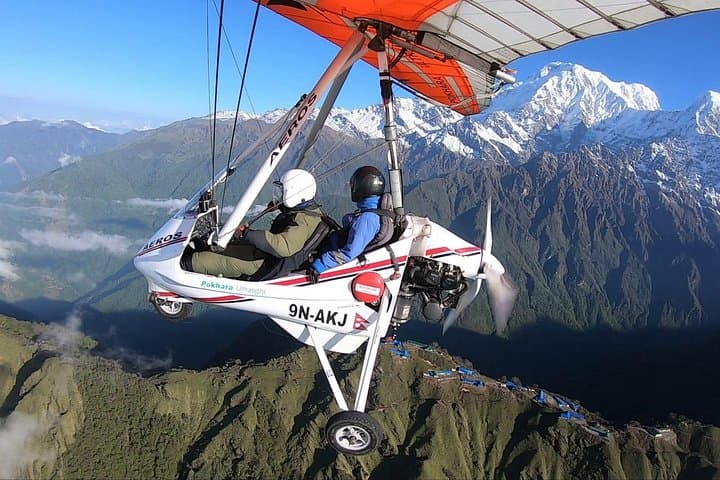
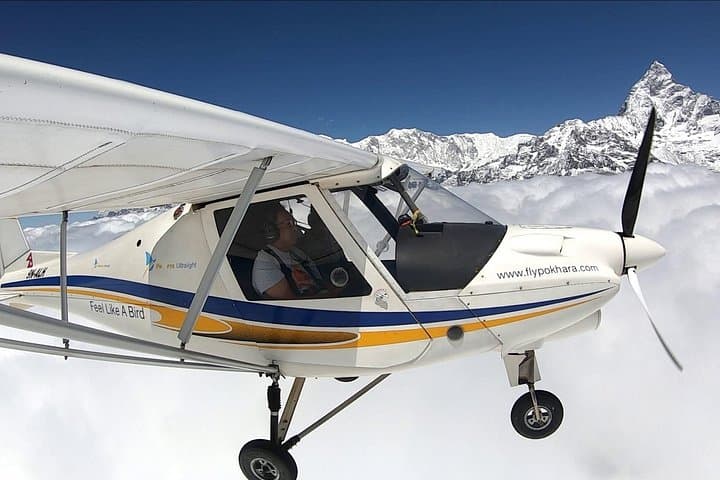
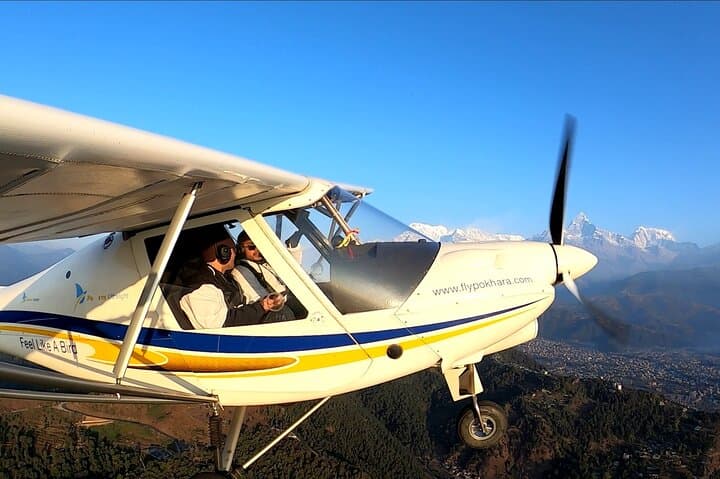
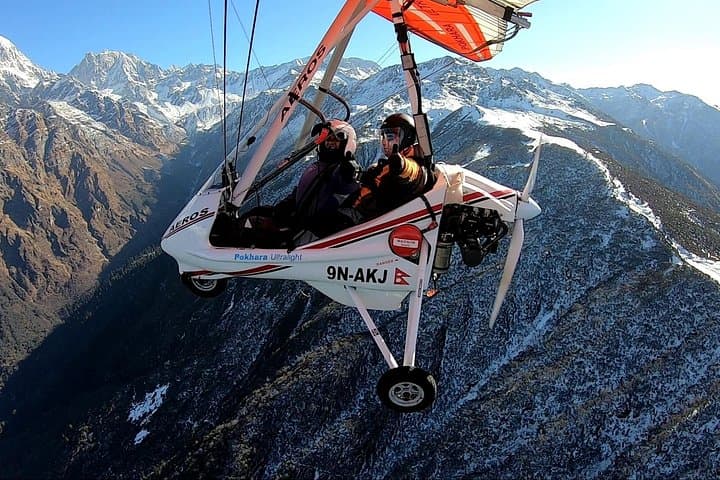
The propeller thins the air as the ultra-light lifts off from a small airstrip near Pokhara, and the valley unfolds beneath like mapped relief—rice terraces, the curving blue of Phewa Lake, and the serrated crown of Machapuchare. From the cockpit you feel close enough to read the shadows on Annapurna’s faces; wind and altitude push gently against the aircraft and against your sense of scale.
The propeller thins the air as the ultra-light lifts off from a small airstrip near Pokhara, and the valley unfolds beneath like mapped relief—rice terraces, the curving blue of Phewa Lake, and the serrated crown of Machapuchare. From the cockpit you feel close enough to read the shadows on Annapurna’s faces; wind and altitude push gently against the aircraft and against your sense of scale.
This route follows the western edge of the Pokhara basin toward the Annapurna massif, a range shaped by Himalayan tectonics and glaciation over millions of years. Pilots often point out classic features: the fishtail peak of Machapuchare, the sweeping Annapurna South ridgeline, and the patchwork hill farms that reflect Gandaki Province’s agrarian culture. Pokhara is also the historical gateway to the Annapurna Circuit—traders and trekkers have used these valleys for centuries—so the view is both geological record and living culture.
Practically, expect a compact experience: a 60-minute private flight with pilot narration, light bumps in thermals, and strict weight and health limits (max ~100 kg; not recommended for pregnant or cardiovascular-risk travelers). Best times are clear-morning flights in spring and autumn when visibility is highest; monsoon months bring cloud and reduced views. Bring a windproof layer, flatten camera settings for handheld shots, and arrive early for briefing and transit from central Pokhara. Weather can cancel flights; operators normally refund if conditions make flying unsafe. For anyone who wants the mountains from a human-scale altitude, this flight offers an immediate, panoramic perspective—exhilarating, brief, and grounded in the geography and culture it passes over.