THE ADVENTURE COLLECTIVE® · Independent discovery and booking for outdoor travel

Skip the long drive between Pokhara and Kathmandu and trade hours for a 25–60 minute scenic flight that carves over Nepal’s dramatic ridgelines. This quick hop offers intimate mountain views, practical transit, and a morning-reliability window for photographers.
Skip the long drive between Pokhara and Kathmandu and trade hours for a 25–60 minute scenic flight that carves over Nepal’s dramatic ridgelines. This quick hop offers intimate mountain views, practical transit, and a morning-reliability window for photographers.
You press your forehead to the small oval window as the plane eases above patchwork rice terraces and the first snowline of the Himalaya cuts the horizon. Below, the lakeside neighborhoods of Pokhara shrink to toy houses; ahead, ridgelines and gleaming white peaks — Annapurna and Dhaulagiri among them — rise and insist on being noticed.
Verified experiences and guided adventures in the surrounding area.
Operated by Saara Tourism Nepal-Travel Advisor in Nepal · Pokhara, Gandaki Province
You press your forehead to the small oval window as the plane eases above patchwork rice terraces and the first snowline of the Himalaya cuts the horizon. Below, the lakeside neighborhoods of Pokhara shrink to toy houses; ahead, ridgelines and gleaming white peaks — Annapurna and Dhaulagiri among them — rise and insist on being noticed.
This short hop traces a corridor shaped by tectonic uplift and centuries of human movement between the fertile Pokhara valley and Kathmandu’s ancient basin. From the air you can read the region’s geology: steep river-cut gorges, moraine shoulders and villages clinging to terraces. Culturally, the route links Gurung and Newar communities—markets, temples and monastery roofs pepper the landscape.
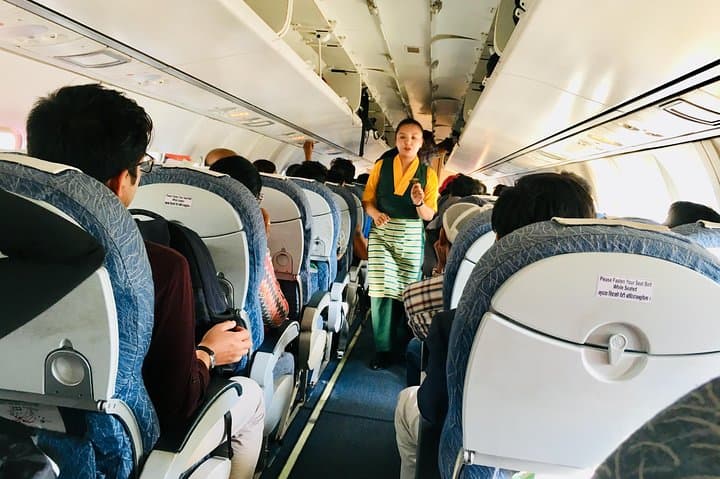
Practically, expect a 25–60 minute experience including pre-flight reporting. Flights are operated on small regional aircraft; windows are small but the views are intimate. Weather drives schedules: morning flights after a clear night deliver the most reliable mountain visibility. Photography benefits from a polarizing filter if you’re using a larger camera; for phones, sit on the left departing Pokhara for the best Annapurna views and on the right arriving into Kathmandu for Kathmandu Valley panoramas.
Accessible to most travelers, this flight is a pragmatic solution when time is limited, replacing an 6–8 hour road journey with a compact, scenic transit. Carry light luggage, arrive early for check-in, and be prepared for sudden schedule changes when Himalayan weather decides the plan.
easy.
25–60 minutes.
No special fitness required; suitable for all ages able to board small aircraft.
Flight time is about 25–60 minutes depending on routing and conditions; plan extra time for check-in and transfers.
Flights operate year-round but are weather-dependent—visibility and cancellations are more common during the monsoon season.
Bring a charged camera or phone, consider a polarizing filter for lenses, and sit on the left departing Pokhara for best peak views.
Yes; the short duration and low physical demand make it suitable for most travelers, though those with mobility needs should notify the operator ahead of time.
Air connections shortened a centuries-old overland corridor that linked Kathmandu’s valley markets with Pokhara’s agricultural plains; flying this route accentuates the geological forces that created the range of microclimates and cultures.
Tour operators increasingly emphasize minimal-impact travel—pack out waste, respect wildlife, and support local businesses to help keep both mountain vistas and communities resilient.
Saara Tourism Nepal-Travel Advisor in Nepal operates guided outdoor trips and adventures with an emphasis on safety, stewardship, and memorable experiences.
You press your forehead to the small oval window as the plane eases above patchwork rice terraces and the first snowline of the Himalaya cuts the horizon. Below, the lakeside neighborhoods of Pokhara shrink to toy houses; ahead, ridgelines and gleaming white peaks — Annapurna and Dhaulagiri among them — rise and insist on being noticed.
You press your forehead to the small oval window as the plane eases above patchwork rice terraces and the first snowline of the Himalaya cuts the horizon. Below, the lakeside neighborhoods of Pokhara shrink to toy houses; ahead, ridgelines and gleaming white peaks — Annapurna and Dhaulagiri among them — rise and insist on being noticed.
This short hop traces a corridor shaped by tectonic uplift and centuries of human movement between the fertile Pokhara valley and Kathmandu’s ancient basin. From the air you can read the region’s geology: steep river-cut gorges, moraine shoulders and villages clinging to terraces. Culturally, the route links Gurung and Newar communities—markets, temples and monastery roofs pepper the landscape.
Practically, expect a 25–60 minute experience including pre-flight reporting. Flights are operated on small regional aircraft; windows are small but the views are intimate. Weather drives schedules: morning flights after a clear night deliver the most reliable mountain visibility. Photography benefits from a polarizing filter if you’re using a larger camera; for phones, sit on the left departing Pokhara for the best Annapurna views and on the right arriving into Kathmandu for Kathmandu Valley panoramas.
Accessible to most travelers, this flight is a pragmatic solution when time is limited, replacing an 6–8 hour road journey with a compact, scenic transit. Carry light luggage, arrive early for check-in, and be prepared for sudden schedule changes when Himalayan weather decides the plan.