THE ADVENTURE COLLECTIVE® · Independent discovery and booking for outdoor travel

See the Annapurna massif from the air and spend 30 minutes at Base Camp on this scenic helicopter tour from Pokhara. Ideal for travelers short on time who want a high-altitude experience with minimal trekking.
See the Annapurna massif from the air and spend 30 minutes at Base Camp on this scenic helicopter tour from Pokhara. Ideal for travelers short on time who want a high-altitude experience with minimal trekking.
The helicopter lifts off from Pokhara and the city shrinks into the patchwork of rice fields and glinting lakes. Within minutes the valley walls steepen; waterfalls begin to shout and the first teeth of the Annapurna massif appear, daring you to read their layered faces from the air. In a short span the helicopter drops you at Annapurna Base Camp (approx. 4,130 m), where crevasses and rock bands hold the story of ancient collisions.
Verified experiences and guided adventures in the surrounding area.
Operated by Master Himalaya Treks and Expedition · Pokhara, Gandaki Province
The helicopter lifts off from Pokhara and the city shrinks into the patchwork of rice fields and glinting lakes. Within minutes the valley walls steepen; waterfalls begin to shout and the first teeth of the Annapurna massif appear, daring you to read their layered faces from the air. In a short span the helicopter drops you at Annapurna Base Camp (approx. 4,130 m), where crevasses and rock bands hold the story of ancient collisions.
The Annapurna range carries both climbing lore and local culture: Annapurna I was first climbed in 1950, and the surrounding sanctuary has long been home to Gurung and Magar communities whose villages dot the lower ridges. Geologically the massif is a folded, uplifted edge of the Himalaya—glaciers etch the valleys and moraine fields mark past advances. Locally, prayer flags and small shrines speak to mountain reverence that predates modern trekking.
Practically, this air-based trip offers about 30 minutes on the ground for photos and a warm cup of coffee, with total activity time around five hours including transfers. Weather governs everything—landings can be canceled if clouds or wind make the sanctuary unsafe. Expect thin air at ABC; keep movements measured and limit exertion during your ground time.
Plan for morning departures for the clearest visibility, bring warm layers and a charged camera, and follow guides’ instructions around the landing site. This is a short, high-impact way to touch the heart of the Annapurnas without the days of trekking, but it still demands respect for altitude, weather, and local mountain culture.
easy.
5 hours.
Suitable for light to moderate fitness; no hiking required but short exposure to high altitude.
Not always—landings depend on weather and visibility; operators may hover for photos or return to Pokhara if conditions are unsafe, with refund or reschedule options.
Yes—passengers must declare weight at booking and those with cardiovascular or serious medical conditions are advised not to fly; check operator requirements in advance.
The itinerary typically includes about 30 minutes on the ground, long enough for photos and a brief warm drink but not for extended exploration.
Yes—domestic pickup and drop-off are usually included, but confirm pickup point and time when you book and allow extra time for traffic or airport procedures.
Annapurna I was the first 8,000m peak climbed in 1950; the Annapurna Sanctuary later became a focal point for trekking and cultural exchange with local Gurung and Magar communities.
Helicopter landings and flights have noise and carbon impacts; operators and visitors are encouraged to follow permit rules, minimize on-site disturbance, and pack out all waste.
Master Himalaya Treks and Expedition operates guided outdoor trips and adventures with an emphasis on safety, stewardship, and memorable experiences.
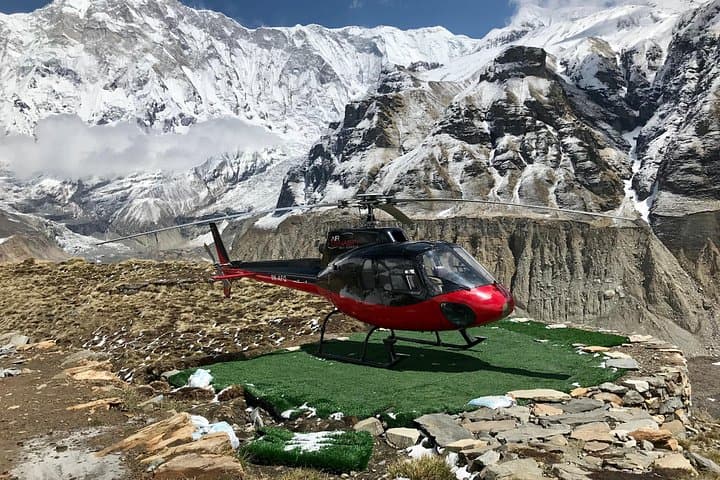
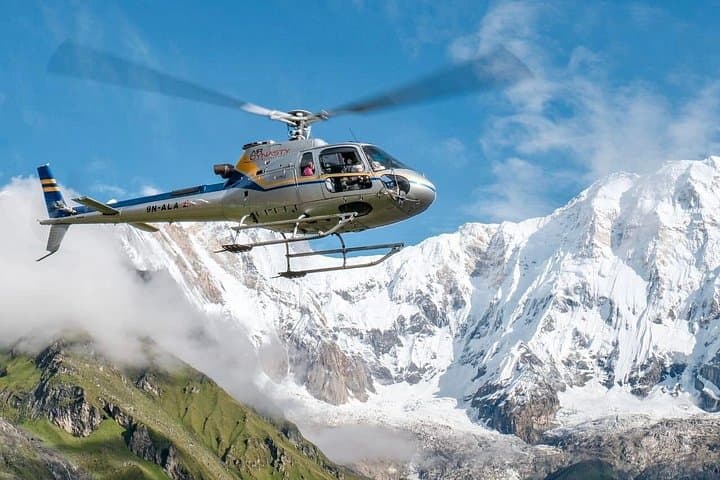
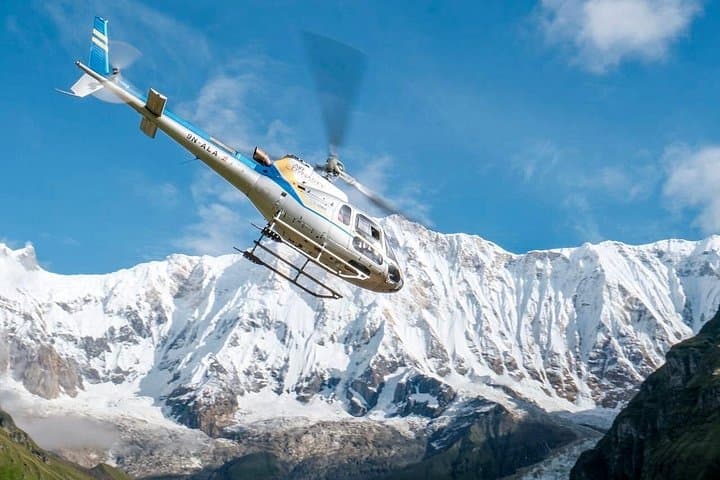
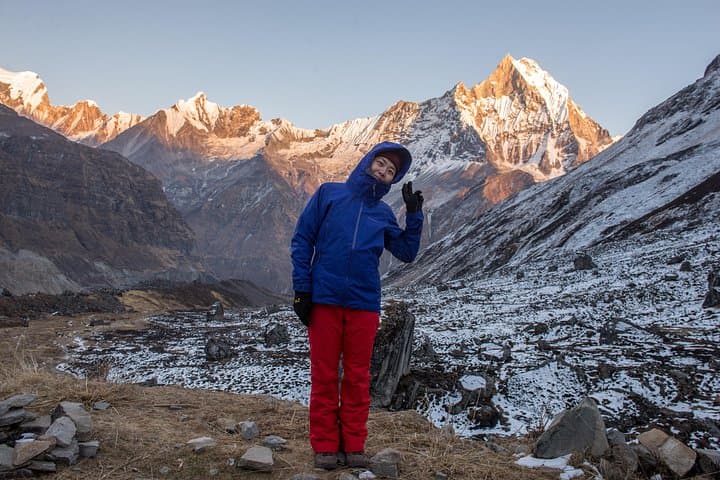
The helicopter lifts off from Pokhara and the city shrinks into the patchwork of rice fields and glinting lakes. Within minutes the valley walls steepen; waterfalls begin to shout and the first teeth of the Annapurna massif appear, daring you to read their layered faces from the air. In a short span the helicopter drops you at Annapurna Base Camp (approx. 4,130 m), where crevasses and rock bands hold the story of ancient collisions.
The helicopter lifts off from Pokhara and the city shrinks into the patchwork of rice fields and glinting lakes. Within minutes the valley walls steepen; waterfalls begin to shout and the first teeth of the Annapurna massif appear, daring you to read their layered faces from the air. In a short span the helicopter drops you at Annapurna Base Camp (approx. 4,130 m), where crevasses and rock bands hold the story of ancient collisions.
The Annapurna range carries both climbing lore and local culture: Annapurna I was first climbed in 1950, and the surrounding sanctuary has long been home to Gurung and Magar communities whose villages dot the lower ridges. Geologically the massif is a folded, uplifted edge of the Himalaya—glaciers etch the valleys and moraine fields mark past advances. Locally, prayer flags and small shrines speak to mountain reverence that predates modern trekking.
Practically, this air-based trip offers about 30 minutes on the ground for photos and a warm cup of coffee, with total activity time around five hours including transfers. Weather governs everything—landings can be canceled if clouds or wind make the sanctuary unsafe. Expect thin air at ABC; keep movements measured and limit exertion during your ground time.
Plan for morning departures for the clearest visibility, bring warm layers and a charged camera, and follow guides’ instructions around the landing site. This is a short, high-impact way to touch the heart of the Annapurnas without the days of trekking, but it still demands respect for altitude, weather, and local mountain culture.