THE ADVENTURE COLLECTIVE® · Independent discovery and booking for outdoor travel

This compact 5-day trek from Pokhara to Annapurna Base Camp packs Himalayan grand views and village hospitality into a fast-paced itinerary. Expect steep stone steps, teahouse nights, mandatory permits and a 4,130m high sunrise that rewards the effort.
This compact 5-day trek from Pokhara to Annapurna Base Camp packs Himalayan grand views and village hospitality into a fast-paced itinerary. Expect steep stone steps, teahouse nights, mandatory permits and a 4,130m high sunrise that rewards the effort.
Morning in the Annapurna foothills begins with chill air that pushes at your jacket and mountain silhouettes that sharpen as the sun rises. The first jeep ride from Pokhara drops you into green hills; the trail then threads suspension bridges, stone staircases and bamboo forest that seem to breathe around you. By day three the valley opens and the peaks of Annapurna and Machapuchare loom — the mountains almost dare you to keep climbing.
Verified experiences and guided adventures in the surrounding area.
Operated by Crystal Holidays Nepal · Pokhara, Gandaki Province
Morning in the Annapurna foothills begins with chill air that pushes at your jacket and mountain silhouettes that sharpen as the sun rises. The first jeep ride from Pokhara drops you into green hills; the trail then threads suspension bridges, stone staircases and bamboo forest that seem to breathe around you. By day three the valley opens and the peaks of Annapurna and Machapuchare loom — the mountains almost dare you to keep climbing.
The route follows centuries-old mule tracks used by local traders and shepherds. Geologically the Annapurna Sanctuary is a bowl carved by glaciers, ringed by 7,000–8,000m faces that expose folded metamorphic rock and snowfields. Along the way Gulmi and Gurung villages offer glimpses of hill agriculture, prayer flags, and hospitality in simple guest houses.
Practical guidance: the 5-day itinerary moves fast and reaches 4,130m at ABC, so prioritize hydration, steady pacing and sleep. Permits (ACAP and TIMS) are mandatory and are typically handled by operators. Expect teahouse lodging with basic meals and limited hot water; carry cash. Trail terrain varies from steep stone steps and muddy forest paths to rocky alpine approaches above Machapuchare Base Camp. Start early each day to avoid afternoon weather and give yourself extra time for descents — these can be tougher on knees than the climbs.
For fitness, train on hills with a loaded pack, practise long days of walking, and be alert for altitude symptoms. With thoughtful preparation the trek delivers compact Himalayan grandeur: sunrise over icy ridgelines, the hush of high-altitude air, and evenings warmed by yak-butter tea and local stories.
challenging.
5 days.
Requires strong cardiovascular fitness and experience with long uphill days; prior multi-day hiking recommended
Yes—both the Annapurna Conservation Area Permit (ACAP) and a TIMS card are required; operators usually arrange them prior to departure.
The trek ascends to 4,130m quickly; allow time to acclimatize, know the signs of acute mountain sickness, and descend if symptoms worsen.
Teahouse guest houses offer basic rooms and communal meals; expect simple bedding, limited hot water and menu options.
Fall (Sep–Nov) and spring (Mar–May) offer the most stable weather and best visibility for mountain views.
Trails here trace centuries of local trade and pastoral movement; Gurung communities along the route maintain many traditional practices and craftwork.
The Annapurna Conservation Area uses permit fees to support trail maintenance and biodiversity protection; follow Leave No Trace principles and minimise single-use plastics.
Crystal Holidays Nepal operates guided outdoor trips and adventures with an emphasis on safety, stewardship, and memorable experiences.


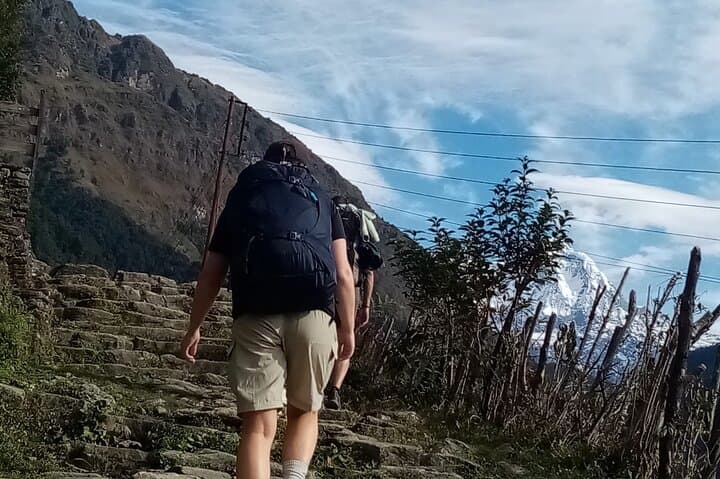

Morning in the Annapurna foothills begins with chill air that pushes at your jacket and mountain silhouettes that sharpen as the sun rises. The first jeep ride from Pokhara drops you into green hills; the trail then threads suspension bridges, stone staircases and bamboo forest that seem to breathe around you. By day three the valley opens and the peaks of Annapurna and Machapuchare loom — the mountains almost dare you to keep climbing.
Morning in the Annapurna foothills begins with chill air that pushes at your jacket and mountain silhouettes that sharpen as the sun rises. The first jeep ride from Pokhara drops you into green hills; the trail then threads suspension bridges, stone staircases and bamboo forest that seem to breathe around you. By day three the valley opens and the peaks of Annapurna and Machapuchare loom — the mountains almost dare you to keep climbing.
The route follows centuries-old mule tracks used by local traders and shepherds. Geologically the Annapurna Sanctuary is a bowl carved by glaciers, ringed by 7,000–8,000m faces that expose folded metamorphic rock and snowfields. Along the way Gulmi and Gurung villages offer glimpses of hill agriculture, prayer flags, and hospitality in simple guest houses.
Practical guidance: the 5-day itinerary moves fast and reaches 4,130m at ABC, so prioritize hydration, steady pacing and sleep. Permits (ACAP and TIMS) are mandatory and are typically handled by operators. Expect teahouse lodging with basic meals and limited hot water; carry cash. Trail terrain varies from steep stone steps and muddy forest paths to rocky alpine approaches above Machapuchare Base Camp. Start early each day to avoid afternoon weather and give yourself extra time for descents — these can be tougher on knees than the climbs.
For fitness, train on hills with a loaded pack, practise long days of walking, and be alert for altitude symptoms. With thoughtful preparation the trek delivers compact Himalayan grandeur: sunrise over icy ridgelines, the hush of high-altitude air, and evenings warmed by yak-butter tea and local stories.