THE ADVENTURE COLLECTIVE® · Independent discovery and booking for outdoor travel

See Pokhara’s highlights in a half-day: a boat on Fewa Lake, mountaineering history at the International Mountain Museum, the thunder of Devi’s Falls and the panoramic Peace Pagoda. This private tour packs geology, culture and short walks into a clear, camera-ready route.
See Pokhara’s highlights in a half-day: a boat on Fewa Lake, mountaineering history at the International Mountain Museum, the thunder of Devi’s Falls and the panoramic Peace Pagoda. This private tour packs geology, culture and short walks into a clear, camera-ready route.
The morning light skims Fewa Lake and the Annapurna ridgeline pushes itself into view, a jagged horizon that seems to change mood with every ripple. You step into a small boat, the engine humming under your feet, and the lake briefly becomes a moving frame for snow-lined peaks. Later the road climbs toward the World Peace Pagoda, where the city falls away and the air sharpens; below, the water that fed Devi’s Falls vanishes into a cave that has carved a tunnel beneath the town.
Verified experiences and guided adventures in the surrounding area.
Operated by Linkage Tours & Travels · Pokhara, Gandaki Province
The morning light skims Fewa Lake and the Annapurna ridgeline pushes itself into view, a jagged horizon that seems to change mood with every ripple. You step into a small boat, the engine humming under your feet, and the lake briefly becomes a moving frame for snow-lined peaks. Later the road climbs toward the World Peace Pagoda, where the city falls away and the air sharpens; below, the water that fed Devi’s Falls vanishes into a cave that has carved a tunnel beneath the town.
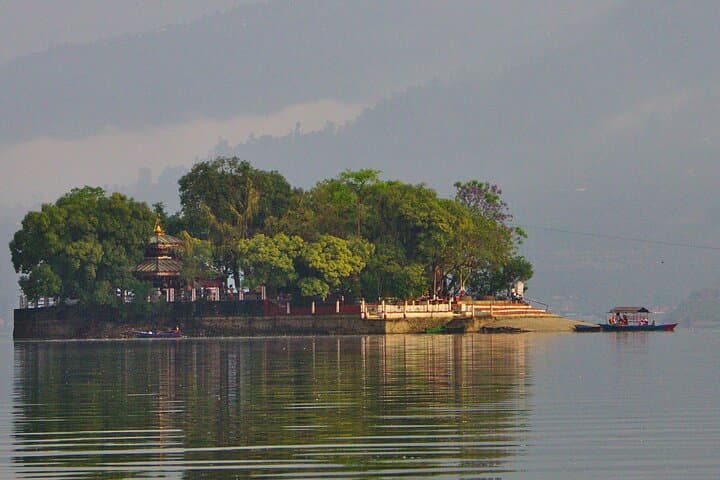
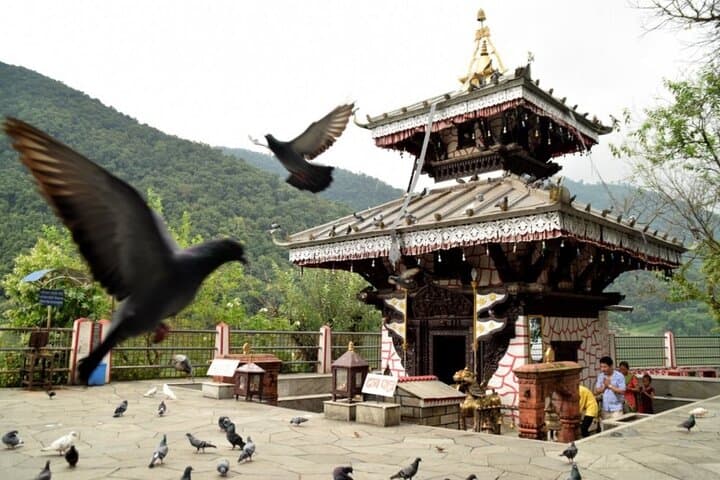
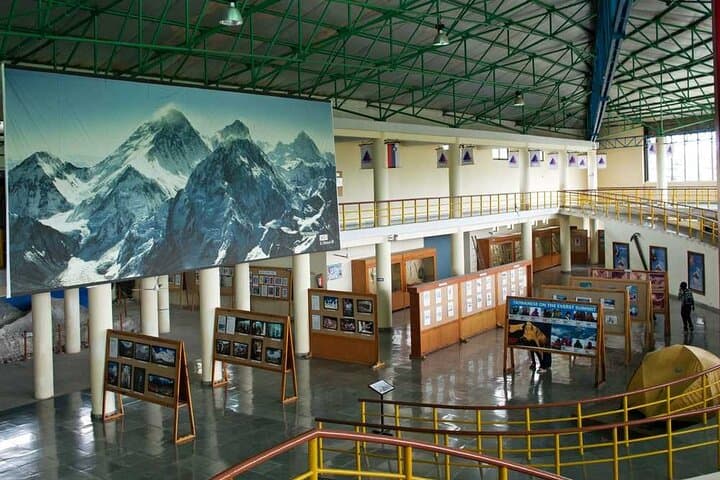
Pokhara’s story is written in stone and stories: glacial outwash shaped the valley, rivers cut deep channels, and the region’s Gurung and Magar cultures have long mixed mountain rites with Hindu and Buddhist practice. The International Mountain Museum records Himalayan climbing history and local lifeways, while Tal Barahi Temple anchors faith on a tiny island in Fewa Lake.
Expect short walks rather than long hikes — a 10–20 minute boat crossing, a 20–40 minute ascent to the Shanti Stupa with about 250–300 m of climbing from the lakeshore, and brief cave and waterfall strolls. Surfaces vary from paved roads and stair sets to damp cave floors; bring steady shoes. Timing matters: mornings deliver clearer mountain views and calmer water, afternoons bring more clouds and photographers.
Practicalities: carry water, sunscreen, and a light layer for hilltop wind. Local drivers know the best viewing angles and can shorten or extend stops; entrance fees for the museum and some sites are modest and payable on arrival. In five hours you’ll trace geology, culture, and moving water — a compact, sensory map of Pokhara.
easy.
4–5 hours.
Suitable for most fitness levels; involves short walks, a boat ride, and a moderate hill climb to the Pagoda.
Typical private boat crossings to Tal Barahi Temple are 10–20 minutes each way depending on wind and water traffic.
This private tour generally does not include site entrance fees—expect modest charges at the International Mountain Museum and some viewpoints.
The ascent involves stairs and an elevation change of roughly 250–300 m from the lakeshore; it’s moderate but manageable with pauses.
Several stops are roadside or accessible by vehicle, but caves, stairs, and some viewpoints are not wheelchair-friendly—check with the operator for tailored pickup and route options.
Pokhara grew as a trade and pilgrimage hub; the Peace Pagoda was built in the 1970s by Japanese Buddhists and the International Mountain Museum documents regional climbing history.
Lake health is a local focus—avoid littering and use refillable bottles; operators encourage low-impact visits to caves and waterfall areas to protect karst features.
Linkage Tours & Travels operates guided outdoor trips and adventures with an emphasis on safety, stewardship, and memorable experiences.
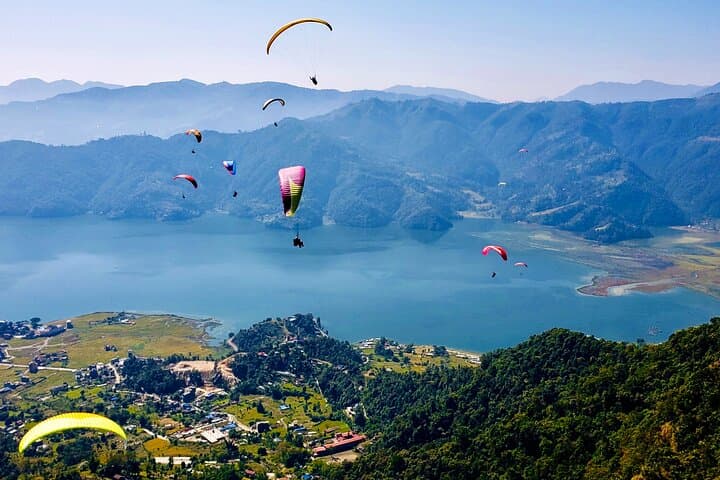
The morning light skims Fewa Lake and the Annapurna ridgeline pushes itself into view, a jagged horizon that seems to change mood with every ripple. You step into a small boat, the engine humming under your feet, and the lake briefly becomes a moving frame for snow-lined peaks. Later the road climbs toward the World Peace Pagoda, where the city falls away and the air sharpens; below, the water that fed Devi’s Falls vanishes into a cave that has carved a tunnel beneath the town.
The morning light skims Fewa Lake and the Annapurna ridgeline pushes itself into view, a jagged horizon that seems to change mood with every ripple. You step into a small boat, the engine humming under your feet, and the lake briefly becomes a moving frame for snow-lined peaks. Later the road climbs toward the World Peace Pagoda, where the city falls away and the air sharpens; below, the water that fed Devi’s Falls vanishes into a cave that has carved a tunnel beneath the town.
Pokhara’s story is written in stone and stories: glacial outwash shaped the valley, rivers cut deep channels, and the region’s Gurung and Magar cultures have long mixed mountain rites with Hindu and Buddhist practice. The International Mountain Museum records Himalayan climbing history and local lifeways, while Tal Barahi Temple anchors faith on a tiny island in Fewa Lake.
Expect short walks rather than long hikes — a 10–20 minute boat crossing, a 20–40 minute ascent to the Shanti Stupa with about 250–300 m of climbing from the lakeshore, and brief cave and waterfall strolls. Surfaces vary from paved roads and stair sets to damp cave floors; bring steady shoes. Timing matters: mornings deliver clearer mountain views and calmer water, afternoons bring more clouds and photographers.
Practicalities: carry water, sunscreen, and a light layer for hilltop wind. Local drivers know the best viewing angles and can shorten or extend stops; entrance fees for the museum and some sites are modest and payable on arrival. In five hours you’ll trace geology, culture, and moving water — a compact, sensory map of Pokhara.