THE ADVENTURE COLLECTIVE® · Independent discovery and booking for outdoor travel

Catch sunrise over Annapurna from Sarangkot, stroll terraced paths in Dhampus, and pause at the World Peace Stupa for sweeping Himalayan panoramas. This guided day tour balances easy walks with high-altitude views and cultural stops.
Catch sunrise over Annapurna from Sarangkot, stroll terraced paths in Dhampus, and pause at the World Peace Stupa for sweeping Himalayan panoramas. This guided day tour balances easy walks with high-altitude views and cultural stops.
Dawn breaks over Pokhara and the ridgeline at Sarangkot lights up like a slow burn — the Annapurna massifs and Fishtail peak push through a thinner air that tastes of cold and cedar. You stand on a hilltop as wind tugs at your jacket, Himalayan spires throwing long shadows across the valley; boats on Phewa Lake pick out those shadows in silver.
Verified experiences and guided adventures in the surrounding area.
Operated by Linkage Tours & Travels · Pokhara, Gandaki Province
Dawn breaks over Pokhara and the ridgeline at Sarangkot lights up like a slow burn — the Annapurna massifs and Fishtail peak push through a thinner air that tastes of cold and cedar. You stand on a hilltop as wind tugs at your jacket, Himalayan spires throwing long shadows across the valley; boats on Phewa Lake pick out those shadows in silver.
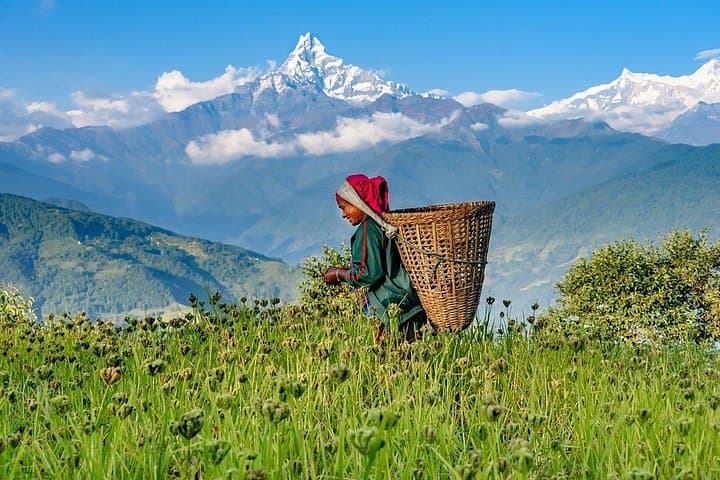
This loop through Dhampus, Sarangkot, World Peace Stupa and Pumdikot threads cultural history with geology. The Gurung villages that dot the route have farmed terraced rice for centuries; the mountains themselves are the uplifted edge of the Indian plate colliding with Eurasia, glaciers carving deep valleys and feeding the rivers below. The Shanti Stupa was built in modern times as a meditative lookout, and local teahouses still serve beaten tea and momos to hikers and pilgrims alike.
Practical guidance: the full excursion runs about 6–7 hours with short on-foot sections—expect multiple 1–3 km walks and intermittent elevation changes of roughly 100–500 m between viewpoints. Trails are firm dirt or paved village lanes; footwear with good grip is useful. Early morning is best for clear mountain visibility; clouds or pre-monsoon haze can reduce views by late afternoon. Guides and private vehicles handle transfers between sites, so the day is low on technical demand but high on weather sensitivity.
Bring layered clothing for a 500–800 m temperature swing, sun protection, and a charged camera battery. Respect prayer sites and local customs: a quiet pause at the stupa brings both space for reflection and the best framed mountain photo.
easy.
6–7 hours.
Suitable for most fitness levels; requires short uphill walks and standing at viewpoints for extended periods.
The guided tour lasts about 6–7 hours and typically includes private transport, bottled water, entrance fees for attractions, and an English-speaking guide.
No technical trekking experience is needed—walks are short (1–3 km) between viewpoints on mostly well-maintained paths and village lanes.
These viewpoints sit between roughly 800–1,700 m; most visitors experience no significant altitude issues, but bring water and move slowly if you feel lightheaded.
Autumn (Sept–Nov) and spring (Mar–May) offer the most reliable clarity; mornings after a cool night tend to give the best visibility.
Pokhara has long been a transit and trading hub for communities in the Annapurna massif; Gurung villages along these ridges keep strong agricultural and cultural traditions tied to the hills.
Trail erosion and litter can increase with visitor numbers; stick to marked paths, avoid single-use plastics, and support locally run teahouses and conservation initiatives.
Linkage Tours & Travels operates guided outdoor trips and adventures with an emphasis on safety, stewardship, and memorable experiences.
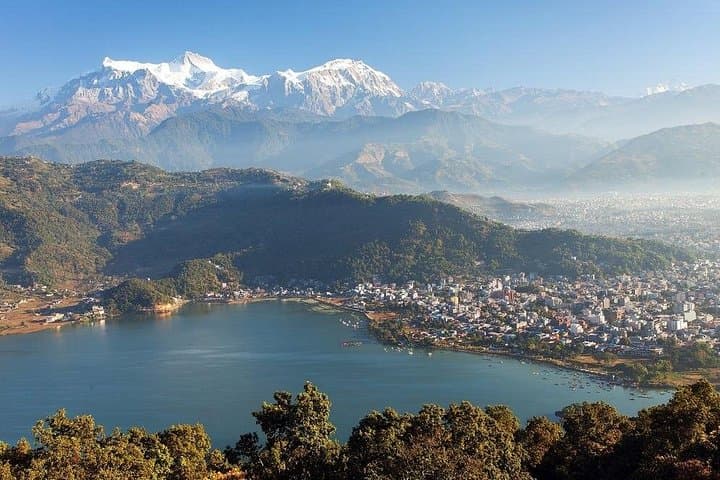
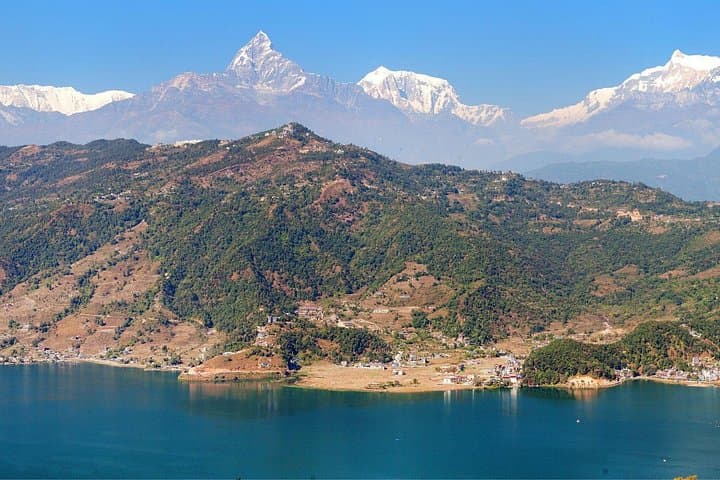
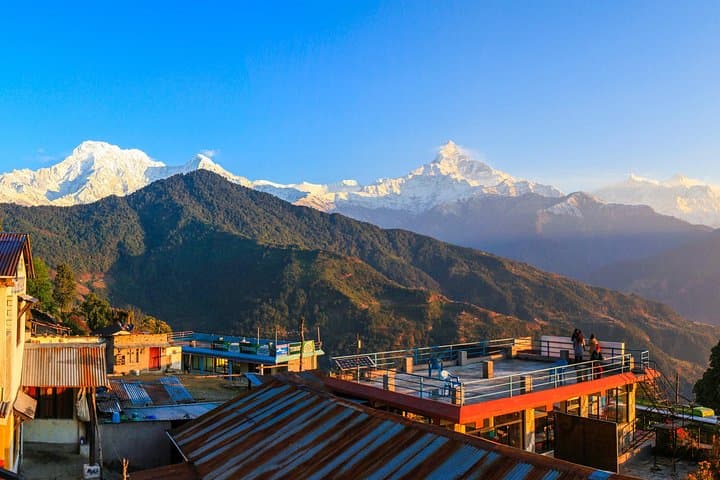
Dawn breaks over Pokhara and the ridgeline at Sarangkot lights up like a slow burn — the Annapurna massifs and Fishtail peak push through a thinner air that tastes of cold and cedar. You stand on a hilltop as wind tugs at your jacket, Himalayan spires throwing long shadows across the valley; boats on Phewa Lake pick out those shadows in silver.
Dawn breaks over Pokhara and the ridgeline at Sarangkot lights up like a slow burn — the Annapurna massifs and Fishtail peak push through a thinner air that tastes of cold and cedar. You stand on a hilltop as wind tugs at your jacket, Himalayan spires throwing long shadows across the valley; boats on Phewa Lake pick out those shadows in silver.
This loop through Dhampus, Sarangkot, World Peace Stupa and Pumdikot threads cultural history with geology. The Gurung villages that dot the route have farmed terraced rice for centuries; the mountains themselves are the uplifted edge of the Indian plate colliding with Eurasia, glaciers carving deep valleys and feeding the rivers below. The Shanti Stupa was built in modern times as a meditative lookout, and local teahouses still serve beaten tea and momos to hikers and pilgrims alike.
Practical guidance: the full excursion runs about 6–7 hours with short on-foot sections—expect multiple 1–3 km walks and intermittent elevation changes of roughly 100–500 m between viewpoints. Trails are firm dirt or paved village lanes; footwear with good grip is useful. Early morning is best for clear mountain visibility; clouds or pre-monsoon haze can reduce views by late afternoon. Guides and private vehicles handle transfers between sites, so the day is low on technical demand but high on weather sensitivity.
Bring layered clothing for a 500–800 m temperature swing, sun protection, and a charged camera battery. Respect prayer sites and local customs: a quiet pause at the stupa brings both space for reflection and the best framed mountain photo.