THE ADVENTURE COLLECTIVE® · Independent discovery and booking for outdoor travel

Spend two nights in a lakeside cottage in Pokhara and take a single-day hike to the World Peace Stupa for panoramic Annapurna views. This compact trip mixes village trails, spiritual calm, and easy access to Phewa Lake.
Spend two nights in a lakeside cottage in Pokhara and take a single-day hike to the World Peace Stupa for panoramic Annapurna views. This compact trip mixes village trails, spiritual calm, and easy access to Phewa Lake.
A cool morning light spills across Phewa Lake as you step out of a small cottage and feel the hill above Pokhara calling. The trail begins in the lakeside neighborhood, climbs through village lanes and terraced fields, and slips into a shawl of rhododendron and sal forest that seems to breathe with each step. By mid-hike the Annapurna range looms white and steady, Machhapuchhre (Fishtail) cutting the skyline like a practiced blade.
Verified experiences and guided adventures in the surrounding area.
Operated by Fewa Trail Treks and Expedition Pvt Ltd · Pokhara, Gandaki Province
A cool morning light spills across Phewa Lake as you step out of a small cottage and feel the hill above Pokhara calling. The trail begins in the lakeside neighborhood, climbs through village lanes and terraced fields, and slips into a shawl of rhododendron and sal forest that seems to breathe with each step. By mid-hike the Annapurna range looms white and steady, Machhapuchhre (Fishtail) cutting the skyline like a practiced blade.
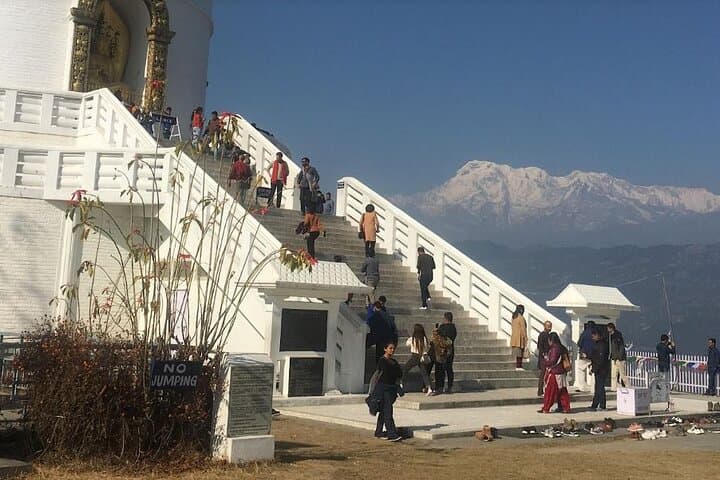
The World Peace Stupa (Shanti Stupa) was built by Japanese Buddhists after the 1990s as a place for quiet contemplation and panoramic views over Pokhara and the Himalaya. Geologically, the route rises from Phewa’s ponded basin up a ridge formed by ancient uplift and fluvial deposition; culturally, the climb threads village life—small teahouses, prayer flags, and stone-built shrines—offering a direct, human-scaled view of Nepali mountain culture.
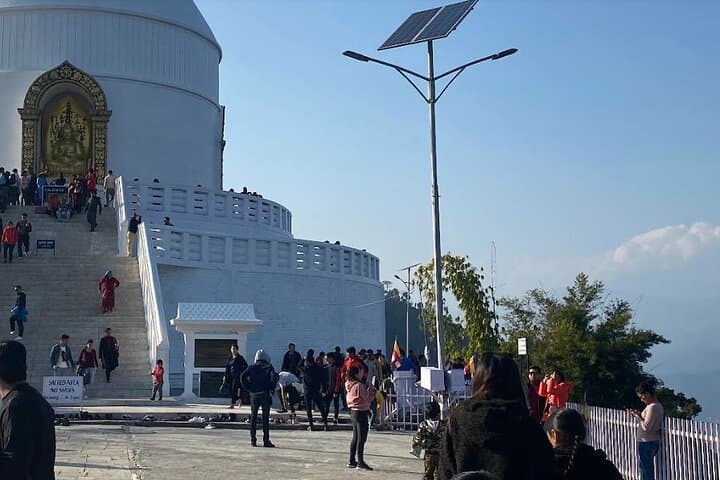
Expect a 3–4 hour round-trip hike on uneven stone steps and dirt trails with occasional short, steeper pitches. The summit rewards you with a circular platform around the stupa, prayer wheels, and unobstructed mountain sightlines—ideal for sunrise or late-afternoon light.
Practical tips: bring layered clothing, sun protection, and at least 1.5 liters of water; local tea stalls appear en route but can be closed early. Guides are common and useful for local history and route-finding. The cottage stay provides comfortable recovery and easy access to lakeside restaurants and boat launches, making this a compact, low-altitude Himalayan experience that combines cultural insight with straightforward hiking.
easy.
3 days (hike: 4–6 hours).
Suitable for most fitness levels; be comfortable with sustained uphill walking for several hours.
The hike is rated easy to moderate; most people complete the round-trip in 3–4 hours on well-marked trails with stone steps and occasional steep stretches.
No high-altitude acclimatization is needed—the stupa sits at low hill elevation above Pokhara; typical altitude sickness risks are minimal.
Yes—this tour includes private transport and hotel pickup and drop-off within Pokhara as part of the itinerary.
Accommodation includes the cottage stay; check the operator for specific meal inclusions—local teahouses and lakeside restaurants are readily available for other meals.
The World Peace Stupa was constructed by Japanese Buddhists in the late 20th century as part of an international effort to promote peace and provide a meditation site with Himalayan views.
Stick to marked trails to limit erosion; avoid single-use plastics—locals and operators encourage carrying out trash to protect Phewa Lake and surrounding forests.
Fewa Trail Treks and Expedition Pvt Ltd operates guided outdoor trips and adventures with an emphasis on safety, stewardship, and memorable experiences.


A cool morning light spills across Phewa Lake as you step out of a small cottage and feel the hill above Pokhara calling. The trail begins in the lakeside neighborhood, climbs through village lanes and terraced fields, and slips into a shawl of rhododendron and sal forest that seems to breathe with each step. By mid-hike the Annapurna range looms white and steady, Machhapuchhre (Fishtail) cutting the skyline like a practiced blade.
A cool morning light spills across Phewa Lake as you step out of a small cottage and feel the hill above Pokhara calling. The trail begins in the lakeside neighborhood, climbs through village lanes and terraced fields, and slips into a shawl of rhododendron and sal forest that seems to breathe with each step. By mid-hike the Annapurna range looms white and steady, Machhapuchhre (Fishtail) cutting the skyline like a practiced blade.
The World Peace Stupa (Shanti Stupa) was built by Japanese Buddhists after the 1990s as a place for quiet contemplation and panoramic views over Pokhara and the Himalaya. Geologically, the route rises from Phewa’s ponded basin up a ridge formed by ancient uplift and fluvial deposition; culturally, the climb threads village life—small teahouses, prayer flags, and stone-built shrines—offering a direct, human-scaled view of Nepali mountain culture.
Expect a 3–4 hour round-trip hike on uneven stone steps and dirt trails with occasional short, steeper pitches. The summit rewards you with a circular platform around the stupa, prayer wheels, and unobstructed mountain sightlines—ideal for sunrise or late-afternoon light.
Practical tips: bring layered clothing, sun protection, and at least 1.5 liters of water; local tea stalls appear en route but can be closed early. Guides are common and useful for local history and route-finding. The cottage stay provides comfortable recovery and easy access to lakeside restaurants and boat launches, making this a compact, low-altitude Himalayan experience that combines cultural insight with straightforward hiking.