THE ADVENTURE COLLECTIVE® · Independent discovery and booking for outdoor travel

A private five-hour car tour around Podgorica that pairs Roman ruins and cave churches with a tasting at Plantaze’s Sipcanik tunnel. Expect short walks, dramatic viewpoints, and local history delivered by guide.
A private five-hour car tour around Podgorica that pairs Roman ruins and cave churches with a tasting at Plantaze’s Sipcanik tunnel. Expect short walks, dramatic viewpoints, and local history delivered by guide.
You pull away from Podgorica’s scrambled cityscape and the air changes: limestone ridges tilt into scrub, the Cijevna river dares you toward narrow canyon light, and ancient stone sits quietly on a ridge above the valley.
Verified experiences and guided adventures in the surrounding area.
Operated by Attraction Montenegro Tour · Podgorica, Podgorica Municipality
You pull away from Podgorica’s scrambled cityscape and the air changes: limestone ridges tilt into scrub, the Cijevna river dares you toward narrow canyon light, and ancient stone sits quietly on a ridge above the valley.
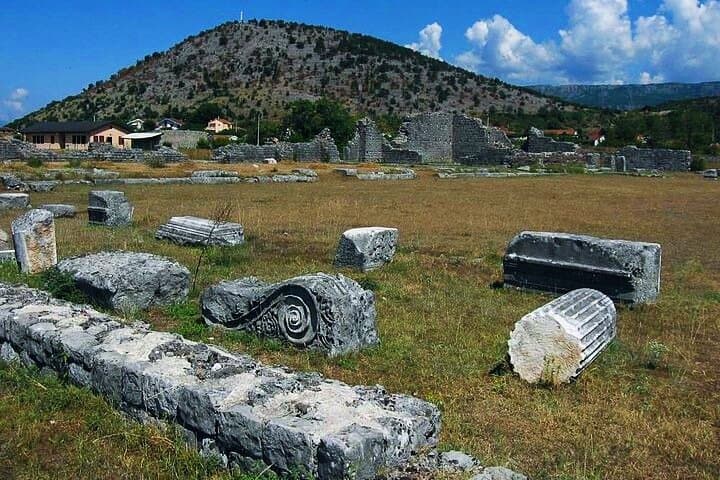
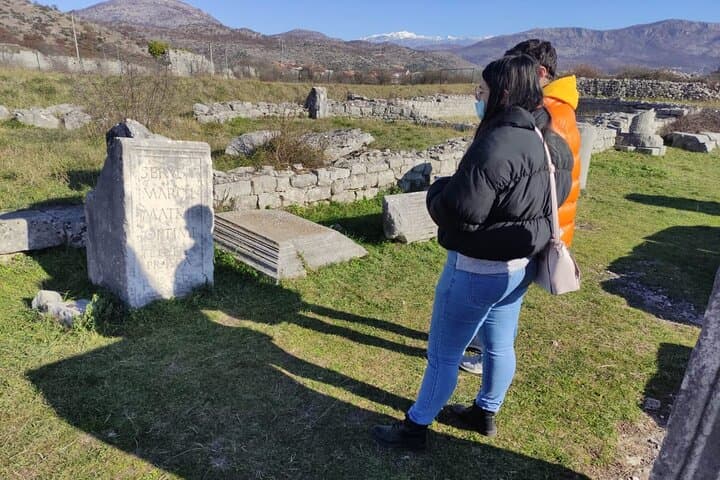
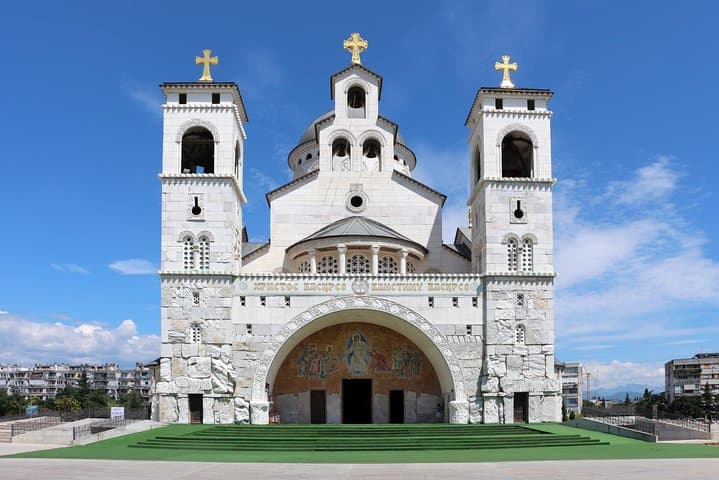
The tour begins at Doclea, the Roman town whose weathered foundations map a 2,000-year arc of regional power. From Trijebac hill the modern capital lays low while you read the landscape—Byzantine routes, Ottoman traces, and the 20th‑century plans that made today’s streets. The Temple of Christ’s Resurrection follows: a recent build with grand proportions that anchors contemporary Orthodox life here.
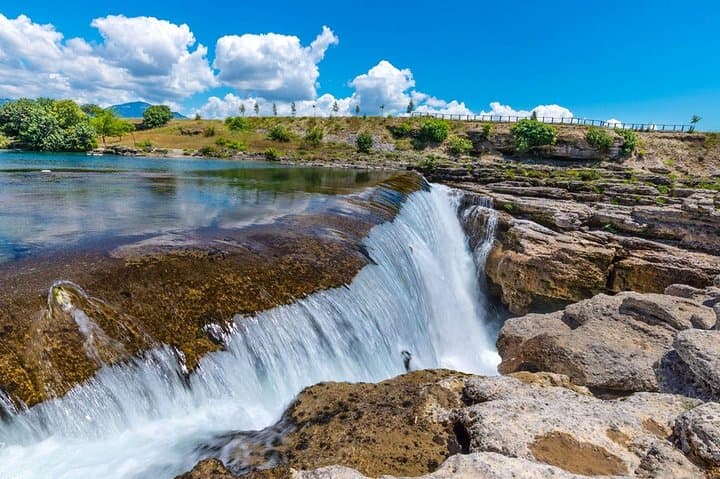
Dajbabe Monastery offers a different note—chapel rooms carved into a small cave where ritual meets raw rock. Downriver, the old Niagara dam at Cijevna and its restaurant make a practical pause: watch the current push against concrete walls and plan the afternoon.
Plantaze winery is a highlight: one of Europe’s largest single estates, with tasting in the Sipcanik tunnel—an airbase-turned-cellar that gives context to Montenegro’s agricultural push after war and socialism.
The final stretch through Podgorica’s Old Town brings clock tower views, fortress ruins and a relaxed dinner that turns tourism into local rhythm.
Practical guidance: this is a largely seated, five-hour private car tour with short walks on uneven archaeological sites and steps in churches and caves. Bring comfortable shoes for short climbs, an ID for wine tasting, layered clothing for canyon breezes, and a camera with spare battery—views change fast in this compact, historic landscape.
easy.
5 hours.
Light activity: mostly seated in a vehicle with several short walks on uneven ground; suitable for most fitness levels
The private tour runs about five hours and includes transport in an air-conditioned vehicle, guide, bottled water, coffee break, and wine tasting at Plantaze.
Yes—infants must sit on a lap; short walks are required but the itinerary is rated physically easy.
Yes; the itinerary lists included admissions and the Sipcanik wine tasting is part of the tour cost.
Yes—bookings collect special requirements in advance; notify the operator about mobility limitations or dietary needs to arrange appropriate stops and meals.
Doclea was a significant Roman-Illyrian town; later layers reflect Byzantine, Ottoman and modern Montenegrin developments. Plantaze grew during 20th‑century agricultural consolidation and remains a major regional producer.
Visitors should stick to marked paths at archaeological sites to prevent erosion; wineries and guides increasingly promote responsible tasting and support vineyard conservation practices.
Attraction Montenegro Tour operates guided outdoor trips and adventures with an emphasis on safety, stewardship, and memorable experiences.
You pull away from Podgorica’s scrambled cityscape and the air changes: limestone ridges tilt into scrub, the Cijevna river dares you toward narrow canyon light, and ancient stone sits quietly on a ridge above the valley.
You pull away from Podgorica’s scrambled cityscape and the air changes: limestone ridges tilt into scrub, the Cijevna river dares you toward narrow canyon light, and ancient stone sits quietly on a ridge above the valley.
The tour begins at Doclea, the Roman town whose weathered foundations map a 2,000-year arc of regional power. From Trijebac hill the modern capital lays low while you read the landscape—Byzantine routes, Ottoman traces, and the 20th‑century plans that made today’s streets. The Temple of Christ’s Resurrection follows: a recent build with grand proportions that anchors contemporary Orthodox life here.
Dajbabe Monastery offers a different note—chapel rooms carved into a small cave where ritual meets raw rock. Downriver, the old Niagara dam at Cijevna and its restaurant make a practical pause: watch the current push against concrete walls and plan the afternoon.
Plantaze winery is a highlight: one of Europe’s largest single estates, with tasting in the Sipcanik tunnel—an airbase-turned-cellar that gives context to Montenegro’s agricultural push after war and socialism.
The final stretch through Podgorica’s Old Town brings clock tower views, fortress ruins and a relaxed dinner that turns tourism into local rhythm.
Practical guidance: this is a largely seated, five-hour private car tour with short walks on uneven archaeological sites and steps in churches and caves. Bring comfortable shoes for short climbs, an ID for wine tasting, layered clothing for canyon breezes, and a camera with spare battery—views change fast in this compact, historic landscape.