THE ADVENTURE COLLECTIVE® · Independent discovery and booking for outdoor travel

Perched above the Central Valley, Poás delivers raw geothermal spectacle: a steaming, sulfuric crater and a quiet rain-fed lagoon. This guide explains what to expect, how to prepare, and the practical steps to visit safely.
Perched above the Central Valley, Poás delivers raw geothermal spectacle: a steaming, sulfuric crater and a quiet rain-fed lagoon. This guide explains what to expect, how to prepare, and the practical steps to visit safely.
At 2,708 meters the air thins and chills, and the crater of Poás announces itself before you see it: a low, sulfurous breath that tugs at the back of the throat and a column of steam that threads the cloud bank. Walk up to the rim and the principal crater opens like a hard, steaming eye — a green, acidic pool ringed by bleached rock and fumaroles that hiss and rearrange the landscape in real time.
Verified experiences and guided adventures in the surrounding area.
Operated by Tico Paradise Costa Rica · Alajuela, Alajuela
At 2,708 meters the air thins and chills, and the crater of Poás announces itself before you see it: a low, sulfurous breath that tugs at the back of the throat and a column of steam that threads the cloud bank. Walk up to the rim and the principal crater opens like a hard, steaming eye — a green, acidic pool ringed by bleached rock and fumaroles that hiss and rearrange the landscape in real time.
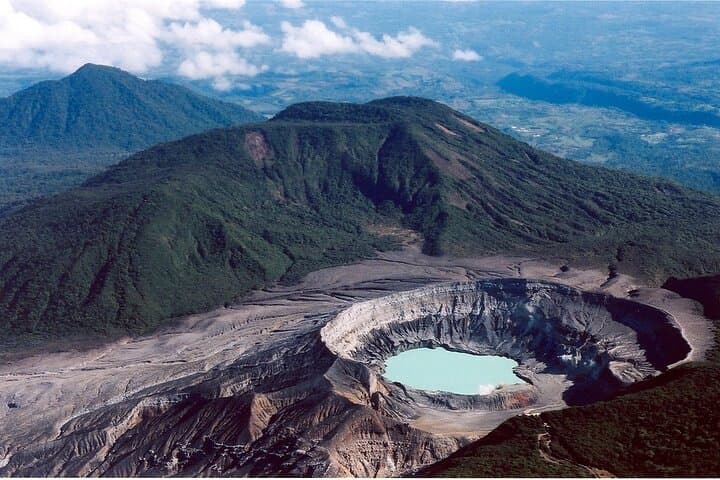
Poás is a working volcano: the main crater spans roughly 1.5 kilometers across and plunges about 300–320 meters to the steaming lake below. A smaller, colder body of water—Botos Lagoon—sits in a separate crater and holds rainwater that feeds local streams flowing east toward the Caribbean. The mountain’s modern personality was shaped by intense fumarolic activity that increased after 1989; you’ll see the ecological fingerprints of that change in patches of damaged forest and in studies posted at the park’s visitor center.
Geologically, Poás sits on the Central American volcanic arc where the Cocos Plate dives beneath the Caribbean Plate. Culturally, the volcano has long been a landmark for communities in Alajuela province, a place of agricultural risk and fascination: sulfur-rich soils outside the park support coffee and vegetable farms that trade altitude for mineral-rich ground.
Visiting is short and intense. Most visitors spend 20–45 minutes at the crater viewpoint; the Botos trail is an easy 1–1.5 km walk through cloud forest and offers a quiet counterpoint to the main crater’s drama. Plan for fog and fast weather changes—visibility can shift from postcard-clear to opaque in minutes. Because the summit is active, the park enforces safety protocols and occasional temporary closures; stay alert to updates.
Practicalities: tickets are mobile-friendly and require confirmation—organizers request guests contact WhatsApp (+1 312-940-7044) or email the day before to receive an access code. Bring your passport to present at the gate and arrive at least 10 minutes early. Parking carries a small fee (about $6); transport and guides are not included with the admission ticket.
Layer up. Even on sunny valley days the summit is cool and windy; a waterproof shell and warm mid-layer will keep you comfortable. Footwear should handle damp, sometimes muddy paths on the Botos trail. Take water and move deliberately—altitude and sulfurous air can make exertion feel sharper than at sea level.
Poás delivers its spectacle in concentrated bursts: steamed fumaroles daring you to stay close and a crater lake that refuses to look like any ordinary lake. For a compact mountain experience that blends raw geology, cloud-forest walks and straightforward logistics, Poás is hard to beat.
easy.
20–45 minutes.
Suitable for most fitness levels; trails are short but altitude can increase exertion
Most visitors spend 20–45 minutes at the crater viewpoint; add 30–60 minutes if you plan to walk the Botos Lagoon trail and visit the visitor center.
No—mobile tickets are accepted, but you must obtain the access code from the operator the day before and present your passport at the gate.
The park monitors activity closely and enforces safety zones; closures can occur at short notice—check for updates and follow park staff directions.
No; this admission covers park entry only. Transport and guided tours must be arranged separately.
Yes—the Botos Lagoon and its short trail are inside the park and accessible during your visit when the park is open.
The main viewpoints are stroller-accessible, but paths can be wet and uneven—supervise children and be cautious near observation rails.
Poás has been a landmark and agricultural influence for local communities; significant increases in fumarolic activity since 1989 changed nearby ecosystems and farming practices.
The park balances public access with strict safety and environmental rules; stay on marked trails to protect recovering flora and reduce exposure to hazardous gases.
Tico Paradise Costa Rica operates guided outdoor trips and adventures with an emphasis on safety, stewardship, and memorable experiences.
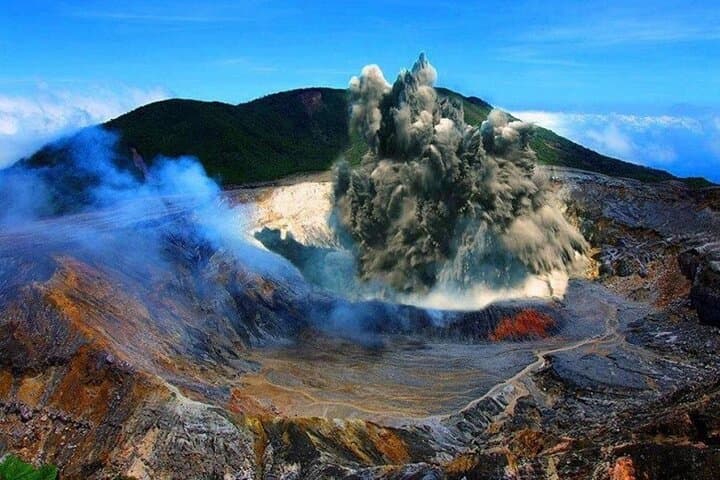
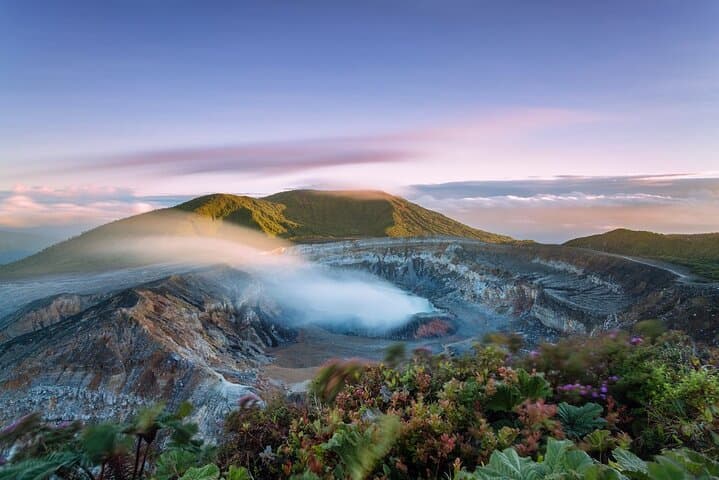
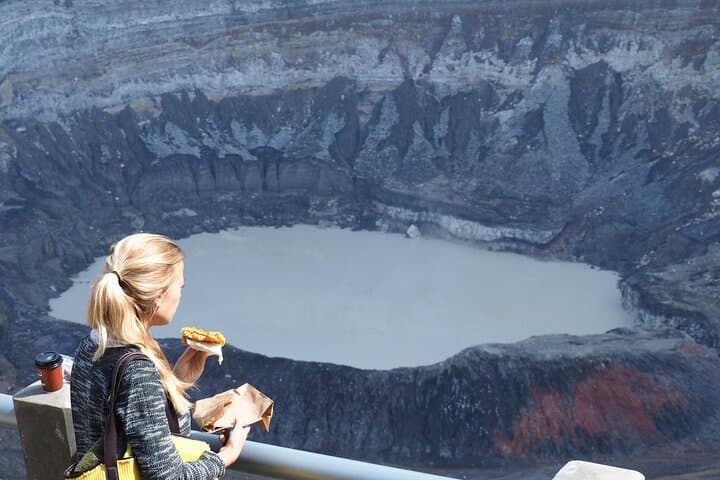
At 2,708 meters the air thins and chills, and the crater of Poás announces itself before you see it: a low, sulfurous breath that tugs at the back of the throat and a column of steam that threads the cloud bank. Walk up to the rim and the principal crater opens like a hard, steaming eye — a green, acidic pool ringed by bleached rock and fumaroles that hiss and rearrange the landscape in real time.
At 2,708 meters the air thins and chills, and the crater of Poás announces itself before you see it: a low, sulfurous breath that tugs at the back of the throat and a column of steam that threads the cloud bank. Walk up to the rim and the principal crater opens like a hard, steaming eye — a green, acidic pool ringed by bleached rock and fumaroles that hiss and rearrange the landscape in real time.
Poás is a working volcano: the main crater spans roughly 1.5 kilometers across and plunges about 300–320 meters to the steaming lake below. A smaller, colder body of water—Botos Lagoon—sits in a separate crater and holds rainwater that feeds local streams flowing east toward the Caribbean. The mountain’s modern personality was shaped by intense fumarolic activity that increased after 1989; you’ll see the ecological fingerprints of that change in patches of damaged forest and in studies posted at the park’s visitor center.
Geologically, Poás sits on the Central American volcanic arc where the Cocos Plate dives beneath the Caribbean Plate. Culturally, the volcano has long been a landmark for communities in Alajuela province, a place of agricultural risk and fascination: sulfur-rich soils outside the park support coffee and vegetable farms that trade altitude for mineral-rich ground.
Visiting is short and intense. Most visitors spend 20–45 minutes at the crater viewpoint; the Botos trail is an easy 1–1.5 km walk through cloud forest and offers a quiet counterpoint to the main crater’s drama. Plan for fog and fast weather changes—visibility can shift from postcard-clear to opaque in minutes. Because the summit is active, the park enforces safety protocols and occasional temporary closures; stay alert to updates.
Practicalities: tickets are mobile-friendly and require confirmation—organizers request guests contact WhatsApp (+1 312-940-7044) or email the day before to receive an access code. Bring your passport to present at the gate and arrive at least 10 minutes early. Parking carries a small fee (about $6); transport and guides are not included with the admission ticket.
Layer up. Even on sunny valley days the summit is cool and windy; a waterproof shell and warm mid-layer will keep you comfortable. Footwear should handle damp, sometimes muddy paths on the Botos trail. Take water and move deliberately—altitude and sulfurous air can make exertion feel sharper than at sea level.
Poás delivers its spectacle in concentrated bursts: steamed fumaroles daring you to stay close and a crater lake that refuses to look like any ordinary lake. For a compact mountain experience that blends raw geology, cloud-forest walks and straightforward logistics, Poás is hard to beat.