THE ADVENTURE COLLECTIVE® · Independent discovery and booking for outdoor travel

Stand on the rim of one of the world’s largest active craters, follow cloud-forest trails to serene crater lakes and five cascading falls, and finish with freshly brewed Costa Rican coffee. This full-day combines geothermal drama, wildlife viewing, and cultural flavors in one accessible package.
Stand on the rim of one of the world’s largest active craters, follow cloud-forest trails to serene crater lakes and five cascading falls, and finish with freshly brewed Costa Rican coffee. This full-day combines geothermal drama, wildlife viewing, and cultural flavors in one accessible package.
You arrive where the road climbs into cloud—fog clings to pines and the wind carries a sharp mineral tang that seems to be breathing from the crater itself. At Poás’s rim, steam and sulfurous vapors push like a living thing from Laguna Caliente, a turquoise-green pool in a crater nearly a mile across and more than 900 feet deep. Down-valley, waterfalls throw sheets of water through fern-dark canyons; at La Paz Waterfall Gardens they plunge in sequence, the sound demanding your attention.
Verified experiences and guided adventures in the surrounding area.
Operated by Pablo C · Alajuela, Alajuela
You arrive where the road climbs into cloud—fog clings to pines and the wind carries a sharp mineral tang that seems to be breathing from the crater itself. At Poás’s rim, steam and sulfurous vapors push like a living thing from Laguna Caliente, a turquoise-green pool in a crater nearly a mile across and more than 900 feet deep. Down-valley, waterfalls throw sheets of water through fern-dark canyons; at La Paz Waterfall Gardens they plunge in sequence, the sound demanding your attention.
Geology here is raw and recent: repeated eruptions sculpted broad craters and acidic lakes while heavy cloud forest soils fed the rich biodiversity that followed. Culturally, the area sits on long-standing agricultural traditions—coffee farms cling to steep slopes and local guides weave volcanic history with stories of farming families who manage microclimates for shade-grown beans.
Expect short, high-elevation walks—Laguna Botos is a gentle 1–2 km trail around an extinct crater with excellent birdwatching. La Paz offers paved 3.5 km paths connecting five waterfalls and wildlife exhibits. The day ends with a deliberate coffee break: freshly brewed beans that tell a local story in every cup.
Practical edge: start early for the clearest crater views, pack a rain jacket (cloud forests turn wet fast), and use sturdy gripped shoes for slick boardwalks. Altitude near Poás (about 2,700–2,800 m) can make climbs feel harder; hydrate and take it steady. Check park status before you go—Poás can close for volcanic activity or low visibility. With moderate fitness you’ll cover varied terrain, see unique volcanic features, waterfalls, and sample Costa Rica’s revered coffee culture in a single full day.
moderate.
8 hours.
Moderately fit: able to walk 3–5 km across mixed terrain at altitude with some stairs and uneven surfaces
This is a full-day experience (about 8 hours) combining a visit to Poás Volcano, cloud forest trails including Laguna Botos, La Paz Waterfall Gardens, and a coffee break; admission to La Paz is typically included—confirm specifics with the operator.
Poás sits around 2,700–2,800 m; visitors may feel mild breathlessness. The park periodically closes for volcanic activity or poor visibility—check current conditions before you travel.
Many trails at La Paz are paved and stroller-friendly; short walks like Laguna Botos are manageable with older children, but crater viewpoints may have uneven surfaces.
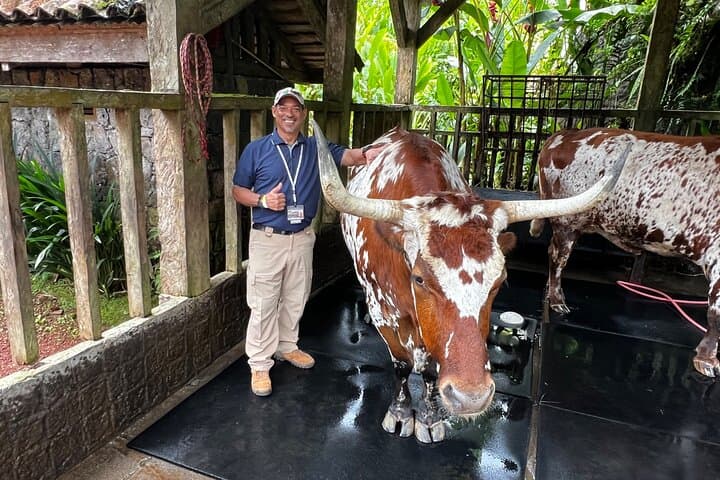
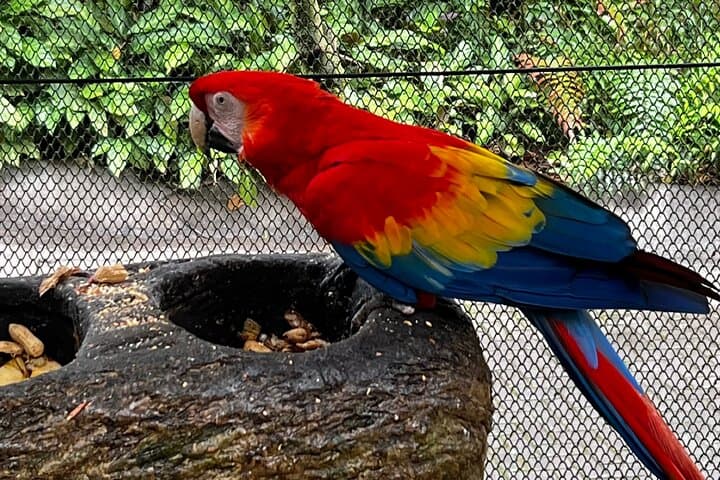
Yes—expect hummingbirds, toucanets, sloths, and rescued animals at La Paz; bird activity is strong near the crater and on cloud-forest trails, especially early morning.
Poás’s eruptions have shaped local settlement and agriculture for centuries; coffee cultivation rose in the 19th–20th centuries, adapting to the region’s volcanic soils and microclimates.
Both Poás National Park and La Paz emphasize habitat protection and rescue work; visitors should stick to trails, avoid feeding wildlife, and support locally run conservation efforts.
Pablo C operates guided outdoor trips and adventures with an emphasis on safety, stewardship, and memorable experiences.
You arrive where the road climbs into cloud—fog clings to pines and the wind carries a sharp mineral tang that seems to be breathing from the crater itself. At Poás’s rim, steam and sulfurous vapors push like a living thing from Laguna Caliente, a turquoise-green pool in a crater nearly a mile across and more than 900 feet deep. Down-valley, waterfalls throw sheets of water through fern-dark canyons; at La Paz Waterfall Gardens they plunge in sequence, the sound demanding your attention.
You arrive where the road climbs into cloud—fog clings to pines and the wind carries a sharp mineral tang that seems to be breathing from the crater itself. At Poás’s rim, steam and sulfurous vapors push like a living thing from Laguna Caliente, a turquoise-green pool in a crater nearly a mile across and more than 900 feet deep. Down-valley, waterfalls throw sheets of water through fern-dark canyons; at La Paz Waterfall Gardens they plunge in sequence, the sound demanding your attention.
Geology here is raw and recent: repeated eruptions sculpted broad craters and acidic lakes while heavy cloud forest soils fed the rich biodiversity that followed. Culturally, the area sits on long-standing agricultural traditions—coffee farms cling to steep slopes and local guides weave volcanic history with stories of farming families who manage microclimates for shade-grown beans.
Expect short, high-elevation walks—Laguna Botos is a gentle 1–2 km trail around an extinct crater with excellent birdwatching. La Paz offers paved 3.5 km paths connecting five waterfalls and wildlife exhibits. The day ends with a deliberate coffee break: freshly brewed beans that tell a local story in every cup.
Practical edge: start early for the clearest crater views, pack a rain jacket (cloud forests turn wet fast), and use sturdy gripped shoes for slick boardwalks. Altitude near Poás (about 2,700–2,800 m) can make climbs feel harder; hydrate and take it steady. Check park status before you go—Poás can close for volcanic activity or low visibility. With moderate fitness you’ll cover varied terrain, see unique volcanic features, waterfalls, and sample Costa Rica’s revered coffee culture in a single full day.