THE ADVENTURE COLLECTIVE® · Independent discovery and booking for outdoor travel

A private shore excursion from Puntarenas that pairs the simmering crater of Poás Volcano with the rainforest cascades and wildlife of La Paz Waterfall Gardens. Expect dramatic vistas, quick weather changes, and short, rewarding walks suitable for moderately fit travelers.
A private shore excursion from Puntarenas that pairs the simmering crater of Poás Volcano with the rainforest cascades and wildlife of La Paz Waterfall Gardens. Expect dramatic vistas, quick weather changes, and short, rewarding walks suitable for moderately fit travelers.
You step off the tender into the humid air of the Gulf of Nicoya and an hour later the landscape has changed: low coastal scrub gives way to steep coffee slopes and cloud-damp forest as the road climbs toward Poás.
Verified experiences and guided adventures in the surrounding area.
Operated by Top Private Tours · Alajuela, Alajuela
You step off the tender into the humid air of the Gulf of Nicoya and an hour later the landscape has changed: low coastal scrub gives way to steep coffee slopes and cloud-damp forest as the road climbs toward Poás.
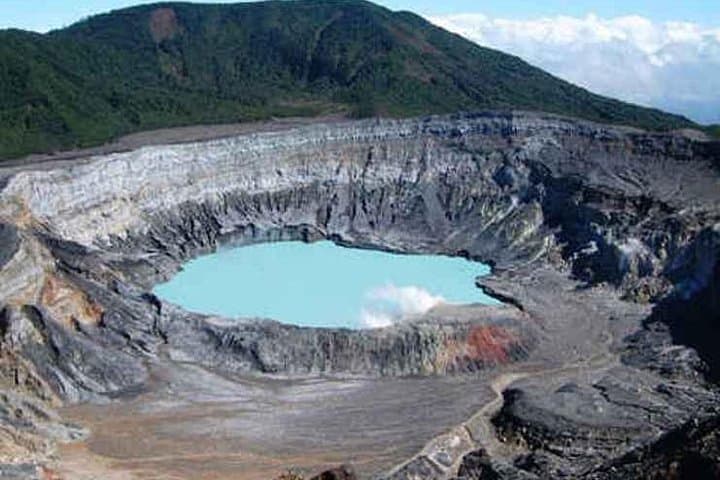
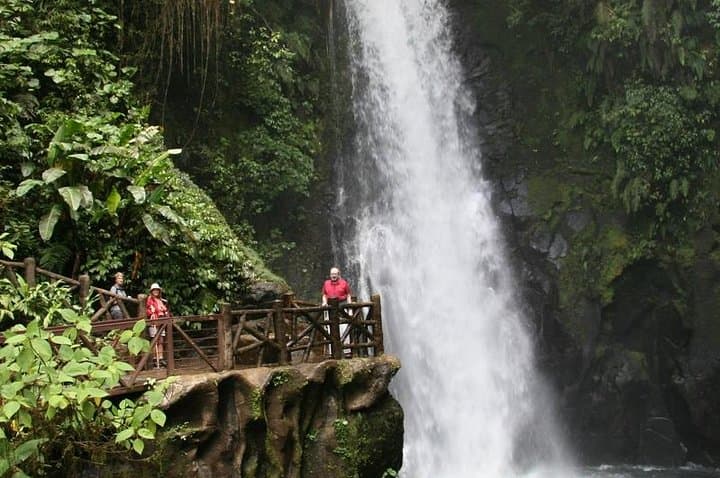
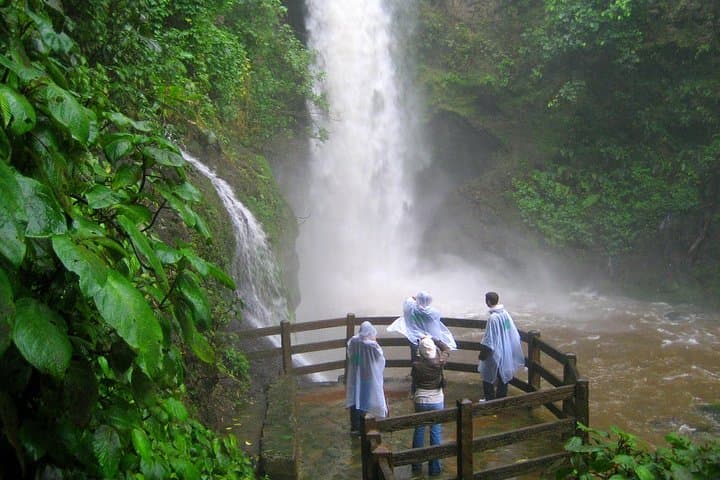
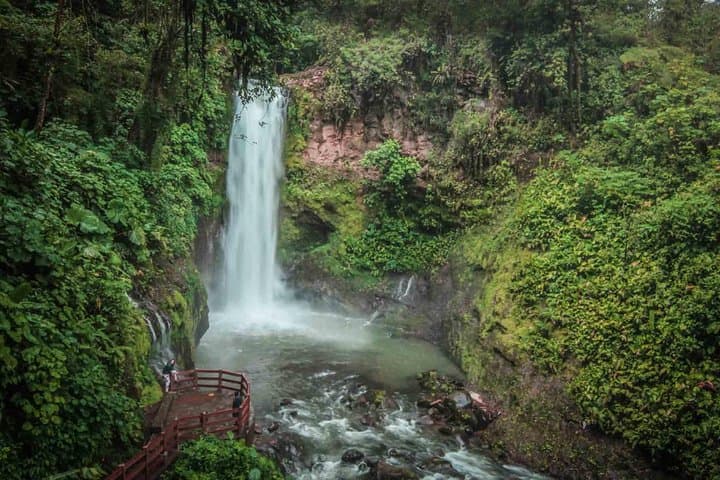
At Poás Volcano the crater announces itself before you see it—acrid steam drifting over a turquoise acidic lagoon, the rim rimmed with fumaroles that breathe sulfur-scented gusts. The trails around the summit are short but dramatic, boardwalks and viewpoints framing geological history: a high-altitude stratovolcano shaped by repeated eruptions and an active hydrothermal system. A few kilometers downhill, La Paz Waterfall Gardens flips the script—cascades cutting through old lava flows, stepped falls, and a private reserve where rescued ocelots and toucans move through orchards and hummingbird feeders.
The region sits in Alajuela province, within a network of volcanic soils that make it a coffee- and biodiversity-rich corridor between the Central Valley and the Caribbean slope. Cultural notes: small mountain towns grew on coffee boom lines and now cater to ecotourism; many private reserves play dual roles in rescue and education.
Practical guidance: bring a wind- and rain-layer; summit temperature can drop to the mid-40s°F (single digits °C) and visibility changes fast. Allow 4–5 hours for a shore excursion including port transfers; passport details are usually required for volcano tickets and cruises must confirm embarkation times. Footwear should be sturdy for slick boardwalks and short hikes. Expect moderate altitudes (~2,700 m at Poás), dramatic photo ops, and quick weather shifts—plan for layers, hydration, and a camera with a weather-sealed case.
moderate.
4–5 hours.
Moderately fit: short hikes and standing at viewpoints; some walking on uneven, moist surfaces and mild altitude (≈2,700 m).
Transfer time varies with traffic but typically ranges 2–2.5 hours each way from Puntarenas to the Poás area; this tour schedules about 4–5 hours total for activities.
This private tour arranges admission but volcano tickets often require passport details (full name, number, nationality) at booking—be prepared to provide them.
Short trails are family-friendly, but travelers should be comfortable with moderate walking, uneven surfaces, and higher altitude; inform the operator of mobility concerns during booking.
Cloud cover can limit views; guides will time stops to maximize visibility where possible, but refunds for poor visibility are unlikely—ask about flexible scheduling when booking.
Poás sits in Costa Rica’s volcanic chain formed by subduction of the Cocos Plate; the area’s coffee plantations and towns grew during 19th–20th century agricultural expansion.
La Paz operates as a private reserve focused on wildlife rescue and education; visitors are asked to stay on trails and avoid feeding wild animals to reduce human-wildlife conflicts.
Top Private Tours operates guided outdoor trips and adventures with an emphasis on safety, stewardship, and memorable experiences.
You step off the tender into the humid air of the Gulf of Nicoya and an hour later the landscape has changed: low coastal scrub gives way to steep coffee slopes and cloud-damp forest as the road climbs toward Poás.
You step off the tender into the humid air of the Gulf of Nicoya and an hour later the landscape has changed: low coastal scrub gives way to steep coffee slopes and cloud-damp forest as the road climbs toward Poás.
At Poás Volcano the crater announces itself before you see it—acrid steam drifting over a turquoise acidic lagoon, the rim rimmed with fumaroles that breathe sulfur-scented gusts. The trails around the summit are short but dramatic, boardwalks and viewpoints framing geological history: a high-altitude stratovolcano shaped by repeated eruptions and an active hydrothermal system. A few kilometers downhill, La Paz Waterfall Gardens flips the script—cascades cutting through old lava flows, stepped falls, and a private reserve where rescued ocelots and toucans move through orchards and hummingbird feeders.
The region sits in Alajuela province, within a network of volcanic soils that make it a coffee- and biodiversity-rich corridor between the Central Valley and the Caribbean slope. Cultural notes: small mountain towns grew on coffee boom lines and now cater to ecotourism; many private reserves play dual roles in rescue and education.
Practical guidance: bring a wind- and rain-layer; summit temperature can drop to the mid-40s°F (single digits °C) and visibility changes fast. Allow 4–5 hours for a shore excursion including port transfers; passport details are usually required for volcano tickets and cruises must confirm embarkation times. Footwear should be sturdy for slick boardwalks and short hikes. Expect moderate altitudes (~2,700 m at Poás), dramatic photo ops, and quick weather shifts—plan for layers, hydration, and a camera with a weather-sealed case.