THE ADVENTURE COLLECTIVE® · Independent discovery and booking for outdoor travel

Walk wooden boardwalks across Plitvice’s twelve interlinked lakes, cross Kozjak by boat, savor a traditional lunch, and see Zadar and Klis Fortress on a private day trip from Split. This full-day tour pairs geology and culture with practical route logistics.
Walk wooden boardwalks across Plitvice’s twelve interlinked lakes, cross Kozjak by boat, savor a traditional lunch, and see Zadar and Klis Fortress on a private day trip from Split. This full-day tour pairs geology and culture with practical route logistics.
You step off the air-conditioned van onto the timber of a wooden boardwalk and the water seems to move with intent—pooling, spilling, and daring you to follow. The path threads across a chain of twelve lakes, each a different shade of green and blue, until a panoramic boat ride carries you across the largest basin and the roar of Veliki Slap (the Great Waterfall) fills the valley.
Verified experiences and guided adventures in the surrounding area.
Operated by Waterworld Croatia · Plitvička Jezera, Lika-Senj County
You step off the air-conditioned van onto the timber of a wooden boardwalk and the water seems to move with intent—pooling, spilling, and daring you to follow. The path threads across a chain of twelve lakes, each a different shade of green and blue, until a panoramic boat ride carries you across the largest basin and the roar of Veliki Slap (the Great Waterfall) fills the valley.
Plitvice’s landscape is shaped by karst geology and active travertine formation; mineral-rich waters build natural dams and stairs that redirect streams into cascades. The park was protected in 1949 and later recognized by UNESCO for its rare hydrology. Nearby Zadar layers Roman ruins and medieval churches into a living waterfront — its Sea Organ and Greeting to the Sun offer modern contrasts to the park’s ancient stones. Klis Fortress, perched above a village, adds two millennia of military history and commanding coastal views.
Expect roughly 3–5 km of walking on wooden boardwalks and packed trails, punctuated by a short panoramic boat crossing and a park train ride; some sections include stairs and uneven surfaces. Bring water, sturdy shoes, and a light rain shell—conditions can change rapidly. The included traditional lunch near the lakes is a practical reward after the morning’s walking, and a brief stop in Zadar gives time for a fast walk through the Forum and a photo at the Sea Organ.
Plan for a full 10–11 hour day from Split: early departure, comfortable footwear, layered clothing, and a charged camera will make this one of the most complete day trips on Croatia’s itinerary.
moderate.
10–11 hours.
Moderate fitness; able to walk 3–5 km on uneven wooden boardwalks and climb stairs several times during a day.
Yes — the tour includes the required entrance ticket to Plitvice Lakes National Park as part of the booking.
Plan for approximately 3–5 km of walking along wooden boardwalks and trails over about 2–3 hours inside the park, plus short train and boat segments.
No — swimming is prohibited to protect the travertine formations; the tour includes a guided panoramic boat ride across Kozjak Lake only.
The route includes stairs and uneven boardwalks; it’s listed as physically easy for most, but not recommended for people with significant spinal, heart, or severe mobility issues.
Plitvice Lakes National Park formed through active travertine deposition and has been protected since 1949; UNESCO listed it for its unique karst hydrology.
Stay on boardwalks, do not feed wildlife, and avoid single-use plastics—entrance quotas and marked paths help reduce erosion and protect travertine growth.
Waterworld Croatia operates guided outdoor trips and adventures with an emphasis on safety, stewardship, and memorable experiences.
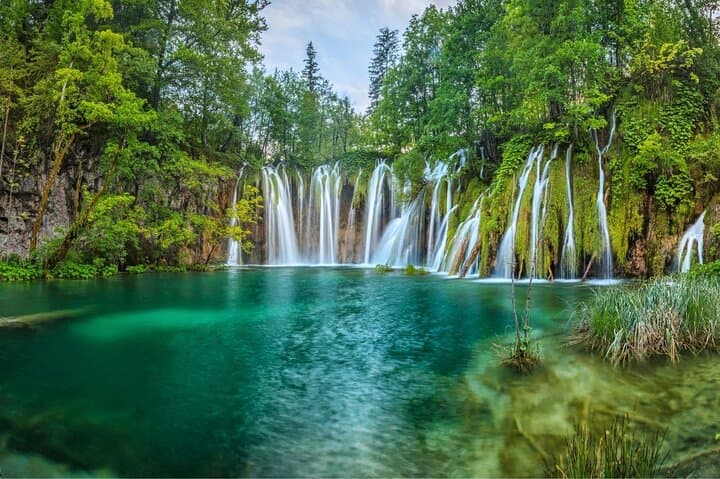
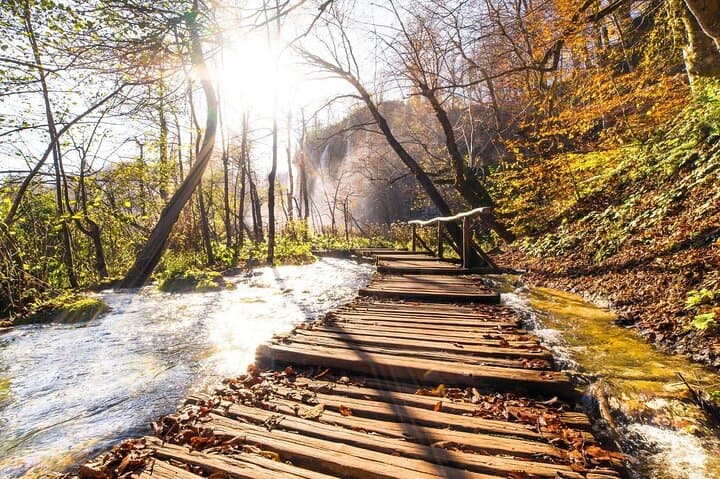
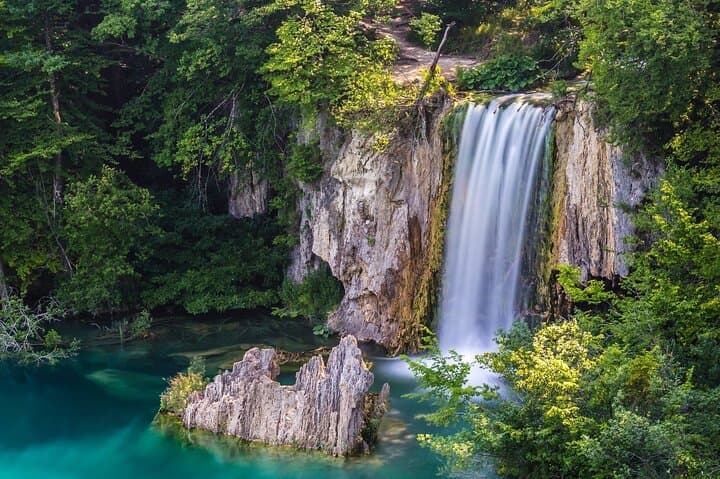
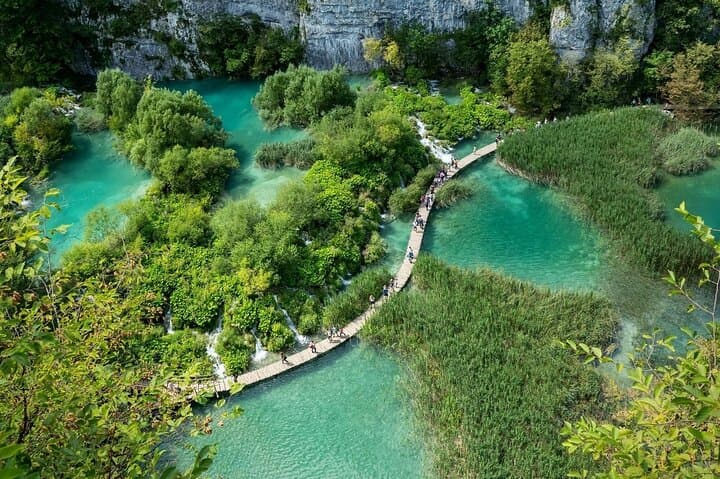
You step off the air-conditioned van onto the timber of a wooden boardwalk and the water seems to move with intent—pooling, spilling, and daring you to follow. The path threads across a chain of twelve lakes, each a different shade of green and blue, until a panoramic boat ride carries you across the largest basin and the roar of Veliki Slap (the Great Waterfall) fills the valley.
You step off the air-conditioned van onto the timber of a wooden boardwalk and the water seems to move with intent—pooling, spilling, and daring you to follow. The path threads across a chain of twelve lakes, each a different shade of green and blue, until a panoramic boat ride carries you across the largest basin and the roar of Veliki Slap (the Great Waterfall) fills the valley.
Plitvice’s landscape is shaped by karst geology and active travertine formation; mineral-rich waters build natural dams and stairs that redirect streams into cascades. The park was protected in 1949 and later recognized by UNESCO for its rare hydrology. Nearby Zadar layers Roman ruins and medieval churches into a living waterfront — its Sea Organ and Greeting to the Sun offer modern contrasts to the park’s ancient stones. Klis Fortress, perched above a village, adds two millennia of military history and commanding coastal views.
Expect roughly 3–5 km of walking on wooden boardwalks and packed trails, punctuated by a short panoramic boat crossing and a park train ride; some sections include stairs and uneven surfaces. Bring water, sturdy shoes, and a light rain shell—conditions can change rapidly. The included traditional lunch near the lakes is a practical reward after the morning’s walking, and a brief stop in Zadar gives time for a fast walk through the Forum and a photo at the Sea Organ.
Plan for a full 10–11 hour day from Split: early departure, comfortable footwear, layered clothing, and a charged camera will make this one of the most complete day trips on Croatia’s itinerary.