THE ADVENTURE COLLECTIVE® · Independent discovery and booking for outdoor travel

Spend a day exploring Plitvice Lakes’ travertine cascades and turquoise pools on a private transfer from Zadar. This one-day trip mixes short hikes, a Kozjak Lake boat crossing, and curated viewpoints for Veliki Slap.
Spend a day exploring Plitvice Lakes’ travertine cascades and turquoise pools on a private transfer from Zadar. This one-day trip mixes short hikes, a Kozjak Lake boat crossing, and curated viewpoints for Veliki Slap.
You step onto the wooden boardwalk and the lakes answer—water sliding over travertine ribs, a cascade daring you to watch until it stills. Morning light strikes bright turquoise, and the forest exhales a cool, resin-scented breath that pushes you forward along the path.
Verified experiences and guided adventures in the surrounding area.
Operated by Octopus Transfers · Plitvička Jezera, Lika-Senj County
You step onto the wooden boardwalk and the lakes answer—water sliding over travertine ribs, a cascade daring you to watch until it stills. Morning light strikes bright turquoise, and the forest exhales a cool, resin-scented breath that pushes you forward along the path.
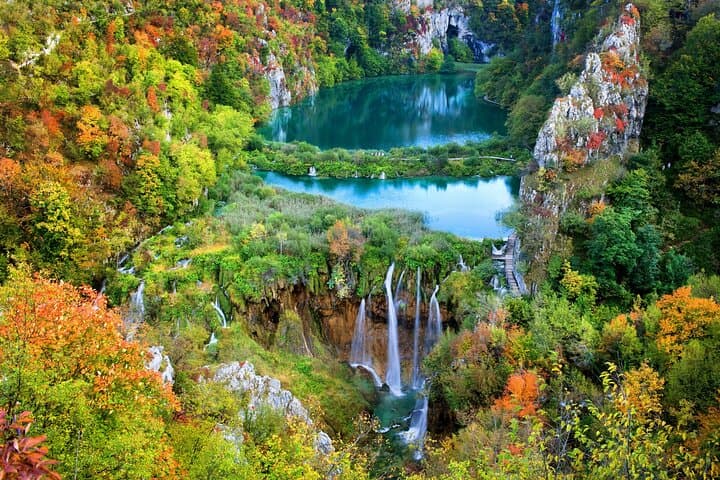
Plitvice Lakes National Park, a UNESCO site since 1979, occupies rolling karst terrain in Croatia’s Lika-Senj County. Over millennia, mineral-rich water built travertine dams that separate 16 linked lakes and feed a sequence of waterfalls, the most dramatic being Veliki Slap (78 m). The area’s human story ranges from pastoral communities in the surrounding villages to recent conservation efforts that prioritize boardwalks and controlled routes to protect delicate limestone formations.
Culturally, the park sits at a crossroads—Velebit’s shade to the west, shepherding traditions inland, and Dalmatian coast influences coming from Zadar on the horizon. Visitor experiences commonly include hiking the upper and lower lake loops, a short boat crossing across Kozjak Lake, and viewpoint stops for Veliki Slap.
Practical notes: the drive from Zadar takes about 1 hour 45 minutes through mountain forest; a private tour adds onboard Wi‑Fi and English guidance and typically allows 3–4 hours in the park. Wear sturdy, water-resistant shoes for variable boardwalk and stone steps, bring layered clothing, insect repellent, and at least 1–2 liters of water. Start early or late in the afternoon to avoid peak crowds and to catch better light on the falls. Stay on marked trails, keep a respectful distance from wildlife, and be prepared for uneven surfaces—this is sightseeing with short hikes and big rewards.
easy.
8 hours.
Suitable for people in average fitness — includes walking on boardwalks and short stair sections; no technical climbing required.
Expect about 1 hour 45 minutes each way by private vehicle, depending on traffic and the chosen pickup point in Zadar.
This tour description lists admission as not included — confirm with the operator so you know whether tickets are covered before arrival.
Some boardwalk sections and viewpoints are accessible, but many paths include steps and uneven surfaces; check specific route accessibility with the provider.
Yes — most private day tours include the short electric boat crossing of Kozjak Lake as part of the itinerary.
Plitvice’s travertine pools formed over thousands of years as calcium carbonate deposited and created natural dams; the park has been protected since it became a national park in 1949 and a UNESCO site in 1979.
Boardwalks and marked routes minimize erosion and protect travertine formation; visitors are encouraged to stay on paths and avoid feeding wildlife to preserve ecosystem balance.
Octopus Transfers operates guided outdoor trips and adventures with an emphasis on safety, stewardship, and memorable experiences.
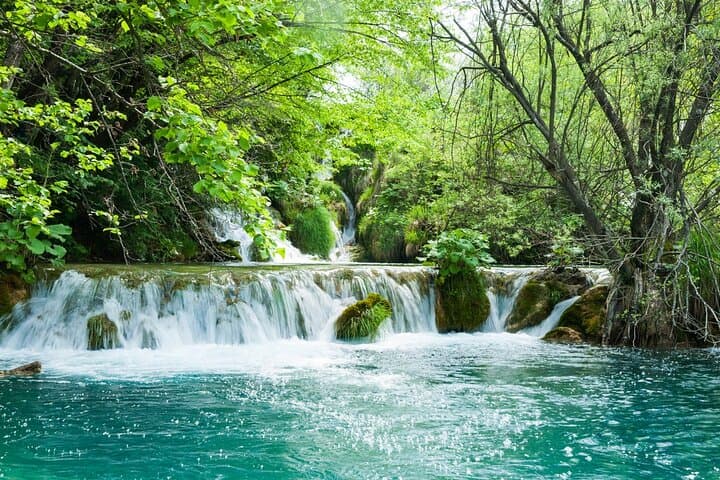
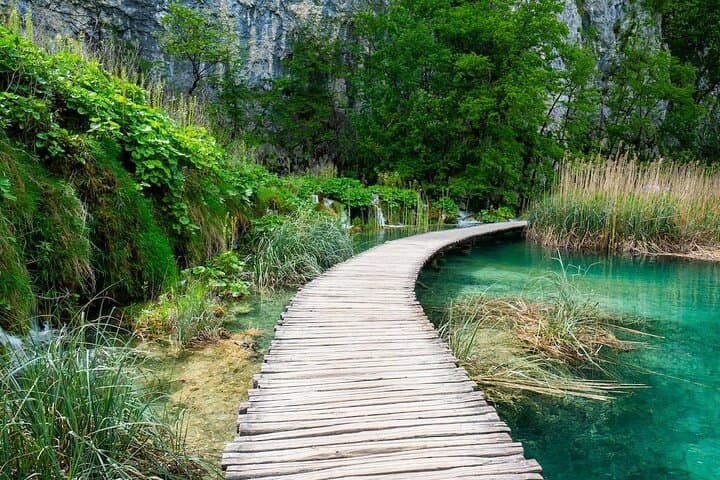
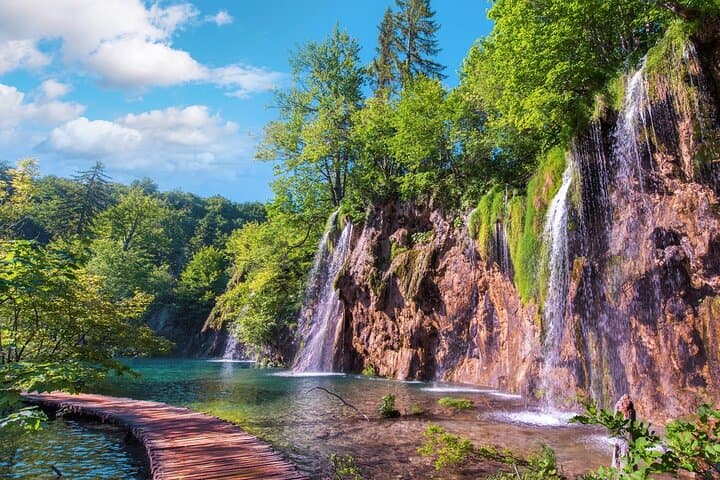
You step onto the wooden boardwalk and the lakes answer—water sliding over travertine ribs, a cascade daring you to watch until it stills. Morning light strikes bright turquoise, and the forest exhales a cool, resin-scented breath that pushes you forward along the path.
You step onto the wooden boardwalk and the lakes answer—water sliding over travertine ribs, a cascade daring you to watch until it stills. Morning light strikes bright turquoise, and the forest exhales a cool, resin-scented breath that pushes you forward along the path.
Plitvice Lakes National Park, a UNESCO site since 1979, occupies rolling karst terrain in Croatia’s Lika-Senj County. Over millennia, mineral-rich water built travertine dams that separate 16 linked lakes and feed a sequence of waterfalls, the most dramatic being Veliki Slap (78 m). The area’s human story ranges from pastoral communities in the surrounding villages to recent conservation efforts that prioritize boardwalks and controlled routes to protect delicate limestone formations.
Culturally, the park sits at a crossroads—Velebit’s shade to the west, shepherding traditions inland, and Dalmatian coast influences coming from Zadar on the horizon. Visitor experiences commonly include hiking the upper and lower lake loops, a short boat crossing across Kozjak Lake, and viewpoint stops for Veliki Slap.
Practical notes: the drive from Zadar takes about 1 hour 45 minutes through mountain forest; a private tour adds onboard Wi‑Fi and English guidance and typically allows 3–4 hours in the park. Wear sturdy, water-resistant shoes for variable boardwalk and stone steps, bring layered clothing, insect repellent, and at least 1–2 liters of water. Start early or late in the afternoon to avoid peak crowds and to catch better light on the falls. Stay on marked trails, keep a respectful distance from wildlife, and be prepared for uneven surfaces—this is sightseeing with short hikes and big rewards.