THE ADVENTURE COLLECTIVE® · Independent discovery and booking for outdoor travel

A full‑day guided tour from Split to Plitvice Lakes takes you across karst plateaus to a chain of turquoise basins, wooden boardwalks and cascading falls. This practical guide explains what to expect on the drive, the walking routes, ticketing, and gear to bring.
A full‑day guided tour from Split to Plitvice Lakes takes you across karst plateaus to a chain of turquoise basins, wooden boardwalks and cascading falls. This practical guide explains what to expect on the drive, the walking routes, ticketing, and gear to bring.
You leave Split before dawn and the coast thins into karst ridges; the highway climbs and the Adriatic gives way to pine and beech. By mid‑morning the park appears: a chain of turquoise basins threaded by wooden boardwalks and waterfalls that dare you to step closer. A guided route unspools across the lakes, with a short electric‑boat crossing that pushes you through glassy water beneath cliff‑hung cascades.
Verified experiences and guided adventures in the surrounding area.
Operated by Traveljaz · Plitvička Jezera, Lika-Senj County
You leave Split before dawn and the coast thins into karst ridges; the highway climbs and the Adriatic gives way to pine and beech. By mid‑morning the park appears: a chain of turquoise basins threaded by wooden boardwalks and waterfalls that dare you to step closer. A guided route unspools across the lakes, with a short electric‑boat crossing that pushes you through glassy water beneath cliff‑hung cascades.
Plitvice Lakes is Croatia’s oldest national park (established 1949) and a UNESCO World Heritage Site. The landscape is classic karst: limestone bedrock, travertine (tufa) dams forming naturally over millennia, and a mosaic of conifer and beech woodland that shapes the microclimates around each lake. The surrounding Lika region has a rural, pastoral history—sheep and traditional stone hamlets—and the park’s infrastructure reflects decades of conservation and visitor management.
Expect varied terrain: compacted earth, wooden boardwalks, stairs (some stretches have up to ~300 steps), and short uphill sections. The tour from Split includes roughly four hours of driving each way and about four to five hours exploring the park; entrance fees are usually not included with third‑party tours. Practical essentials: reserve entry in high season, wear grippy shoes for wet boardwalks, bring water and layered clothing, and carry a small daypack for snacks and a camera.
Timing matters—early arrival eases crowding and captures the best light for photos. Respect marked trails: the tufa formations are fragile and closed to off‑trail travel. With basic fitness and proper footwear, this day trip presents one of Croatia’s clearest encounters with wild water, geology, and old‑growth forest.
moderate.
10 hours.
Moderate fitness: able to walk several hours on uneven terrain and climb stairs.
Often they are not—many operators list park admission as excluded. Confirm with your booking and have a printed or mobile ticket ready if you purchase separately.
Expect roughly 3.5–4.5 hours each way depending on traffic and stops; the full day tour is about 10 hours door‑to‑door.
Children and active older adults can enjoy the boardwalk routes, but note stairs and longer sections; infant seats may be available on the vehicle—check the tour operator’s policies.
Yes—regular electric boat crossings and internal shuttle buses operate on established routes, but availability can vary seasonally and are tied to your park ticket.
Plitvice was protected nationally in 1949 and recognized by UNESCO in 1979 for its unique travertine formation processes and biodiversity.
Stay on marked trails—tufa dams are fragile and easily damaged; the park manages visitor flow to protect habitats and reduce erosion.
Traveljaz operates guided outdoor trips and adventures with an emphasis on safety, stewardship, and memorable experiences.


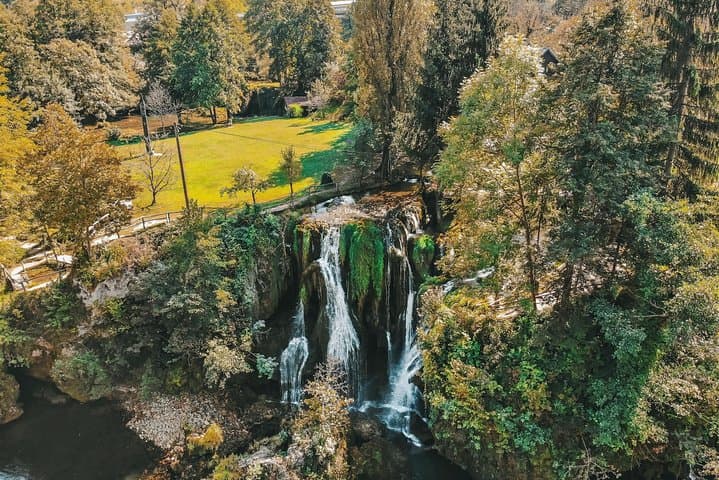
You leave Split before dawn and the coast thins into karst ridges; the highway climbs and the Adriatic gives way to pine and beech. By mid‑morning the park appears: a chain of turquoise basins threaded by wooden boardwalks and waterfalls that dare you to step closer. A guided route unspools across the lakes, with a short electric‑boat crossing that pushes you through glassy water beneath cliff‑hung cascades.
You leave Split before dawn and the coast thins into karst ridges; the highway climbs and the Adriatic gives way to pine and beech. By mid‑morning the park appears: a chain of turquoise basins threaded by wooden boardwalks and waterfalls that dare you to step closer. A guided route unspools across the lakes, with a short electric‑boat crossing that pushes you through glassy water beneath cliff‑hung cascades.
Plitvice Lakes is Croatia’s oldest national park (established 1949) and a UNESCO World Heritage Site. The landscape is classic karst: limestone bedrock, travertine (tufa) dams forming naturally over millennia, and a mosaic of conifer and beech woodland that shapes the microclimates around each lake. The surrounding Lika region has a rural, pastoral history—sheep and traditional stone hamlets—and the park’s infrastructure reflects decades of conservation and visitor management.
Expect varied terrain: compacted earth, wooden boardwalks, stairs (some stretches have up to ~300 steps), and short uphill sections. The tour from Split includes roughly four hours of driving each way and about four to five hours exploring the park; entrance fees are usually not included with third‑party tours. Practical essentials: reserve entry in high season, wear grippy shoes for wet boardwalks, bring water and layered clothing, and carry a small daypack for snacks and a camera.
Timing matters—early arrival eases crowding and captures the best light for photos. Respect marked trails: the tufa formations are fragile and closed to off‑trail travel. With basic fitness and proper footwear, this day trip presents one of Croatia’s clearest encounters with wild water, geology, and old‑growth forest.