THE ADVENTURE COLLECTIVE® · Independent discovery and booking for outdoor travel

Boardwalks thread across cobalt pools and waterfalls roar under fir-shadowed ridges. This Plitvice day trip from Zadar offers a compact, transfer-inclusive way to experience Croatia’s UNESCO karst wonder in a single day.
Boardwalks thread across cobalt pools and waterfalls roar under fir-shadowed ridges. This Plitvice day trip from Zadar offers a compact, transfer-inclusive way to experience Croatia’s UNESCO karst wonder in a single day.
A low rumble of water meets the road before the first trees appear — that’s how a day at Plitvice Lakes begins when you travel from Zadar. Arrival brings a corridor of boardwalks threaded over turquoise pools; the lakes dare you to keep walking, and every turn frames another cascade. The forested ridgelines hold the sound of water long after you leave the main falls.
Verified experiences and guided adventures in the surrounding area.
Operated by Taxi Zadar · Plitvička Jezera, Lika-Senj County
A low rumble of water meets the road before the first trees appear — that’s how a day at Plitvice Lakes begins when you travel from Zadar. Arrival brings a corridor of boardwalks threaded over turquoise pools; the lakes dare you to keep walking, and every turn frames another cascade. The forested ridgelines hold the sound of water long after you leave the main falls.
Plitvice Lakes National Park, Croatia’s first national park (proclaimed 1949) and a UNESCO World Heritage Site since 1979, is a karst laboratory. Travertine (tufa) formations built over millennia create natural dams and step-like lakes linked by waterfalls and streams. The park sits between the Mala Kapela and Lička Plješivica ranges and is primarily forested, with traditional mountain villages scattered beyond the park boundaries. Expect interpretive signs that explain tufa formation and the human history of the Lika region.
Practical guidance: most day transfers allocate 3–5 hours in the park — enough for the main loop and boat ride, but not for deep backcountry hikes. Trails are mainly maintained boardwalks and gravel paths with stairs; waterproof shoes with good traction and at least 1–2 liters of water are recommended. Buy or reserve your park entrance in advance during high season; ticket booths and shuttle schedules can fill up. Early morning or late afternoon visits reduce crowds and catch the waterfalls at their most photogenic.
Respect marked paths: tufa builds slowly and is fragile. Leave no trace, carry out refuse, and keep dogs on a leash. With a short transfer from Zadar and return service, this day trip delivers concentrated geology, clear water, and the steady rhythm of rushing falls.
easy.
3–5 hours.
Suitable for most fitness levels; requires standing, moderate walking on uneven boardwalks and stairs.
Not always—check your booking details; many transfers require purchasing park entrance separately or reserving a timed ticket in advance.
Typical transfers from Zadar range 1.5–2 hours each way depending on traffic; total tour time usually allows 3–5 hours inside the park.
Yes—trail sections are family-friendly, but infants should be secured in carriers rather than strollers on uneven boardwalks; children must be accompanied by adults.
Dogs are allowed on leashes in many outdoor areas, but check rules for boardwalks and seasonal restrictions; service animals are generally permitted.
Plitvice’s tufa barriers accreted over thousands of years; the park was Croatia’s first national park (1949) and earned UNESCO status in 1979 for its outstanding karst formations.
Tufa formation is fragile—stay on marked paths and avoid touching deposits; the park operates visitor limits and seasonal management to reduce erosion and preserve habitats.
Taxi Zadar operates guided outdoor trips and adventures with an emphasis on safety, stewardship, and memorable experiences.


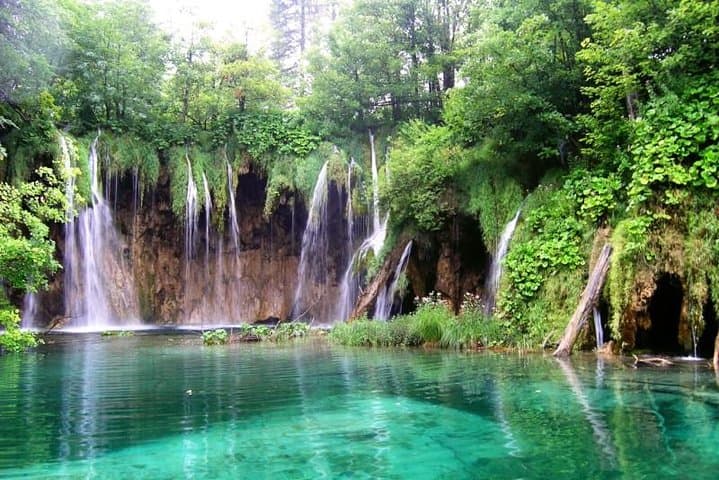

A low rumble of water meets the road before the first trees appear — that’s how a day at Plitvice Lakes begins when you travel from Zadar. Arrival brings a corridor of boardwalks threaded over turquoise pools; the lakes dare you to keep walking, and every turn frames another cascade. The forested ridgelines hold the sound of water long after you leave the main falls.
A low rumble of water meets the road before the first trees appear — that’s how a day at Plitvice Lakes begins when you travel from Zadar. Arrival brings a corridor of boardwalks threaded over turquoise pools; the lakes dare you to keep walking, and every turn frames another cascade. The forested ridgelines hold the sound of water long after you leave the main falls.
Plitvice Lakes National Park, Croatia’s first national park (proclaimed 1949) and a UNESCO World Heritage Site since 1979, is a karst laboratory. Travertine (tufa) formations built over millennia create natural dams and step-like lakes linked by waterfalls and streams. The park sits between the Mala Kapela and Lička Plješivica ranges and is primarily forested, with traditional mountain villages scattered beyond the park boundaries. Expect interpretive signs that explain tufa formation and the human history of the Lika region.
Practical guidance: most day transfers allocate 3–5 hours in the park — enough for the main loop and boat ride, but not for deep backcountry hikes. Trails are mainly maintained boardwalks and gravel paths with stairs; waterproof shoes with good traction and at least 1–2 liters of water are recommended. Buy or reserve your park entrance in advance during high season; ticket booths and shuttle schedules can fill up. Early morning or late afternoon visits reduce crowds and catch the waterfalls at their most photogenic.
Respect marked paths: tufa builds slowly and is fragile. Leave no trace, carry out refuse, and keep dogs on a leash. With a short transfer from Zadar and return service, this day trip delivers concentrated geology, clear water, and the steady rhythm of rushing falls.