THE ADVENTURE COLLECTIVE® · Independent discovery and booking for outdoor travel

Transform a long transfer into the highlight of your Croatia trip with a private door-to-door transfer plus Plitvice Lakes entry. Walk wooden boardwalks above turquoise basins, hear waterfalls push the air, and learn why this karst landscape is a UNESCO-protected wonder.
Transform a long transfer into the highlight of your Croatia trip with a private door-to-door transfer plus Plitvice Lakes entry. Walk wooden boardwalks above turquoise basins, hear waterfalls push the air, and learn why this karst landscape is a UNESCO-protected wonder.
A low sun pushes across the Adriatic as a private vehicle peels away from Split, the city’s stone roofs shrinking behind you. Hours later the road climbs into Lika’s forested ridges and, suddenly, a chain of turquoise basins and foaming falls opens before you: Plitvice Lakes demanding your full attention. Wooden pathways thread above water so clear you can see submerged trunks and the pale limestone that builds the park’s dramatic travertine barriers.
Verified experiences and guided adventures in the surrounding area.
Operated by Time Travel Split · Plitvička Jezera, Lika-Senj County
A low sun pushes across the Adriatic as a private vehicle peels away from Split, the city’s stone roofs shrinking behind you. Hours later the road climbs into Lika’s forested ridges and, suddenly, a chain of turquoise basins and foaming falls opens before you: Plitvice Lakes demanding your full attention. Wooden pathways thread above water so clear you can see submerged trunks and the pale limestone that builds the park’s dramatic travertine barriers.
Plitvice’s story is geological as much as human. Over millennia, tufa (travertine) precipitated from mineral-rich streams and created natural dams; the park’s UNESCO designation recognizes those processes and the intact karst landscape that supports endemic plants and traditional mountain villages of the Lika region.
You’ll pass through mixed beech and fir stands, cross wooden catwalks over upper and lower lakes, and encounter cascades that roar louder after rain. Local culture is spare and practical — shepherding and forestry shaped the area — and nearby kiosks sell hearty regional snacks if you need fuel.
Practical guidance: this private transfer converts a long road day into a flexible park visit — expect a total outing of 7–8 hours with roughly 2–4 hours walking in the park. Wear grippy shoes for wet boardwalks and steps, carry water and a waterproof layer, and charge your camera; early or late in the day gives the best light and fewer crowds. Respect trail closures — the travertine formations are fragile, and staying on marked paths helps keep Plitvice intact for the next visitor.
moderate.
7–8 hours.
Suitable for most travelers who can manage 2–4 hours of steady walking, stairs, and wet boardwalks.
The total tour runs about 7–8 hours; driving time varies but the itinerary includes roughly 2–4 hours inside Plitvice Lakes for walking and viewing.
Yes — this private tour includes Plitvice Lakes entrance tickets so you bypass separate ticket lines.
Many lower boardwalks and lakeside routes are stroller-accessible, but some trails have steps and uneven sections—infant carriers can be more practical for longer walks.
No — swimming is prohibited to protect fragile travertine formations and water quality.
Plitvice’s lakes and dams formed over thousands of years through mineral deposition on a karst limestone landscape; human settlement in the Lika region has long centered on pastoralism and forestry.
Plitvice is strictly managed to protect travertine formation and water quality—stay on marked trails and follow park rules to minimize impact.
Time Travel Split operates guided outdoor trips and adventures with an emphasis on safety, stewardship, and memorable experiences.
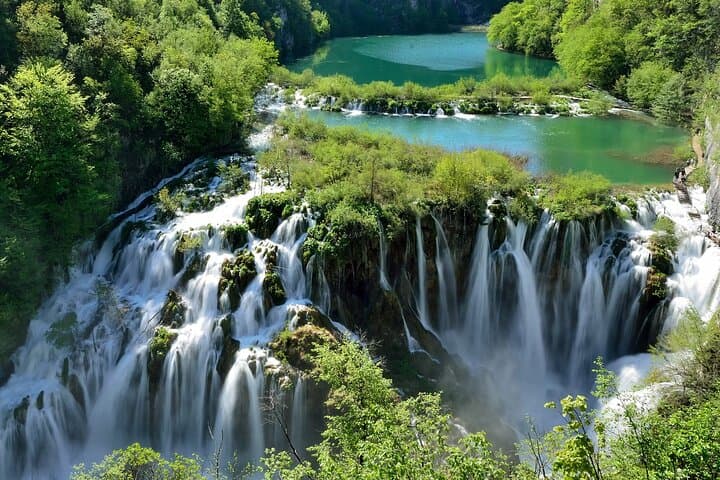
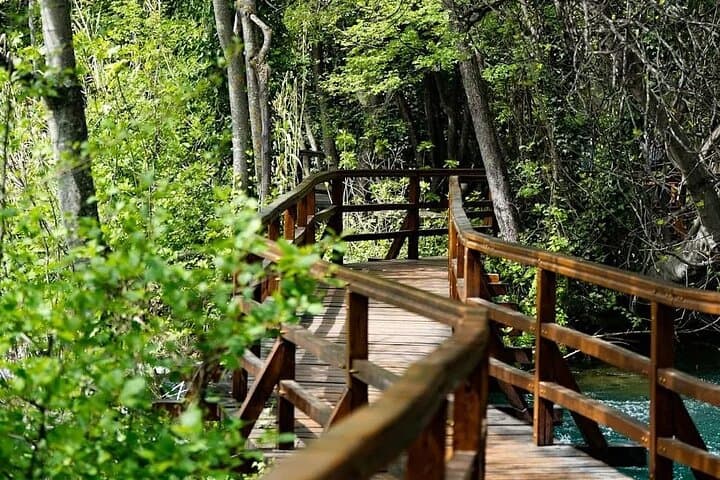
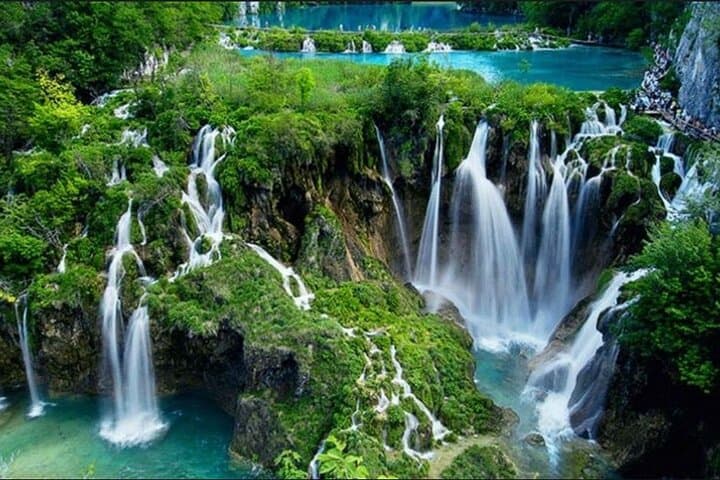
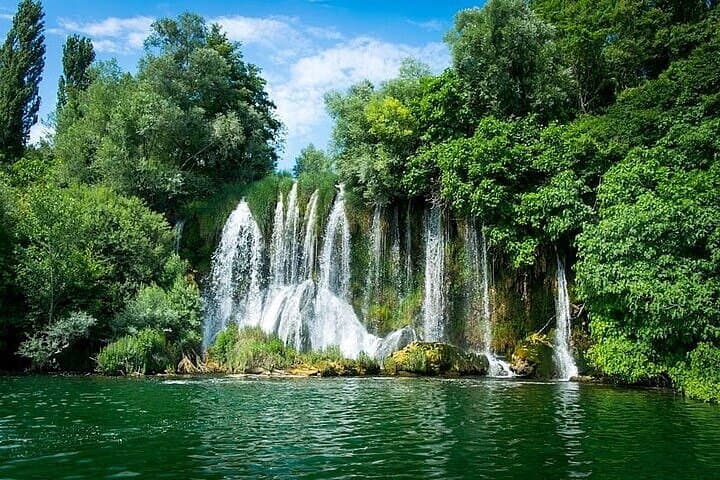
A low sun pushes across the Adriatic as a private vehicle peels away from Split, the city’s stone roofs shrinking behind you. Hours later the road climbs into Lika’s forested ridges and, suddenly, a chain of turquoise basins and foaming falls opens before you: Plitvice Lakes demanding your full attention. Wooden pathways thread above water so clear you can see submerged trunks and the pale limestone that builds the park’s dramatic travertine barriers.
A low sun pushes across the Adriatic as a private vehicle peels away from Split, the city’s stone roofs shrinking behind you. Hours later the road climbs into Lika’s forested ridges and, suddenly, a chain of turquoise basins and foaming falls opens before you: Plitvice Lakes demanding your full attention. Wooden pathways thread above water so clear you can see submerged trunks and the pale limestone that builds the park’s dramatic travertine barriers.
Plitvice’s story is geological as much as human. Over millennia, tufa (travertine) precipitated from mineral-rich streams and created natural dams; the park’s UNESCO designation recognizes those processes and the intact karst landscape that supports endemic plants and traditional mountain villages of the Lika region.
You’ll pass through mixed beech and fir stands, cross wooden catwalks over upper and lower lakes, and encounter cascades that roar louder after rain. Local culture is spare and practical — shepherding and forestry shaped the area — and nearby kiosks sell hearty regional snacks if you need fuel.
Practical guidance: this private transfer converts a long road day into a flexible park visit — expect a total outing of 7–8 hours with roughly 2–4 hours walking in the park. Wear grippy shoes for wet boardwalks and steps, carry water and a waterproof layer, and charge your camera; early or late in the day gives the best light and fewer crowds. Respect trail closures — the travertine formations are fragile, and staying on marked paths helps keep Plitvice intact for the next visitor.