THE ADVENTURE COLLECTIVE® · Independent discovery and booking for outdoor travel

Learn to surf on Playa Grande’s wide sandbank where steady, beginner-friendly waves and small teacher-to-student ratios make confidence happen fast. This secluded beach near Tamarindo pairs safety-focused instruction with beachside conservation and fewer crowds.
Learn to surf on Playa Grande’s wide sandbank where steady, beginner-friendly waves and small teacher-to-student ratios make confidence happen fast. This secluded beach near Tamarindo pairs safety-focused instruction with beachside conservation and fewer crowds.
Salt air and a wide sand shelf open before you—Playa Grande’s shoreline stretches with a quiet confidence, the Pacific sending predictable, forgiving breakers that dare first-timers to stand up. Lessons here begin on land with concise safety and technique drills, then move into waist-to-chest-deep water where instructors keep paddling distance short and feedback immediate.
Verified experiences and guided adventures in the surrounding area.
Operated by Mojo Surf Adventures · Playa Grande, Guanacaste
Salt air and a wide sand shelf open before you—Playa Grande’s shoreline stretches with a quiet confidence, the Pacific sending predictable, forgiving breakers that dare first-timers to stand up. Lessons here begin on land with concise safety and technique drills, then move into waist-to-chest-deep water where instructors keep paddling distance short and feedback immediate.
Geologically, Playa Grande is a long sandy bay formed by coastal currents and river outwash, creating a gentle sandbar ideal for rolling, right-leaning waves. The beach sits on the edge of Las Baulas National Marine Park, an area known for nesting leatherback turtles and coastal mangroves—elements that shape both the ecosystem and local conservation efforts. Culturally, the nearby town of Tamarindo grew from a fishing village into a surf hub; Playa Grande remains less crowded, used historically by locals and now managed to balance tourism with protection of nesting sites.
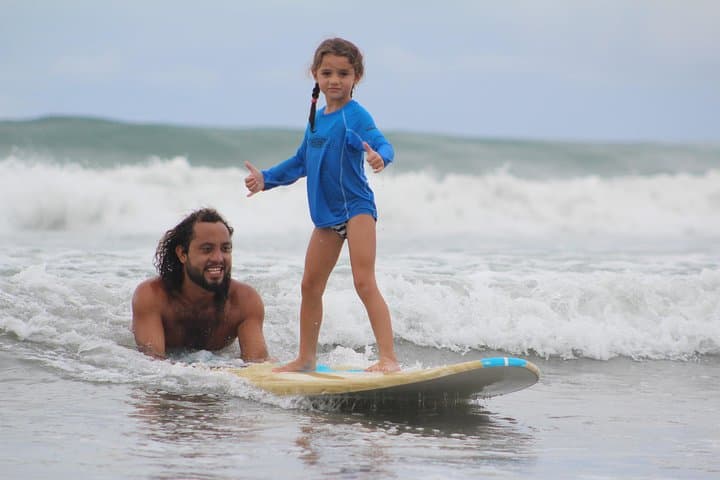
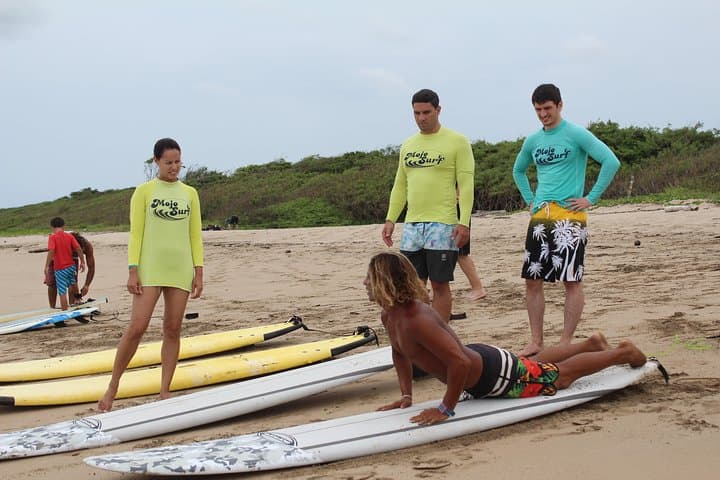
Expect small groups (often 2–4 students per instructor), 2–2.5 hour lessons that mix land drills, two water sessions, and a pineapple-and-water break. Instructors provide boards, rash guards, and optional photo/video packages. Waves are best around high tide; lessons prioritize safety, making this suitable for children and adults with basic swimming ability.
Practical tips: arrive with sunscreen and a swimsuit, hydrate beforehand, and tell instructors about any medical or mobility concerns. Timing lessons early or late in the day avoids peak sun and boat traffic. For repeat sessions, ask about semi-private options to accelerate progress.
easy.
2–2.5 hours.
Suitable for most fitness levels; basic swimming ability and comfort in waist-to-chest deep surf recommended
Basic swimming ability and comfort in waist-to-chest deep water are recommended; instructors stay close and use foam boards for extra flotation.
Yes—children as young as four are accepted with parent approval, and instructors adapt teaching methods for younger learners.
A 10-minute land briefing, two water sessions totaling about 90–105 minutes with a short break, equipment, and optional photo/video packages.
Playa Grande is deliberately less crowded and often used by this operator exclusively, providing more open water and fewer local rock hazards than some Tamarindo breaks.
Playa Grande sits adjacent to Las Baulas National Marine Park, created to protect nesting leatherback turtles and the coastal ecosystems that supported local fishing communities.
Tour operators coordinate with park rules to avoid nesting zones and encourage use of reef-safe sunscreen; sticking to marked paths and avoiding nighttime beach traffic helps protect turtles.
Mojo Surf Adventures operates guided outdoor trips and adventures with an emphasis on safety, stewardship, and memorable experiences.
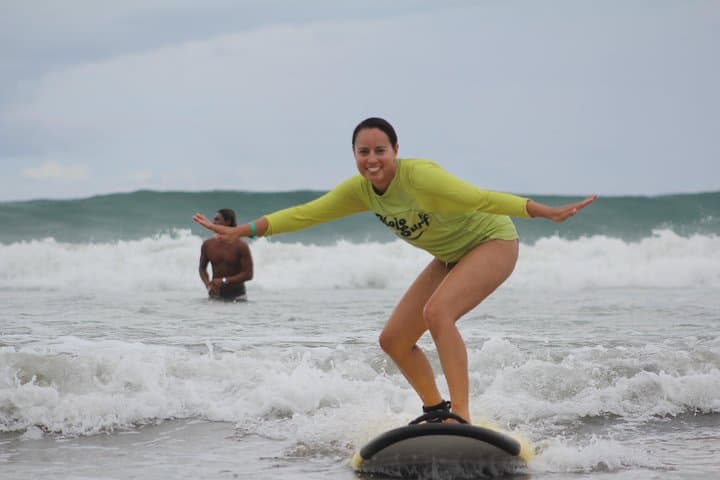
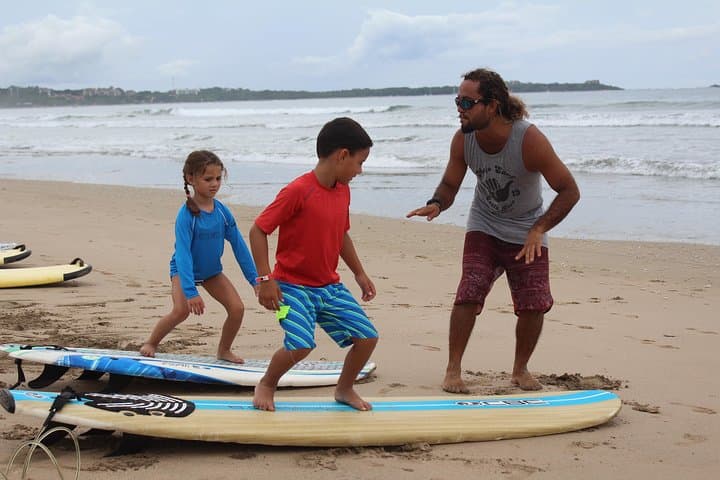
Salt air and a wide sand shelf open before you—Playa Grande’s shoreline stretches with a quiet confidence, the Pacific sending predictable, forgiving breakers that dare first-timers to stand up. Lessons here begin on land with concise safety and technique drills, then move into waist-to-chest-deep water where instructors keep paddling distance short and feedback immediate.
Salt air and a wide sand shelf open before you—Playa Grande’s shoreline stretches with a quiet confidence, the Pacific sending predictable, forgiving breakers that dare first-timers to stand up. Lessons here begin on land with concise safety and technique drills, then move into waist-to-chest-deep water where instructors keep paddling distance short and feedback immediate.
Geologically, Playa Grande is a long sandy bay formed by coastal currents and river outwash, creating a gentle sandbar ideal for rolling, right-leaning waves. The beach sits on the edge of Las Baulas National Marine Park, an area known for nesting leatherback turtles and coastal mangroves—elements that shape both the ecosystem and local conservation efforts. Culturally, the nearby town of Tamarindo grew from a fishing village into a surf hub; Playa Grande remains less crowded, used historically by locals and now managed to balance tourism with protection of nesting sites.
Expect small groups (often 2–4 students per instructor), 2–2.5 hour lessons that mix land drills, two water sessions, and a pineapple-and-water break. Instructors provide boards, rash guards, and optional photo/video packages. Waves are best around high tide; lessons prioritize safety, making this suitable for children and adults with basic swimming ability.
Practical tips: arrive with sunscreen and a swimsuit, hydrate beforehand, and tell instructors about any medical or mobility concerns. Timing lessons early or late in the day avoids peak sun and boat traffic. For repeat sessions, ask about semi-private options to accelerate progress.