THE ADVENTURE COLLECTIVE® · Independent discovery and booking for outdoor travel

Explore the limestone caves and clear freshwater chambers outside Playa del Carmen with a private guided cenote dive. Small groups, expert guides, and shallow cavern passages make this a top choice for certified divers seeking dramatic light, delicate formations, and calm water.
Explore the limestone caves and clear freshwater chambers outside Playa del Carmen with a private guided cenote dive. Small groups, expert guides, and shallow cavern passages make this a top choice for certified divers seeking dramatic light, delicate formations, and calm water.
At first light the limestone exhales cool air and a vertical shaft of sun slices the water — the cenote dares you to slip beneath the surface. From Playa del Carmen a short drive takes divers to sinkholes where caverns open like rooms and light becomes a navigational partner. Guides lead small, private groups into wide, shallow passages where haloclines shimmer and stalactites loom like silent architecture.
Verified experiences and guided adventures in the surrounding area.
Operated by My Private Dive · Playa del Carmen, Quintana Roo
At first light the limestone exhales cool air and a vertical shaft of sun slices the water — the cenote dares you to slip beneath the surface. From Playa del Carmen a short drive takes divers to sinkholes where caverns open like rooms and light becomes a navigational partner. Guides lead small, private groups into wide, shallow passages where haloclines shimmer and stalactites loom like silent architecture.
These cenotes are part of the Yucatán’s larger karst system, formed when underground rivers carved soft limestone and then collapsed. The Maya treated these pools as both life-source and portal; many cenotes were freshwater wells and ritual places. Today divers float through clear, calm water that reveals fossilized formations and delicate flowstone—features more fragile than they appear.
Expect a focused briefing, equipment checks, and two dives at sites such as Dos Ojos, Chac Mool, Chikin Ha, or Casa Cenote. Maximum depths are modest (around 14 m/45 ft), which favors long bottom times and excellent light for photography. Water can be thermally layered — a cool current will meet warmer surface water — so a thin wetsuit is common.
Practicalities: certified open-water divers should bring certification cards, a dive computer, and neutral-buoyancy skills. Operators usually provide full gear, bottled water, and a bilingual guide. Plan for a 5–6 hour morning excursion to avoid afternoon storms; leave sunscreen off before entering and use reef-safe options on the surface. Respect formations, follow your guide’s line protocol, and surface slowly — the cenote’s quiet is part of the experience.
moderate.
5–6 hours.
Moderate fitness; comfortable with repeated equipment donning, surface swims, and carrying rental gear.
Yes—participants must be certified divers (Open Water or higher) and comfortable with basic buoyancy and buddy procedures.
Most guided cenote dives on this tour stay within about 14 m (45 ft), focusing on light-filled caverns and large passages rather than deep cave penetration.
Yes—tours typically include pick-up and drop-off within Playa del Carmen; confirm your pickup time and location when booking.
Beginners who are certified and have practiced neutral buoyancy can enjoy these sites; full cave diving requires additional training and is not part of standard guided tours.
Cenotes were crucial water sources and sacred sites for the Maya; many served both practical and ritual roles in pre-Hispanic communities.
Operators follow strict guidelines: no-touch policies for formations, using reef-safe products, and limiting group sizes to reduce sediment disturbance and protect water clarity.
My Private Dive operates guided outdoor trips and adventures with an emphasis on safety, stewardship, and memorable experiences.
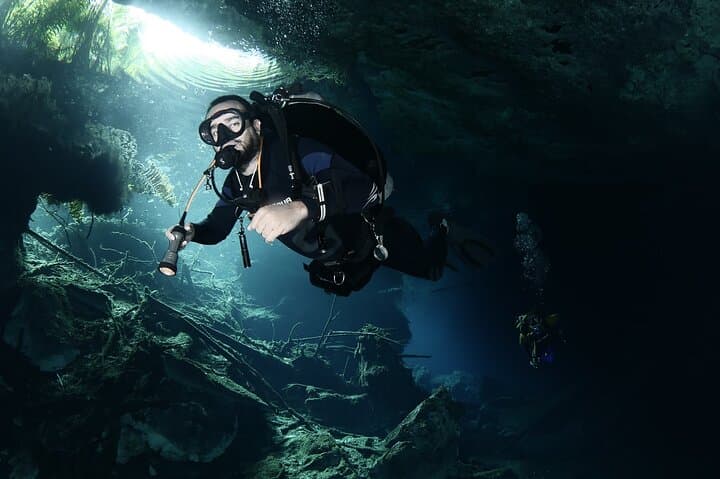
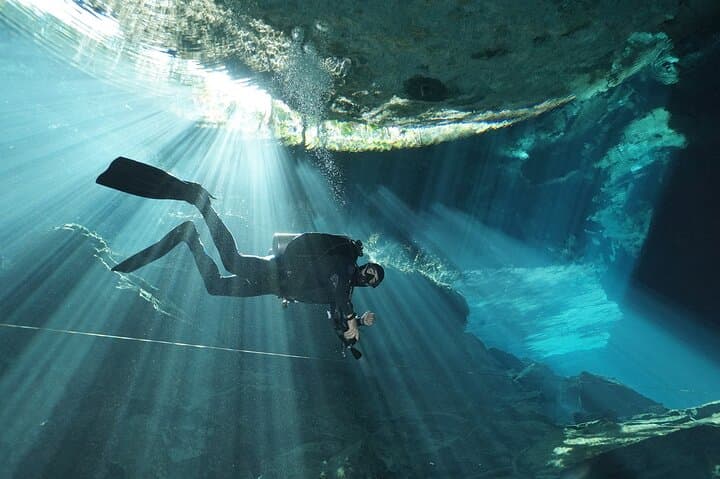
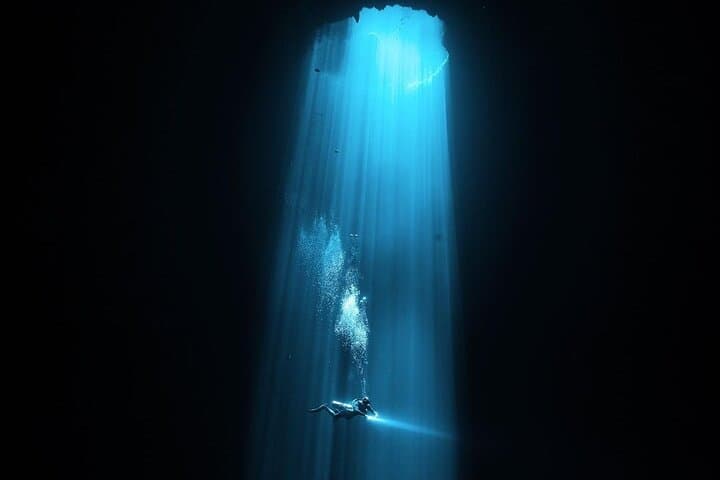
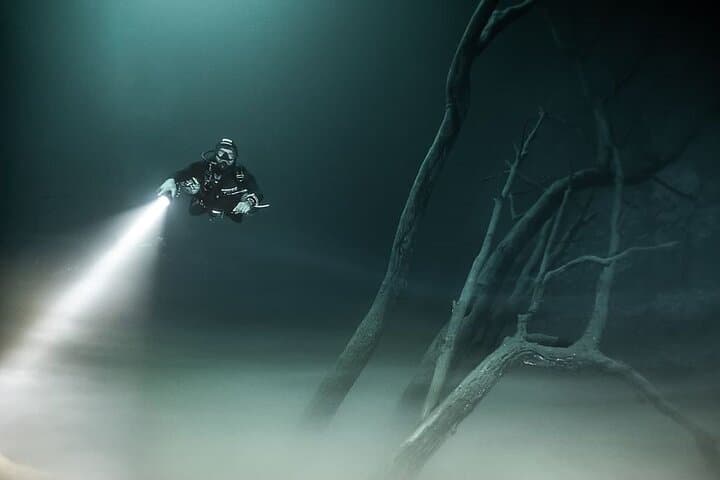
At first light the limestone exhales cool air and a vertical shaft of sun slices the water — the cenote dares you to slip beneath the surface. From Playa del Carmen a short drive takes divers to sinkholes where caverns open like rooms and light becomes a navigational partner. Guides lead small, private groups into wide, shallow passages where haloclines shimmer and stalactites loom like silent architecture.
At first light the limestone exhales cool air and a vertical shaft of sun slices the water — the cenote dares you to slip beneath the surface. From Playa del Carmen a short drive takes divers to sinkholes where caverns open like rooms and light becomes a navigational partner. Guides lead small, private groups into wide, shallow passages where haloclines shimmer and stalactites loom like silent architecture.
These cenotes are part of the Yucatán’s larger karst system, formed when underground rivers carved soft limestone and then collapsed. The Maya treated these pools as both life-source and portal; many cenotes were freshwater wells and ritual places. Today divers float through clear, calm water that reveals fossilized formations and delicate flowstone—features more fragile than they appear.
Expect a focused briefing, equipment checks, and two dives at sites such as Dos Ojos, Chac Mool, Chikin Ha, or Casa Cenote. Maximum depths are modest (around 14 m/45 ft), which favors long bottom times and excellent light for photography. Water can be thermally layered — a cool current will meet warmer surface water — so a thin wetsuit is common.
Practicalities: certified open-water divers should bring certification cards, a dive computer, and neutral-buoyancy skills. Operators usually provide full gear, bottled water, and a bilingual guide. Plan for a 5–6 hour morning excursion to avoid afternoon storms; leave sunscreen off before entering and use reef-safe options on the surface. Respect formations, follow your guide’s line protocol, and surface slowly — the cenote’s quiet is part of the experience.