THE ADVENTURE COLLECTIVE® · Independent discovery and booking for outdoor travel

Walk beneath the vaulted arches of Playa de las Catedrales, explore Isla Pancha’s lighthouse views, and stroll Lugo’s UNESCO Roman wall on a private day trip from Santiago. This one-day tour pairs dramatic coastal geology with seaside towns and local cuisine.
Walk beneath the vaulted arches of Playa de las Catedrales, explore Isla Pancha’s lighthouse views, and stroll Lugo’s UNESCO Roman wall on a private day trip from Santiago. This one-day tour pairs dramatic coastal geology with seaside towns and local cuisine.
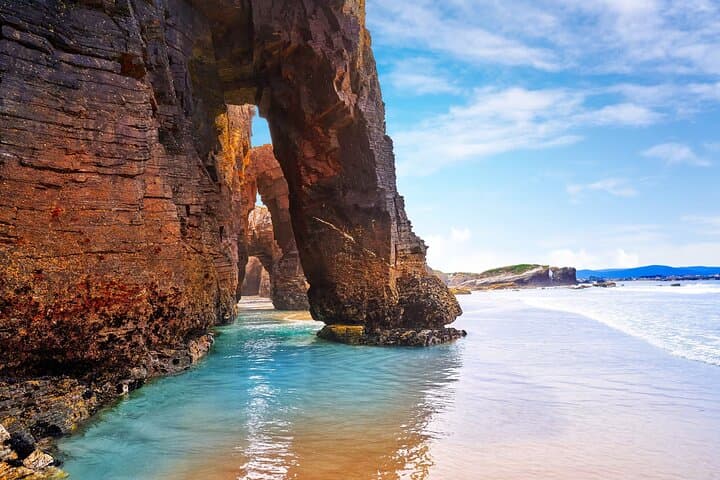
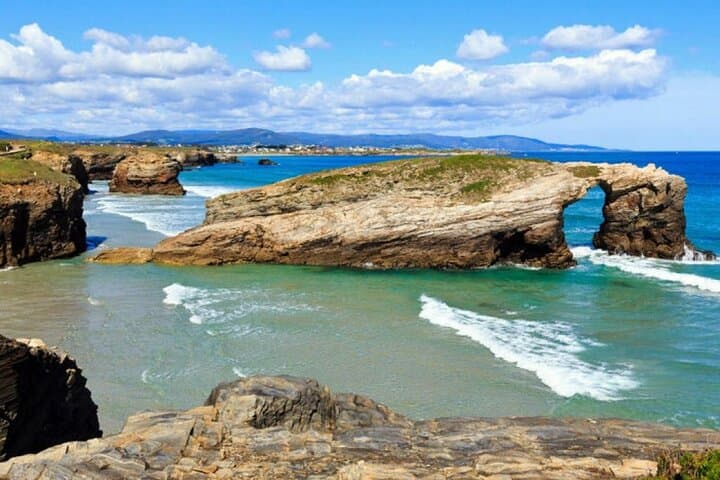
Salt wind pushes across the sand as you step from the cliff-top carpark toward the vaults of Playa de las Catedrales. Rock arches rise like hollowed cathedrals; at low tide you can walk beneath them, listening to the Cantabrian Sea edge and retreat like a purposeful animal.
Verified experiences and guided adventures in the surrounding area.
Operated by Galicia Travels · Ribadeo, Galicia
Salt wind pushes across the sand as you step from the cliff-top carpark toward the vaults of Playa de las Catedrales. Rock arches rise like hollowed cathedrals; at low tide you can walk beneath them, listening to the Cantabrian Sea edge and retreat like a purposeful animal.
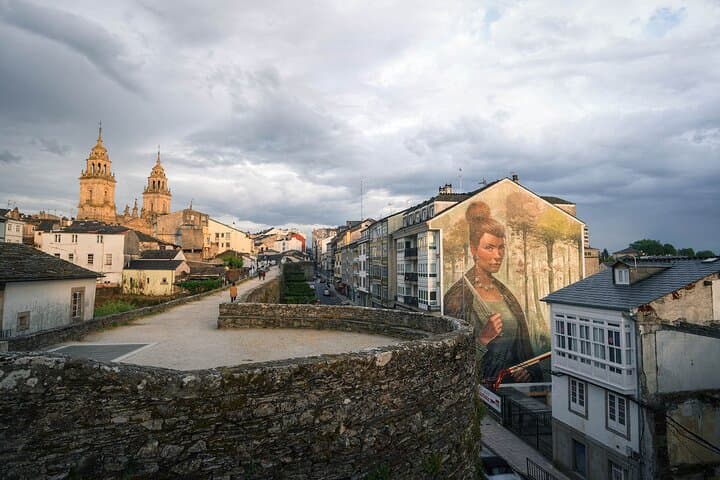
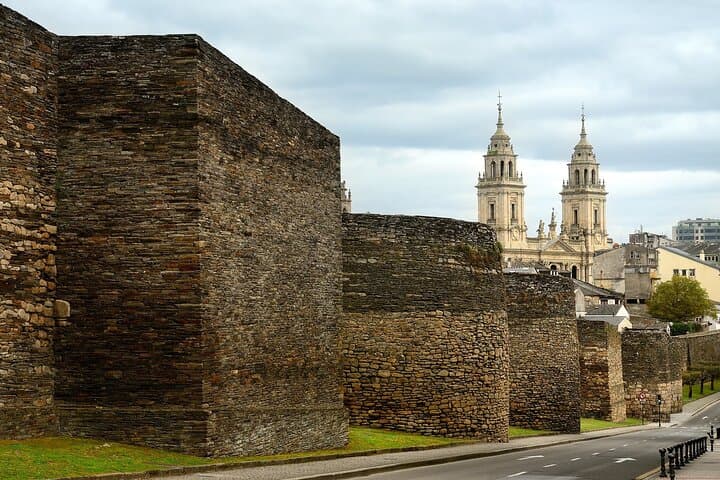
This stretch of coast records a long geological story: soft Miocene sandstone and shale sculpted by relentless waves and wind into arches, caves and sea stacks. Nearby Lugo adds a different chapter—Roman engineers built a continuous defensive wall here in the 3rd–4th century CE, still walkable today. Tapia de Casariego and Isla Pancha inject maritime culture: fishing boats, a nineteenth-century lighthouse, and surf-ready beaches that reflect the region’s working coastline and tourism in quiet balance.
On a private tour from Santiago, expect flexible stops for photos, a seaside lunch in Tapia’s harbor, and a guided walk timed to low tide at As Catedrais to avoid the crowds. Guides will point out tidal pools, safe routes across exposed sand, and viewpoints on Isla Pancha that frame the Cantabrian horizon.
Practical guidance: check tide tables and local opening times, wear sturdy shoes that can handle wet sand and uneven rock, and bring layers—the coast can be sunny and immediately chilly with the breeze. Allow at least nine hours for the round trip from Santiago; transportation is typically an air-conditioned private vehicle. With good planning this is a full-day coastal immersion that balances dramatic geology with local food and Roman history.
easy.
9 hours.
Suitable for most fitness levels; involves short walks on uneven ground and stairs on viewpoints
Yes—access to the main rock arches is safe and most impressive at low tide; guides time the stop accordingly and you can check local tide charts in advance.
Short walks are family-friendly, but the beach and rock surfaces are uneven; infants can be carried in slings and strollers have limited usefulness on sand and rocks.
Expect about 2–2.5 hours each way; private tours are typically flexible with stops and pacing within the 9-hour window if arranged in advance.
Isla Pancha is viewed from short walks or viewpoints; access to the lighthouse itself may be restricted depending on tides and local regulations—your guide will advise on best vantage points.
Lugo’s Roman wall dates to the late Roman Empire and remains one of the most complete Roman fortifications in Europe, offering a living link to the region’s past.
Coastal habitats here are sensitive—stick to marked paths, avoid removing shells or rock, and follow tide-safety guidance to minimize impact.
Galicia Travels operates guided outdoor trips and adventures with an emphasis on safety, stewardship, and memorable experiences.
Salt wind pushes across the sand as you step from the cliff-top carpark toward the vaults of Playa de las Catedrales. Rock arches rise like hollowed cathedrals; at low tide you can walk beneath them, listening to the Cantabrian Sea edge and retreat like a purposeful animal.
Salt wind pushes across the sand as you step from the cliff-top carpark toward the vaults of Playa de las Catedrales. Rock arches rise like hollowed cathedrals; at low tide you can walk beneath them, listening to the Cantabrian Sea edge and retreat like a purposeful animal.
This stretch of coast records a long geological story: soft Miocene sandstone and shale sculpted by relentless waves and wind into arches, caves and sea stacks. Nearby Lugo adds a different chapter—Roman engineers built a continuous defensive wall here in the 3rd–4th century CE, still walkable today. Tapia de Casariego and Isla Pancha inject maritime culture: fishing boats, a nineteenth-century lighthouse, and surf-ready beaches that reflect the region’s working coastline and tourism in quiet balance.
On a private tour from Santiago, expect flexible stops for photos, a seaside lunch in Tapia’s harbor, and a guided walk timed to low tide at As Catedrais to avoid the crowds. Guides will point out tidal pools, safe routes across exposed sand, and viewpoints on Isla Pancha that frame the Cantabrian horizon.
Practical guidance: check tide tables and local opening times, wear sturdy shoes that can handle wet sand and uneven rock, and bring layers—the coast can be sunny and immediately chilly with the breeze. Allow at least nine hours for the round trip from Santiago; transportation is typically an air-conditioned private vehicle. With good planning this is a full-day coastal immersion that balances dramatic geology with local food and Roman history.