THE ADVENTURE COLLECTIVE® · Independent discovery and booking for outdoor travel

Learn the Pizzica and Taranta beneath centuries-old olive trees in Puglia—an active, cultural workshop with music, stories, and a local tasting. Perfect for travelers who want hands-on folklore in a rural setting.
Learn the Pizzica and Taranta beneath centuries-old olive trees in Puglia—an active, cultural workshop with music, stories, and a local tasting. Perfect for travelers who want hands-on folklore in a rural setting.
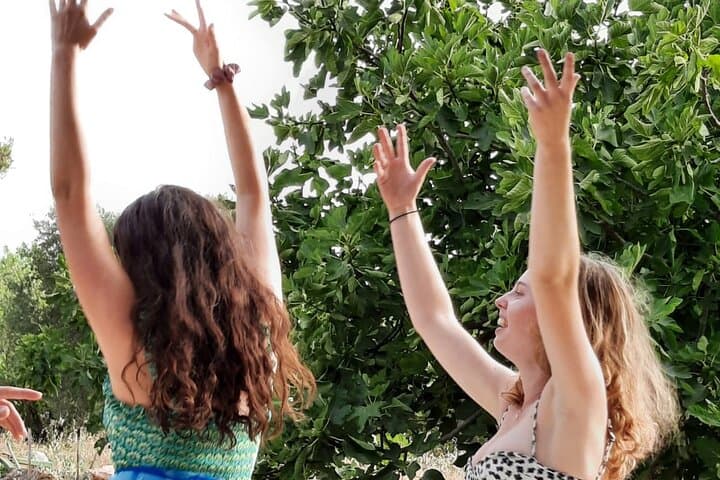
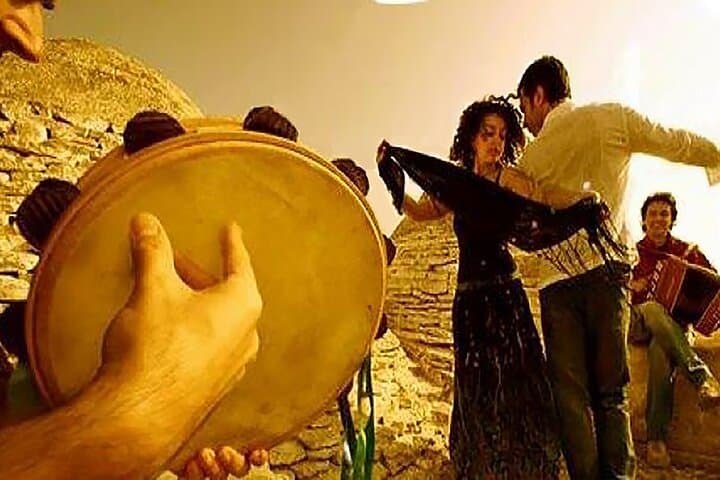
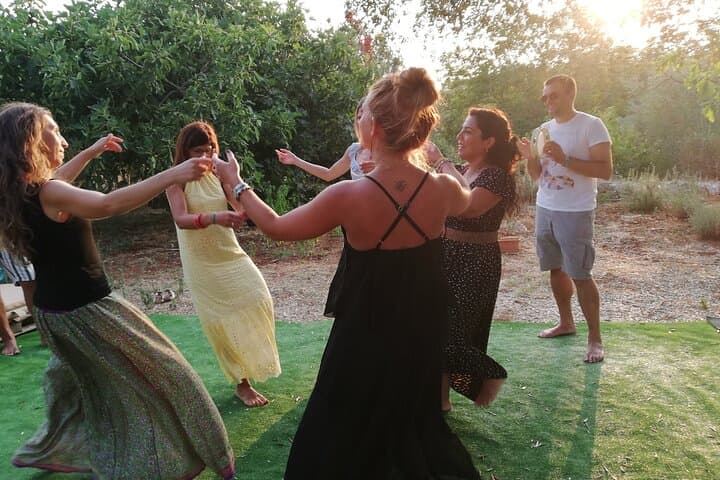
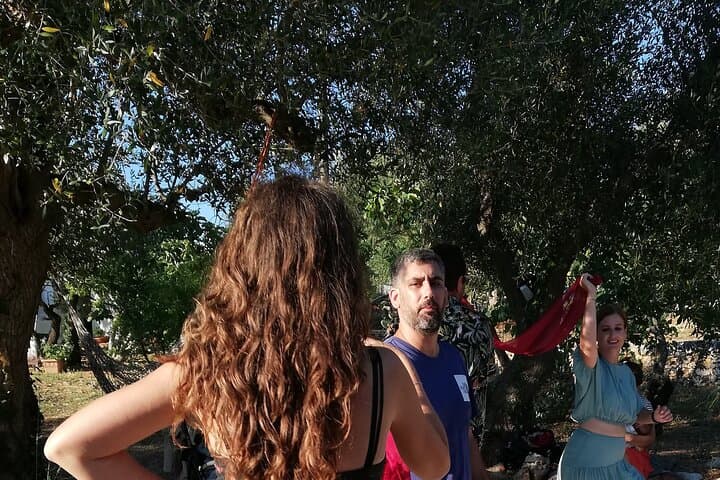
Dust from the Murgia lifts with each step as a tambourine calls you into a circle beneath gnarled, centenary olive trunks.
Verified experiences and guided adventures in the surrounding area.
Operated by Simona Ciccarese · Taranto, Apulia
Dust from the Murgia lifts with each step as a tambourine calls you into a circle beneath gnarled, centenary olive trunks.
This experience places you in the open-air rhythms of Puglia: an olive grove stage where the Pizzica and Taranta dances—once a ritual cure for a feared spider bite—are taught with clear, step-by-step instruction. The landscape is limestone plateau and scrub, stones smoothed over millennia; the trees themselves are living markers of local subsistence and agrarian history.
Pizzica and Tarantella are cultural expressions shaped by southern Italy’s folk music, Mediterranean trade routes, and peasant rites. Instructors recount legends, describe the scarf’s role in performance, and demonstrate the double step and circular formations that move from measured to ecstatic.
Expect an energetic, low-impact workshop suitable for all ages followed by a tasting of local products and wine—an opportunity to taste Apulian olive oil, bread, cheeses and regional varietals.
Practical guidance: wear stable, closed shoes and breathable clothing—long skirts or dresses are traditional and recommended for authenticity and comfort. Bring sun protection and a small refillable water bottle; bottled water is usually provided. The lesson is roughly 2.5 hours, mostly on even dirt and grass surfaces, and is wheelchair and stroller accessible at many venues. The tone is participatory rather than performative: you’ll learn history, rhythm and steps, and leave with a clearer sense of why these dances remain central to Puglia’s cultural calendar.
easy.
2–3 hours.
Suitable for most fitness levels; participants should be able to stand and move gently for 90–120 minutes.
Yes—families are welcome; activities are adapted for kids and the pace is inclusive.
Hosts typically supply tambourines and a scarf, but you can bring a small percussion instrument if you prefer.
Wear comfortable, breathable clothing and closed-toe shoes; long skirts or dresses are traditional and often recommended.
Many venues and transfer points are wheelchair accessible and friendly to strollers—confirm specific accessibility needs when booking.
The dance evolved from southern Italy’s folk rituals and social medicine—rituals intended to expel the ‘tarantism’ illness through frenetic movement and communal music.
Many olive groves are ancient and protected by local conservation efforts; visitors should stay on paths and avoid touching fragile trunks to help preserve these living landmarks.
Simona Ciccarese operates guided outdoor trips and adventures with an emphasis on safety, stewardship, and memorable experiences.
Dust from the Murgia lifts with each step as a tambourine calls you into a circle beneath gnarled, centenary olive trunks.
Dust from the Murgia lifts with each step as a tambourine calls you into a circle beneath gnarled, centenary olive trunks.
This experience places you in the open-air rhythms of Puglia: an olive grove stage where the Pizzica and Taranta dances—once a ritual cure for a feared spider bite—are taught with clear, step-by-step instruction. The landscape is limestone plateau and scrub, stones smoothed over millennia; the trees themselves are living markers of local subsistence and agrarian history.
Pizzica and Tarantella are cultural expressions shaped by southern Italy’s folk music, Mediterranean trade routes, and peasant rites. Instructors recount legends, describe the scarf’s role in performance, and demonstrate the double step and circular formations that move from measured to ecstatic.
Expect an energetic, low-impact workshop suitable for all ages followed by a tasting of local products and wine—an opportunity to taste Apulian olive oil, bread, cheeses and regional varietals.
Practical guidance: wear stable, closed shoes and breathable clothing—long skirts or dresses are traditional and recommended for authenticity and comfort. Bring sun protection and a small refillable water bottle; bottled water is usually provided. The lesson is roughly 2.5 hours, mostly on even dirt and grass surfaces, and is wheelchair and stroller accessible at many venues. The tone is participatory rather than performative: you’ll learn history, rhythm and steps, and leave with a clearer sense of why these dances remain central to Puglia’s cultural calendar.