THE ADVENTURE COLLECTIVE® · Independent discovery and booking for outdoor travel

Traverse a lunar basalt plain to the rim of the Dolomieu crater on Piton de la Fournaise. This guided hike blends volcanic geology, wide-open views and practical logistics—ideal for moderately fit outdoor travelers.
Traverse a lunar basalt plain to the rim of the Dolomieu crater on Piton de la Fournaise. This guided hike blends volcanic geology, wide-open views and practical logistics—ideal for moderately fit outdoor travelers.
You emerge onto a hard, black plain that seems to move underfoot—sharp scoria crunches, wind presses against your jacket, and distant steam ghosts the horizon. The trail climbs away from Pas de Bellecombe and into a landscape that feels half-planetary: cones puncture the sky, old lava fields fan out like frozen rivers, and the Dolomieu crater gapes ahead, patient and immense.
Verified experiences and guided adventures in the surrounding area.
Operated by OTENTHIKE · Bourg-Murat, Réunion
You emerge onto a hard, black plain that seems to move underfoot—sharp scoria crunches, wind presses against your jacket, and distant steam ghosts the horizon. The trail climbs away from Pas de Bellecombe and into a landscape that feels half-planetary: cones puncture the sky, old lava fields fan out like frozen rivers, and the Dolomieu crater gapes ahead, patient and immense.
This is Piton de la Fournaise, one of the most active shield volcanoes on Earth. Its repeated eruptions built the island’s southeastern flank; lava flows and pyroclastic cones record geological episodes visible from the trail. Culturally, the volcano has guided local life for centuries—routes, grazing areas and lookout points like Pas de Bellecombe are woven into Réunion’s rural history.
Expect a mineral, mostly exposed route with sparse endemic shrub and pockets of volcanic sand. Typical guided outings run about six hours door-to-door, with roughly 6 km of walking and an elevation change in the low hundreds of meters depending on how far you approach the crater rim. Terrain alternates compacted trail, loose scoria and occasional rocky steps; wind and sun are constant companions.
Practical tips: check eruption bulletins and weather in advance, pack sun and wind protection, carry at least 2 liters of water, and hire a certified guide—trail markers and local knowledge matter here. Footwear with solid tread, layered breathable clothing, and steady pacing will make the hike an immersive, manageable encounter with one of the planet’s most alive landscapes.
moderate.
6 hours.
Moderately fit—able to hike 5–8 km over uneven ground and manage 300–400 m of cumulative elevation change at a steady pace.
Guided outings typically last around six hours total; on-trail walking is often 3–5 hours depending on how far the guide approaches the crater rim.
No—access is restricted during active eruptions or when authorities deem conditions unsafe; guides monitor official advisories and will cancel if necessary.
A certified local guide is highly recommended for safety and interpretation; access to the summit area can be restricted and guides know the current permitted routes.
The drier, cooler months (May–October) typically offer clearer skies and more stable conditions; the wet season brings higher chance of closures and stronger winds.
Repeated eruptions of Piton de la Fournaise have shaped Réunion’s southeastern landscape; local communities developed paths and lookout points tied to volcanic activity over centuries.
This volcanic landscape hosts fragile endemic plants and thin soils—stay on established trails, avoid collecting rocks or plants, and follow Leave No Trace practices.
OTENTHIKE operates guided outdoor trips and adventures with an emphasis on safety, stewardship, and memorable experiences.
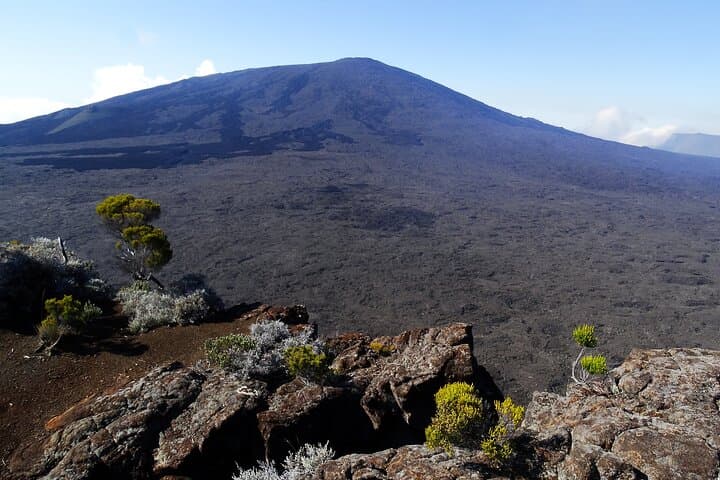
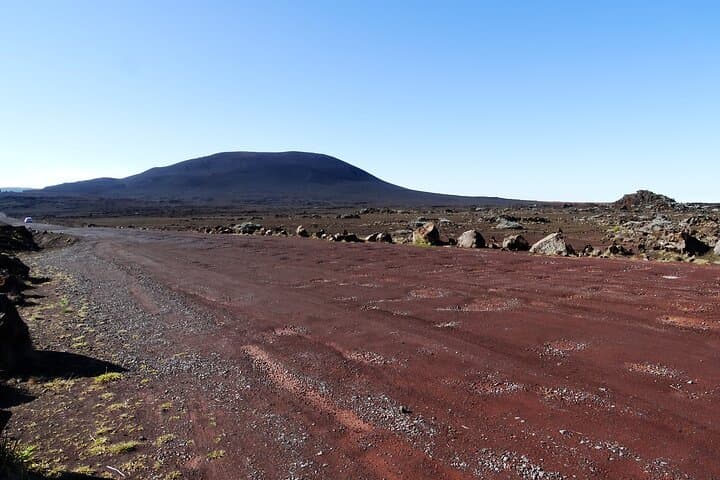
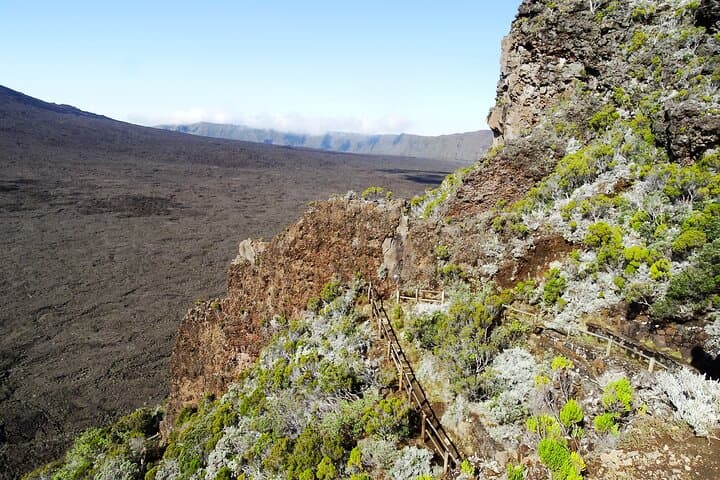
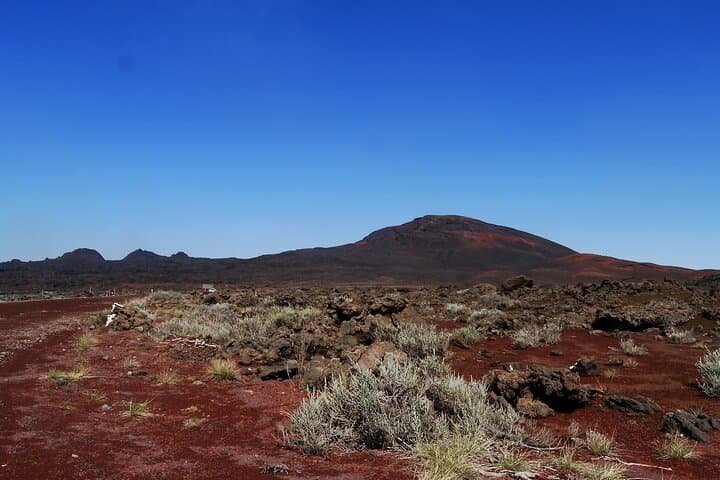
You emerge onto a hard, black plain that seems to move underfoot—sharp scoria crunches, wind presses against your jacket, and distant steam ghosts the horizon. The trail climbs away from Pas de Bellecombe and into a landscape that feels half-planetary: cones puncture the sky, old lava fields fan out like frozen rivers, and the Dolomieu crater gapes ahead, patient and immense.
You emerge onto a hard, black plain that seems to move underfoot—sharp scoria crunches, wind presses against your jacket, and distant steam ghosts the horizon. The trail climbs away from Pas de Bellecombe and into a landscape that feels half-planetary: cones puncture the sky, old lava fields fan out like frozen rivers, and the Dolomieu crater gapes ahead, patient and immense.
This is Piton de la Fournaise, one of the most active shield volcanoes on Earth. Its repeated eruptions built the island’s southeastern flank; lava flows and pyroclastic cones record geological episodes visible from the trail. Culturally, the volcano has guided local life for centuries—routes, grazing areas and lookout points like Pas de Bellecombe are woven into Réunion’s rural history.
Expect a mineral, mostly exposed route with sparse endemic shrub and pockets of volcanic sand. Typical guided outings run about six hours door-to-door, with roughly 6 km of walking and an elevation change in the low hundreds of meters depending on how far you approach the crater rim. Terrain alternates compacted trail, loose scoria and occasional rocky steps; wind and sun are constant companions.
Practical tips: check eruption bulletins and weather in advance, pack sun and wind protection, carry at least 2 liters of water, and hire a certified guide—trail markers and local knowledge matter here. Footwear with solid tread, layered breathable clothing, and steady pacing will make the hike an immersive, manageable encounter with one of the planet’s most alive landscapes.