THE ADVENTURE COLLECTIVE® · Independent discovery and booking for outdoor travel

Cycle from Pisa to Lucca along the Puccini Trail, following the Serchio river through floodplain scenery, small villages, and the medieval walls of Lucca. This easy, self-guided ride mixes flat, bike-path riding with cultural stops for food and history.
Cycle from Pisa to Lucca along the Puccini Trail, following the Serchio river through floodplain scenery, small villages, and the medieval walls of Lucca. This easy, self-guided ride mixes flat, bike-path riding with cultural stops for food and history.
You roll out of Pisa with the leaning tower shrinking behind you and the warm air of the Arno pressing at your back. The route follows the Serchio river’s low terraces: water daring you to look over its shoulder at flooded oxbows, reedbeds scalloping the banks, and a chorus of birds punctuating the ride. The Puccini Trail threads past agricultural fields and small stone bridges until Lucca’s medieval walls rise, flat-topped and oddly modern, framing red roofs and the climbable Guinigi Tower.
Verified experiences and guided adventures in the surrounding area.
Operated by Smile & Ride · Pisa, Tuscany
You roll out of Pisa with the leaning tower shrinking behind you and the warm air of the Arno pressing at your back. The route follows the Serchio river’s low terraces: water daring you to look over its shoulder at flooded oxbows, reedbeds scalloping the banks, and a chorus of birds punctuating the ride. The Puccini Trail threads past agricultural fields and small stone bridges until Lucca’s medieval walls rise, flat-topped and oddly modern, framing red roofs and the climbable Guinigi Tower.
This corridor between Pisa and Lucca has layers of history — Roman roads visible under later medieval town plans, fortified Rocca di Ripafratta guarding one of the river fords, and the birthplace of composer Giacomo Puccini in nearby Torre del Lago. Geologically the route sits on riverine alluvium, producing broad floodplains and easy gradients that make for steady cycling. Culturally, the towns along the way are as focused on food as on form: local cecina, necci and Tuscan wines reward short stops.
Practical guidance: expect 4–5 hours of riding at a relaxed pace, mostly flat with compacted gravel and paved sections. Navigation is straightforward on signed cycle paths and quiet secondary roads, but bring a charged phone or printed map — some rural segments have sparse signage. Hydrate early, use sunscreen, and plan a final lap on Lucca’s tree-lined walls for views. Leave no trace on the riverbanks; these habitats sustain kingfishers and herons and deserve respect.
easy.
4–5 hours.
Suitable for casual cyclists who can ride 15–30 km at a relaxed pace; minimal hills.
No advanced skills are required—this is an easy route for riders comfortable on a bike for up to a half-day on mostly flat terrain.
Yes, the tour includes use of a bicycle (often hybrid) and typically a helmet; confirm exact bike type and sizing at booking.
Yes—the route ends at Lucca and you can extend your stay to explore the city walls and historic center before returning independently.
Older children who can ride 15–30 km comfortably may do well; supervise near roads and bring frequent breaks for younger riders.
The trail runs through areas shaped by Roman and medieval transport routes; Lucca was an important medieval republic and is the birthplace of composer Giacomo Puccini.
The Serchio floodplain supports riparian habitats; stay on paths, pack out trash, and avoid trampling reedbeds to protect nesting birds.
Smile & Ride operates guided outdoor trips and adventures with an emphasis on safety, stewardship, and memorable experiences.
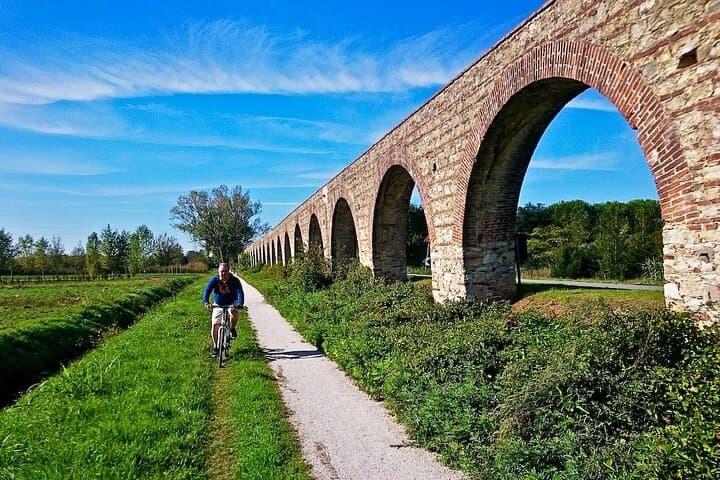

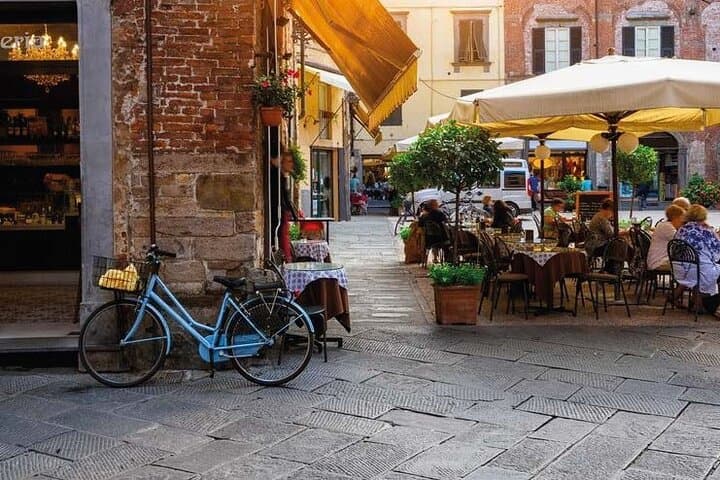
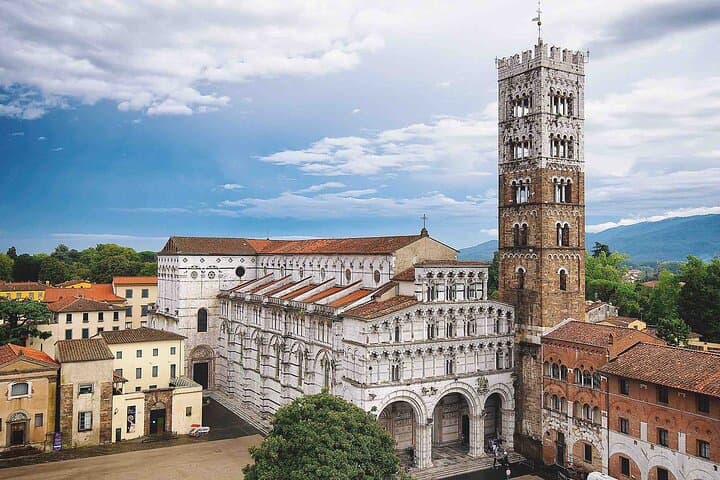
You roll out of Pisa with the leaning tower shrinking behind you and the warm air of the Arno pressing at your back. The route follows the Serchio river’s low terraces: water daring you to look over its shoulder at flooded oxbows, reedbeds scalloping the banks, and a chorus of birds punctuating the ride. The Puccini Trail threads past agricultural fields and small stone bridges until Lucca’s medieval walls rise, flat-topped and oddly modern, framing red roofs and the climbable Guinigi Tower.
You roll out of Pisa with the leaning tower shrinking behind you and the warm air of the Arno pressing at your back. The route follows the Serchio river’s low terraces: water daring you to look over its shoulder at flooded oxbows, reedbeds scalloping the banks, and a chorus of birds punctuating the ride. The Puccini Trail threads past agricultural fields and small stone bridges until Lucca’s medieval walls rise, flat-topped and oddly modern, framing red roofs and the climbable Guinigi Tower.
This corridor between Pisa and Lucca has layers of history — Roman roads visible under later medieval town plans, fortified Rocca di Ripafratta guarding one of the river fords, and the birthplace of composer Giacomo Puccini in nearby Torre del Lago. Geologically the route sits on riverine alluvium, producing broad floodplains and easy gradients that make for steady cycling. Culturally, the towns along the way are as focused on food as on form: local cecina, necci and Tuscan wines reward short stops.
Practical guidance: expect 4–5 hours of riding at a relaxed pace, mostly flat with compacted gravel and paved sections. Navigation is straightforward on signed cycle paths and quiet secondary roads, but bring a charged phone or printed map — some rural segments have sparse signage. Hydrate early, use sunscreen, and plan a final lap on Lucca’s tree-lined walls for views. Leave no trace on the riverbanks; these habitats sustain kingfishers and herons and deserve respect.