THE ADVENTURE COLLECTIVE® · Independent discovery and booking for outdoor travel

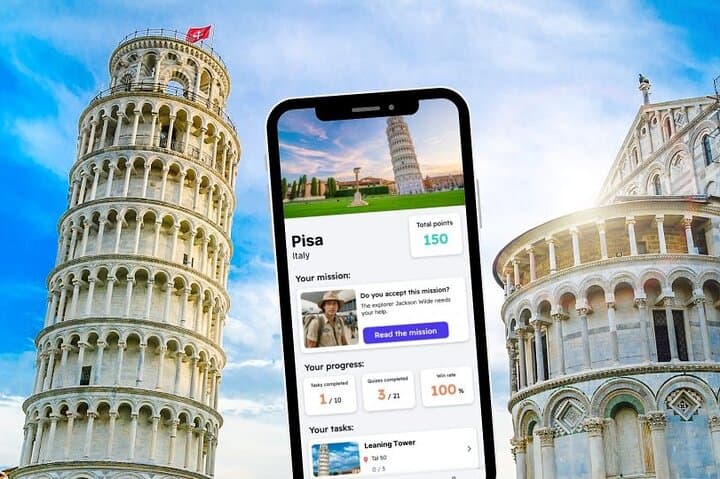
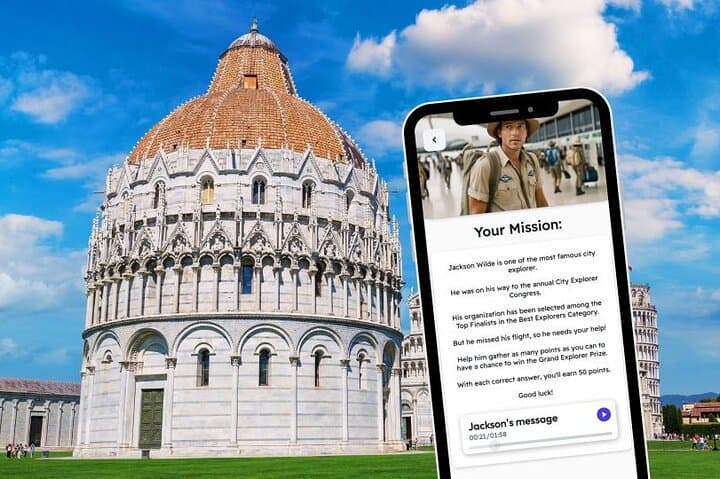
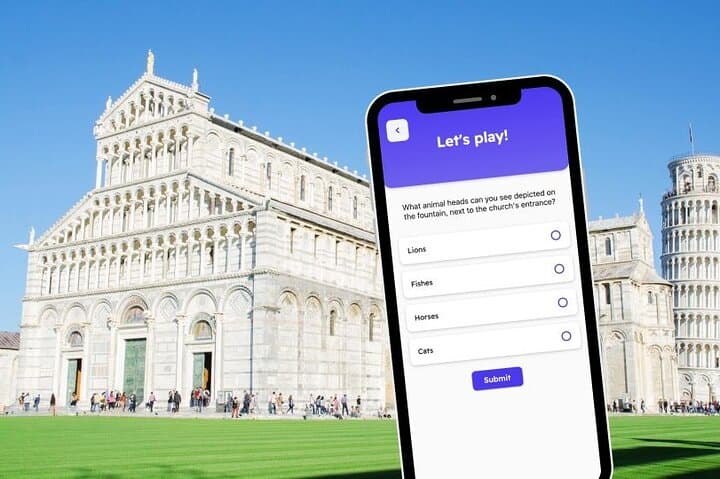
Turn Pisa into a playable city with a self-guided app that quizzes and guides you through nine key sites including the Leaning Tower and Baptistery. Walk ~2 km at your own pace—no guide required, monument entry not included.
Turn Pisa into a playable city with a self-guided app that quizzes and guides you through nine key sites including the Leaning Tower and Baptistery. Walk ~2 km at your own pace—no guide required, monument entry not included.
You step into Piazza dei Miracoli with your phone as a guide and a challenge humming in your pocket: the Leaning Tower dares you to solve a riddle before you circle its shadow. Cobbled alleys push you toward the Arno, which threads through the city like a patient local, nudging you past medieval facades and small piazzas that keep their secrets.
Verified experiences and guided adventures in the surrounding area.
Operated by Wanderway · Pisa, Tuscany
You step into Piazza dei Miracoli with your phone as a guide and a challenge humming in your pocket: the Leaning Tower dares you to solve a riddle before you circle its shadow. Cobbled alleys push you toward the Arno, which threads through the city like a patient local, nudging you past medieval facades and small piazzas that keep their secrets.
Pisa grew as a maritime republic; its cathedral complex—Duomo, Baptistery and Camposanto—dates to the 11th–13th centuries and sits on soft alluvial soil that famously let the bell tower lean. The app-led game highlights nine stops: Santa Maria della Spina, San Michele in Borgo, Knight’s Square, Baths of Nero, the Cathedral complex, and Porto Nuova, weaving short trivia, local lore and architectural notes as you walk.
Geology matters here: flat, paved streets and river terraces mean almost no elevation gain, but uneven stones and occasional tram rails make steady footwear important. The experience is as much cultural as physical—expect snippets about Pisan maritime law, medieval trade, and the student-driven energy in Borgo Stretto.
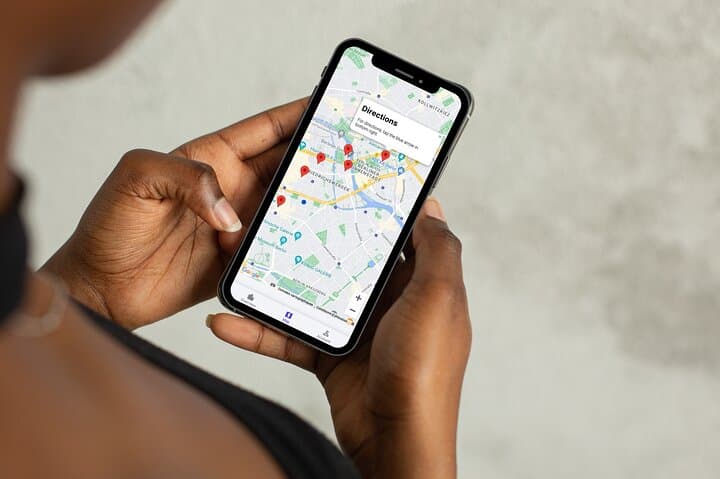
Practically: download the Wanderway app (or open in your browser), allow location services, and start at any point—most groups complete the roughly 1.5–2.5 km route in about two hours. The game does not include monument entry; book timed tickets separately if you want to climb the tower or enter the Baptistery. Keep your phone charged, pick off-peak hours to avoid tour groups, and use headphones for better immersion. This is a low-effort, high-engagement way to learn Pisa on your own terms.
easy.
2 hours.
Suitable for most fitness levels; expect light walking (1.5–2.5 km) on flat, paved surfaces
No—this self-guided game does not include monument entry. Purchase timed tickets for the tower, Baptistery or Cathedral separately through official vendor sites or at ticket offices.
Yes—download the app or open the browser version and begin at the first station or any point you prefer; GPS will guide your progress.
The content is offered in English, French, German and Spanish according to the booking information.
Much of the central route is flat and paved but includes cobbles and narrow sidewalks; accessibility can vary—check specific stretches and consider an alternative mapped route if needed.
Pisa was a powerful maritime republic in the Middle Ages—many cathedral monuments date from the 11th–13th centuries and reflect wealth from Mediterranean trade.
Piazza dei Miracoli manages visitor numbers and restoration work; stick to marked areas, avoid touching frescoes or marble, and use official ticketing to support preservation.
Wanderway operates guided outdoor trips and adventures with an emphasis on safety, stewardship, and memorable experiences.
You step into Piazza dei Miracoli with your phone as a guide and a challenge humming in your pocket: the Leaning Tower dares you to solve a riddle before you circle its shadow. Cobbled alleys push you toward the Arno, which threads through the city like a patient local, nudging you past medieval facades and small piazzas that keep their secrets.
You step into Piazza dei Miracoli with your phone as a guide and a challenge humming in your pocket: the Leaning Tower dares you to solve a riddle before you circle its shadow. Cobbled alleys push you toward the Arno, which threads through the city like a patient local, nudging you past medieval facades and small piazzas that keep their secrets.
Pisa grew as a maritime republic; its cathedral complex—Duomo, Baptistery and Camposanto—dates to the 11th–13th centuries and sits on soft alluvial soil that famously let the bell tower lean. The app-led game highlights nine stops: Santa Maria della Spina, San Michele in Borgo, Knight’s Square, Baths of Nero, the Cathedral complex, and Porto Nuova, weaving short trivia, local lore and architectural notes as you walk.
Geology matters here: flat, paved streets and river terraces mean almost no elevation gain, but uneven stones and occasional tram rails make steady footwear important. The experience is as much cultural as physical—expect snippets about Pisan maritime law, medieval trade, and the student-driven energy in Borgo Stretto.
Practically: download the Wanderway app (or open in your browser), allow location services, and start at any point—most groups complete the roughly 1.5–2.5 km route in about two hours. The game does not include monument entry; book timed tickets separately if you want to climb the tower or enter the Baptistery. Keep your phone charged, pick off-peak hours to avoid tour groups, and use headphones for better immersion. This is a low-effort, high-engagement way to learn Pisa on your own terms.