THE ADVENTURE COLLECTIVE® · Independent discovery and booking for outdoor travel

Sail Macquarie Harbour aboard the MV Sophia to the ruins of Pillinger, Bonnet Island’s lighthouse and the notorious Hells Gates. This five-hour cruise mixes guided shore walks, local history and close-up wildlife viewing with a chef-prepared lunch.
Sail Macquarie Harbour aboard the MV Sophia to the ruins of Pillinger, Bonnet Island’s lighthouse and the notorious Hells Gates. This five-hour cruise mixes guided shore walks, local history and close-up wildlife viewing with a chef-prepared lunch.
The MV Sophia slips away from Strahan’s jetty and the air changes — salt sharp, eucalyptus softening the horizon. Passengers stand forward as Macquarie Harbour opens, the water daring you to read its history: shipwrecks at Hells Gates, convict-era industries, and the skeleton of a once-busy timber township at Pillinger.
Verified experiences and guided adventures in the surrounding area.
Operated by NRMA · Strahan, Tasmania
The MV Sophia slips away from Strahan’s jetty and the air changes — salt sharp, eucalyptus softening the horizon. Passengers stand forward as Macquarie Harbour opens, the water daring you to read its history: shipwrecks at Hells Gates, convict-era industries, and the skeleton of a once-busy timber township at Pillinger.
The tour threads past the Training Wall, an imposing 19th-century engineering work built to keep the harbour navigable, and rounds Bonnet Island where a small lighthouse keeps company with a penguin colony. Guests step ashore at Pillinger for a guided walk among ruins — brick foundations, rusted machinery and forest reclaiming cleared ground — while guides interpret the rise and fall of the mining and timber settlement.
Geologically, Macquarie Harbour is a shallow, tannin-dark inlet carved by rivers and reshaped by coastal processes; the narrow entrance at Hells Gates funnels tidal energy, producing notorious currents that challenge navigation and reward careful piloting. Culturally, the region is a record of early colonial industry layered over palawa country; interpretive talks often touch on both heritage and the natural patterns that shaped settlement.
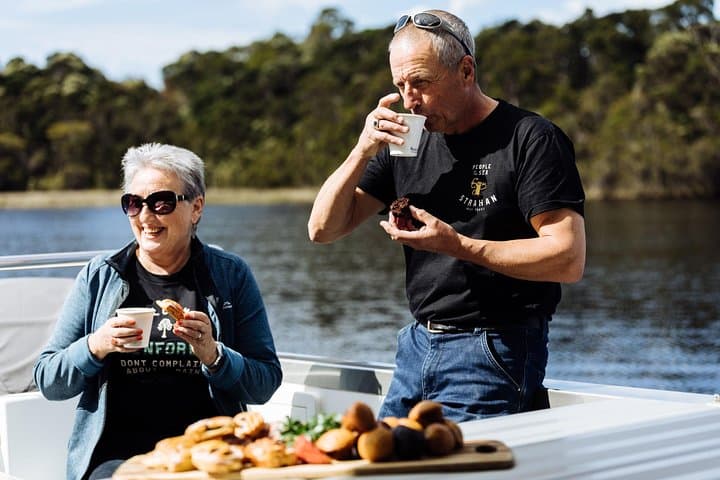
Practically, the full experience runs about five hours aboard a comfortable, small-capacity vessel with a chef-prepared lunch and morning tea included. Expect short shore walks on uneven, sometimes muddy terrain; sturdy footwear and a windproof layer make the shore visit more enjoyable. Bring binoculars for seabirds and penguins, waterproofs for spray on open water, and seasickness meds if prone to motion sensitivity. Timing your visit for calmer summer seas improves sightlines, but each season offers different light and wildlife behavior.
The Pillinger Explorer balances relaxed cruising with hands-on history — a compact, accessible slice of Tasmania’s rugged west coast that puts the region’s industry, geology and wildlife on clear display.
easy.
5 hours.
Suitable for most fitness levels; participants should be able to manage a short, uneven shore walk and basic boat boarding.
The full itinerary is approximately five hours, including morning tea, a guided shore visit to Pillinger, and a chef-prepared lunch aboard MV Sophia.
No — the shore walk is short but over uneven ground; closed-toe shoes and basic mobility are recommended.
Yes — expect seabirds, occasional seals and a small penguin colony at Bonnet Island; sightings depend on season and conditions.
Tours may be cancelled for bad weather or insufficient travelers; full refund is typically available if cancelled at least three full days before departure.
Pillinger was a late-19th-century timber and mining township; many brick and machinery remnants on site reflect a rapid industrial rise and abandonment once transport patterns shifted.
Macquarie Harbour’s tidal flows and fragile shoreline habitats are sensitive to disturbance; visitors are asked to follow guidance, stay on marked routes and avoid approaching wildlife.
NRMA operates guided outdoor trips and adventures with an emphasis on safety, stewardship, and memorable experiences.
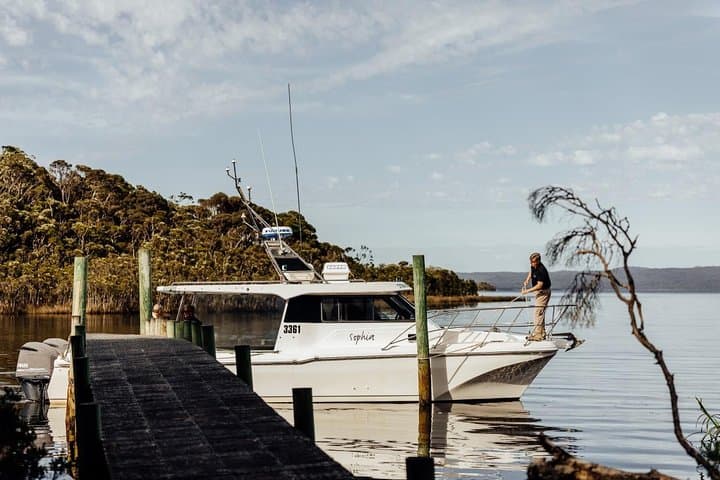
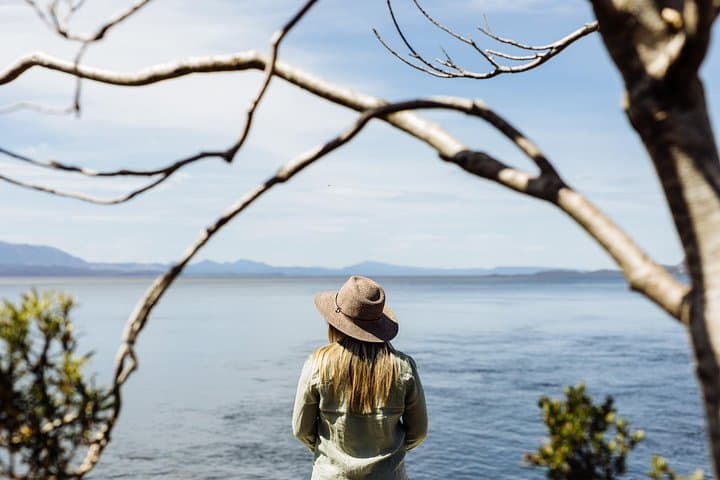

The MV Sophia slips away from Strahan’s jetty and the air changes — salt sharp, eucalyptus softening the horizon. Passengers stand forward as Macquarie Harbour opens, the water daring you to read its history: shipwrecks at Hells Gates, convict-era industries, and the skeleton of a once-busy timber township at Pillinger.
The MV Sophia slips away from Strahan’s jetty and the air changes — salt sharp, eucalyptus softening the horizon. Passengers stand forward as Macquarie Harbour opens, the water daring you to read its history: shipwrecks at Hells Gates, convict-era industries, and the skeleton of a once-busy timber township at Pillinger.
The tour threads past the Training Wall, an imposing 19th-century engineering work built to keep the harbour navigable, and rounds Bonnet Island where a small lighthouse keeps company with a penguin colony. Guests step ashore at Pillinger for a guided walk among ruins — brick foundations, rusted machinery and forest reclaiming cleared ground — while guides interpret the rise and fall of the mining and timber settlement.
Geologically, Macquarie Harbour is a shallow, tannin-dark inlet carved by rivers and reshaped by coastal processes; the narrow entrance at Hells Gates funnels tidal energy, producing notorious currents that challenge navigation and reward careful piloting. Culturally, the region is a record of early colonial industry layered over palawa country; interpretive talks often touch on both heritage and the natural patterns that shaped settlement.
Practically, the full experience runs about five hours aboard a comfortable, small-capacity vessel with a chef-prepared lunch and morning tea included. Expect short shore walks on uneven, sometimes muddy terrain; sturdy footwear and a windproof layer make the shore visit more enjoyable. Bring binoculars for seabirds and penguins, waterproofs for spray on open water, and seasickness meds if prone to motion sensitivity. Timing your visit for calmer summer seas improves sightlines, but each season offers different light and wildlife behavior.
The Pillinger Explorer balances relaxed cruising with hands-on history — a compact, accessible slice of Tasmania’s rugged west coast that puts the region’s industry, geology and wildlife on clear display.