THE ADVENTURE COLLECTIVE® · Independent discovery and booking for outdoor travel

A focused three‑day private pilgrimage from Seoul that visits Korea’s principal Catholic heritage sites—martyr shrines, early churchbirthplaces, and village sanctuaries—guided by an official English guide with private transport.
A focused three‑day private pilgrimage from Seoul that visits Korea’s principal Catholic heritage sites—martyr shrines, early churchbirthplaces, and village sanctuaries—guided by an official English guide with private transport.
Dawn light moves across narrow Seoul streets as a private minivan eases away from the hotel, the guide pointing out the stone steeple of Myeongdong Cathedral receding into the rearview. Over three days the road alternates between polite city avenues and low mountain passes; each stop folds a chapter of Korean Catholic history into view—from execution grounds and riverside memorials to small village churches where the first native priests were formed.
Verified experiences and guided adventures in the surrounding area.
Operated by Best K Services · Seoul, Seoul
Dawn light moves across narrow Seoul streets as a private minivan eases away from the hotel, the guide pointing out the stone steeple of Myeongdong Cathedral receding into the rearview. Over three days the road alternates between polite city avenues and low mountain passes; each stop folds a chapter of Korean Catholic history into view—from execution grounds and riverside memorials to small village churches where the first native priests were formed.
Korean Catholicism grew in an unusual way: through lay study beginning in the late 18th century rather than foreign mission structures, then surviving waves of persecution that produced dozens of martyrs and several canonizations. Geology and geography shaped those stories—rivers and riverbanks became execution or burial sites, while hilltop fortresses like Namhansanseong doubled as prisons or refuge.
Culturally this tour is as much about quiet witness as sightseeing. Sites such as Seosomun, Saenamteo and Jeoldusan are sober, often minimal spaces where stone and bronze mark individuals and collectives who resisted erasure. Elsewhere, restored village churches and Gongseri Cathedral show how local communities remembered and rebuilt.
Practical notes: the package includes a licensed English guide, private air‑conditioned vehicle, and basic fees; expect several short walks at memorials and time for reflection. Dress conservatively for churches, bring a light rain layer in spring or monsoon season, and plan arrivals outside peak worship times for a quieter visit. The route suits travelers wanting thoughtful, low‑impact cultural pilgrimage with clear logistics and door‑to‑door transport.
easy.
3 days (approx. 72 hours).
Suitable for travelers of most fitness levels; basic mobility for short walks and stairs is helpful.
Yes—private air‑conditioned transportation with hotel pick‑up/drop‑off in Seoul/Gyeonggi‑do is included.
A licensed official English tour guide accompanies the itinerary and handles local interpretation and logistics.
Most historic sites in the itinerary list admission included; the guide will confirm any local fees during booking and handle payments when necessary.
The tour is stroller‑accessible in many stops and noted as physically easy, but infants must sit on a lap during transport.
Korean Catholicism began among lay scholars in the 1780s rather than through an established foreign mission; waves of persecution in the 19th century produced both local martyrs and enduring devotional sites.
Many sites are preserved as national or local heritage locations—visitors are asked to remain on designated paths, avoid photography restrictions, and respect quiet zones to minimize impact.
Best K Services operates guided outdoor trips and adventures with an emphasis on safety, stewardship, and memorable experiences.

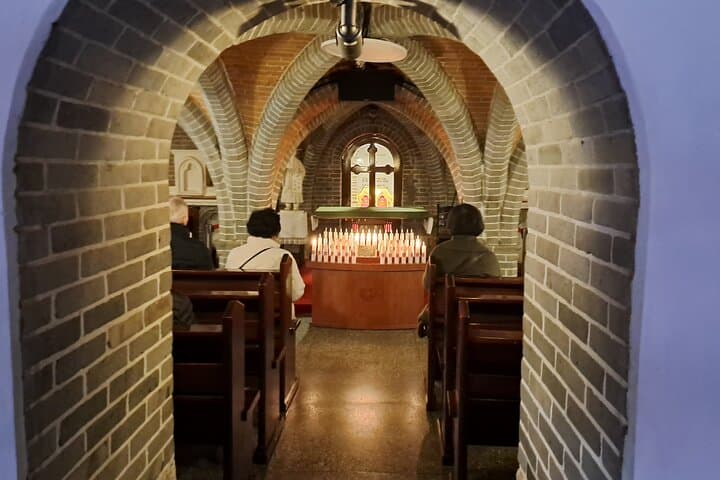


Dawn light moves across narrow Seoul streets as a private minivan eases away from the hotel, the guide pointing out the stone steeple of Myeongdong Cathedral receding into the rearview. Over three days the road alternates between polite city avenues and low mountain passes; each stop folds a chapter of Korean Catholic history into view—from execution grounds and riverside memorials to small village churches where the first native priests were formed.
Dawn light moves across narrow Seoul streets as a private minivan eases away from the hotel, the guide pointing out the stone steeple of Myeongdong Cathedral receding into the rearview. Over three days the road alternates between polite city avenues and low mountain passes; each stop folds a chapter of Korean Catholic history into view—from execution grounds and riverside memorials to small village churches where the first native priests were formed.
Korean Catholicism grew in an unusual way: through lay study beginning in the late 18th century rather than foreign mission structures, then surviving waves of persecution that produced dozens of martyrs and several canonizations. Geology and geography shaped those stories—rivers and riverbanks became execution or burial sites, while hilltop fortresses like Namhansanseong doubled as prisons or refuge.
Culturally this tour is as much about quiet witness as sightseeing. Sites such as Seosomun, Saenamteo and Jeoldusan are sober, often minimal spaces where stone and bronze mark individuals and collectives who resisted erasure. Elsewhere, restored village churches and Gongseri Cathedral show how local communities remembered and rebuilt.
Practical notes: the package includes a licensed English guide, private air‑conditioned vehicle, and basic fees; expect several short walks at memorials and time for reflection. Dress conservatively for churches, bring a light rain layer in spring or monsoon season, and plan arrivals outside peak worship times for a quieter visit. The route suits travelers wanting thoughtful, low‑impact cultural pilgrimage with clear logistics and door‑to‑door transport.