THE ADVENTURE COLLECTIVE® · Independent discovery and booking for outdoor travel

Walk the key sites connected to Saint Francis on a self-guided one-hour route through Assisi. The tour pairs offline audio and maps with close-up views of medieval churches and a final approach to the Basilica of Saint Francis.
Walk the key sites connected to Saint Francis on a self-guided one-hour route through Assisi. The tour pairs offline audio and maps with close-up views of medieval churches and a final approach to the Basilica of Saint Francis.
You step through an ancient gate and the city tilts into a different rhythm: narrow stone lanes, a bell that counts the hours, and terraces that look out over the Umbrian plain. The Pilgrim Path traces the compact heart of Assisi—the Roman walls, medieval piazzas, and the final approach to the Basilica of Saint Francis—every turn measured against centuries of devotion.
Verified experiences and guided adventures in the surrounding area.
Operated by Tourific · Assisi, Umbria
You step through an ancient gate and the city tilts into a different rhythm: narrow stone lanes, a bell that counts the hours, and terraces that look out over the Umbrian plain. The Pilgrim Path traces the compact heart of Assisi—the Roman walls, medieval piazzas, and the final approach to the Basilica of Saint Francis—every turn measured against centuries of devotion.
Assisi’s stones record layers of history: Roman foundations beneath medieval facades, and a 13th-century basilica built to shelter the tomb of Saint Francis. The surrounding limestone hills, weathered by olive groves and wind, give the town its pale, sun-bleached character; you’ll pass churches whose frescoes map theological debates and civic squares that once hosted markets and clergy.
This self-guided route combines cultural focus with accessible walking—expect cobbles, short stair runs, and signage at key points. The audio and written guide (downloadable for offline use) highlights architectural details, saintly stories, and where to pause for a sweeping valley view.
Practical edge: set aside one hour for the core loop, more if you plan to enter museums or the basilica (check opening hours). Wear sturdy shoes for uneven stone and bring water—the shade can be limited on sunlit terraces. Respect sacred spaces by following dress codes inside churches and keeping voices low. Early morning or late afternoon visits avoid crowds and give you softer light for frescoes. With a little preparation, this walk is both a compact history lesson and a quiet way to meet Assisi on foot.
easy.
1 hour.
Suitable for most fitness levels; requires standing and walking on uneven cobbles for up to an hour.
The core route is designed for about 60 minutes; allow extra time if you want to enter churches, the basilica, or stop for photos.
Entry rules can change—while the walk ends at the basilica, check current opening hours and any entry fees or reservation requirements before arrival.
Assisi’s historic center has narrow, uneven cobbles and stair sections; some parts are difficult for wheelchairs—plan accordingly and use accessible entrances where available.
The tour provides audio and written guides via the app; check the product page for available languages and whether an English track is included.
Assisi grew from a Roman settlement into a medieval pilgrimage center; the Basilica of Saint Francis (13th century) was built over the saint’s tomb and became a focal point of Franciscan spirituality.
High visitor numbers stress ancient structures and frescoes—follow signage, avoid touching artwork, and stick to marked paths to protect fragile stone and cultural heritage.
Tourific operates guided outdoor trips and adventures with an emphasis on safety, stewardship, and memorable experiences.


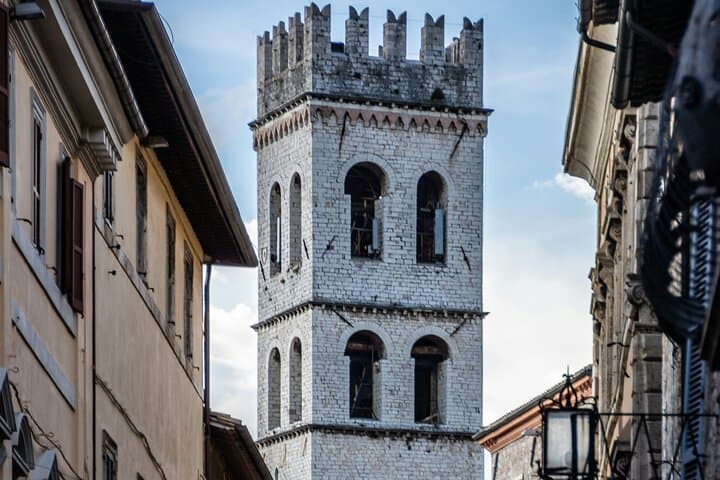
You step through an ancient gate and the city tilts into a different rhythm: narrow stone lanes, a bell that counts the hours, and terraces that look out over the Umbrian plain. The Pilgrim Path traces the compact heart of Assisi—the Roman walls, medieval piazzas, and the final approach to the Basilica of Saint Francis—every turn measured against centuries of devotion.
You step through an ancient gate and the city tilts into a different rhythm: narrow stone lanes, a bell that counts the hours, and terraces that look out over the Umbrian plain. The Pilgrim Path traces the compact heart of Assisi—the Roman walls, medieval piazzas, and the final approach to the Basilica of Saint Francis—every turn measured against centuries of devotion.
Assisi’s stones record layers of history: Roman foundations beneath medieval facades, and a 13th-century basilica built to shelter the tomb of Saint Francis. The surrounding limestone hills, weathered by olive groves and wind, give the town its pale, sun-bleached character; you’ll pass churches whose frescoes map theological debates and civic squares that once hosted markets and clergy.
This self-guided route combines cultural focus with accessible walking—expect cobbles, short stair runs, and signage at key points. The audio and written guide (downloadable for offline use) highlights architectural details, saintly stories, and where to pause for a sweeping valley view.
Practical edge: set aside one hour for the core loop, more if you plan to enter museums or the basilica (check opening hours). Wear sturdy shoes for uneven stone and bring water—the shade can be limited on sunlit terraces. Respect sacred spaces by following dress codes inside churches and keeping voices low. Early morning or late afternoon visits avoid crowds and give you softer light for frescoes. With a little preparation, this walk is both a compact history lesson and a quiet way to meet Assisi on foot.