THE ADVENTURE COLLECTIVE® · Independent discovery and booking for outdoor travel

Explore the Pilbara’s distinctive birdlife on a private 90-minute guided walk along the Ngurrin Trail near Karratha. Expect close views of regional species, interpretive insights on local ecology and culture, and practical guidance for low-impact wildlife viewing.
Explore the Pilbara’s distinctive birdlife on a private 90-minute guided walk along the Ngurrin Trail near Karratha. Expect close views of regional species, interpretive insights on local ecology and culture, and practical guidance for low-impact wildlife viewing.
Dawn spreads pale gold across the red country as you step onto the Ngurrin Trail, the dry grasses whispering and small birds flitting through acacia and spinifex. The group moves quietly; a guide points out a flash of white-browed robin, then the unmistakable silhouette of a rufous hare-wallaby-like shape slipping between rocks. The walk is short—about 1.2 km—but the landscape is dense with life if you know where to look.
Verified experiences and guided adventures in the surrounding area.
Operated by Pilbara Bird Tours · Karratha, Western Australia
Dawn spreads pale gold across the red country as you step onto the Ngurrin Trail, the dry grasses whispering and small birds flitting through acacia and spinifex. The group moves quietly; a guide points out a flash of white-browed robin, then the unmistakable silhouette of a rufous hare-wallaby-like shape slipping between rocks. The walk is short—about 1.2 km—but the landscape is dense with life if you know where to look.
This stretch of the Pilbara sits on ancient iron-rich geology that carved rugged coastlines and low ranges. Indigenous people have lived here for tens of thousands of years; nearby Murujuga (Burrup Peninsula) holds some of the world’s oldest rock art, evidence of a long relationship between people and place. European pastoral history and modern mining have shaped access and conservation priorities, but pockets of native habitat persist, attracting species adapted to heat and seasonal rains.
On a guided bird tour you’ll get both identification and context—seasonal behaviors, where birds nest, and how the coastline and inland spinifex influence distribution. Guides emphasize quiet movement and minimal disturbance, which improves sightings and protects nesting sites.
Practical: tours run about 90 minutes and are suitable for most fitness levels; expect uneven, sandy or gravelly footing and strong sun. Go early in the morning to avoid heat, bring water, sun protection, and a pair of binoculars or a telephoto lens if you want close portraits. Respect wildlife by staying on the trail and keeping noise low—good behavior translates directly into better bird encounters.
easy.
1.5 hours (90 minutes).
Suitable for most fitness levels—light walking on mostly flat but uneven trail; accessible for strollers on short sections.
The guided Ngurrin Trail walk is about 1.2 km and lasts roughly 90 minutes; it’s rated easy and suitable for most ages and fitness levels, though footing can be uneven.
Yes—infants and small children can use strollers on accessible sections, but parents should expect short uneven segments; mention any needs when booking.
Service animals are allowed; general pets are not recommended due to wildlife disturbance and local regulations—verify with the operator before booking.
Tours may be canceled in extreme heat or bad weather for safety; the operator’s cancellation policy typically allows a full refund if canceled at least 24 hours in advance.
The Pilbara is rich in Indigenous heritage; Murujuga’s petroglyphs represent one of the world’s longest continuous cultural records and lie within the broader birding landscape.
The area’s bird populations are sensitive to habitat disturbance; stay on the trail, avoid feeding wildlife, and follow guide instructions to minimize impact.
Pilbara Bird Tours operates guided outdoor trips and adventures with an emphasis on safety, stewardship, and memorable experiences.
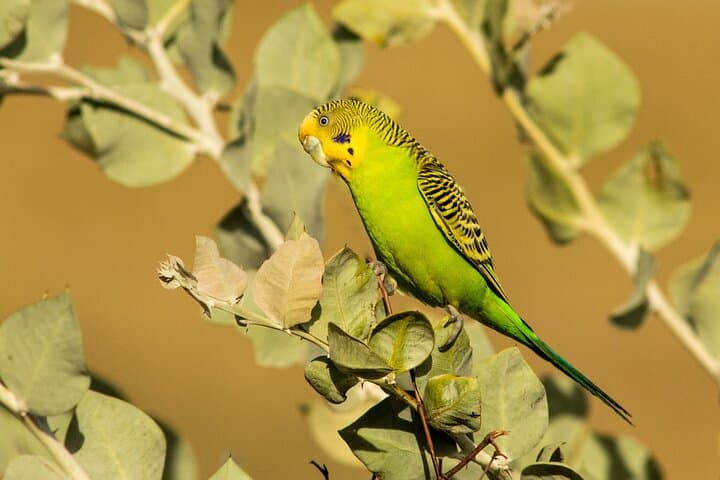


Dawn spreads pale gold across the red country as you step onto the Ngurrin Trail, the dry grasses whispering and small birds flitting through acacia and spinifex. The group moves quietly; a guide points out a flash of white-browed robin, then the unmistakable silhouette of a rufous hare-wallaby-like shape slipping between rocks. The walk is short—about 1.2 km—but the landscape is dense with life if you know where to look.
Dawn spreads pale gold across the red country as you step onto the Ngurrin Trail, the dry grasses whispering and small birds flitting through acacia and spinifex. The group moves quietly; a guide points out a flash of white-browed robin, then the unmistakable silhouette of a rufous hare-wallaby-like shape slipping between rocks. The walk is short—about 1.2 km—but the landscape is dense with life if you know where to look.
This stretch of the Pilbara sits on ancient iron-rich geology that carved rugged coastlines and low ranges. Indigenous people have lived here for tens of thousands of years; nearby Murujuga (Burrup Peninsula) holds some of the world’s oldest rock art, evidence of a long relationship between people and place. European pastoral history and modern mining have shaped access and conservation priorities, but pockets of native habitat persist, attracting species adapted to heat and seasonal rains.
On a guided bird tour you’ll get both identification and context—seasonal behaviors, where birds nest, and how the coastline and inland spinifex influence distribution. Guides emphasize quiet movement and minimal disturbance, which improves sightings and protects nesting sites.
Practical: tours run about 90 minutes and are suitable for most fitness levels; expect uneven, sandy or gravelly footing and strong sun. Go early in the morning to avoid heat, bring water, sun protection, and a pair of binoculars or a telephoto lens if you want close portraits. Respect wildlife by staying on the trail and keeping noise low—good behavior translates directly into better bird encounters.